What is shiso?
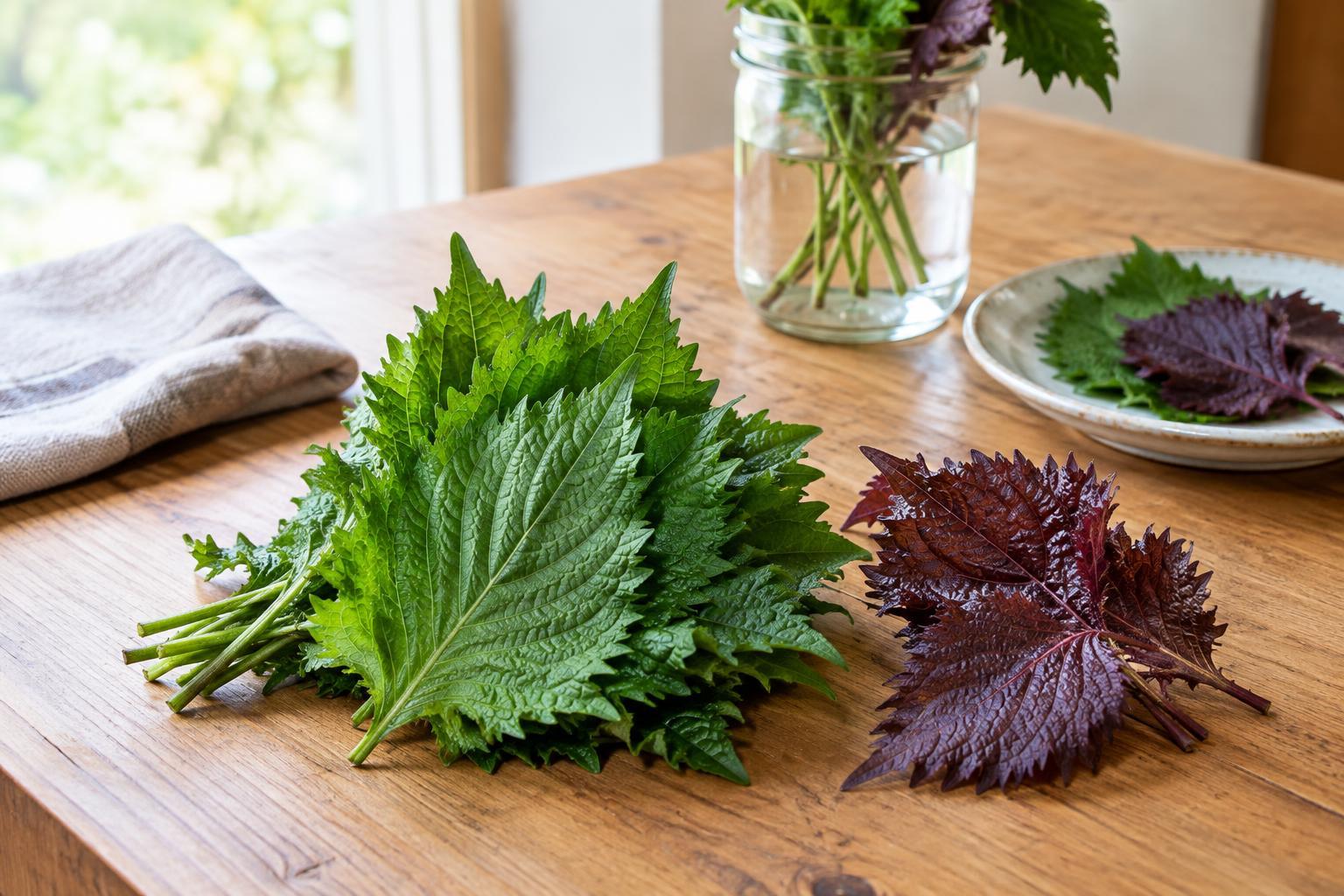
Shiso is an aromatic leaf used in Japanese cooking. Green shiso, often called aojiso, is the type most commonly served fresh. Its flavor is bright and herbal, with a character that may remind you of mint, basil, or citrus without tasting quite like any of them. A whole leaf can add fragrance to a bite of food, while thinly sliced leaves can bring that same flavor across an entire dish.
Red shiso, or akajiso, has a different role in many kitchens. It is often used to lend color and flavor to pickles and preserved foods, including some preparations of umeboshi. You may also encounter it in drinks. If a recipe asks for fresh green shiso as a garnish, red shiso may not give the same result: its flavor and texture can differ. Check which type a recipe calls for before buying a large bunch.
How to choose good leaves
Look for leaves that are lively rather than limp, with a noticeable aroma when the bunch is handled gently. Green shiso should have a fairly even green color; red shiso can range from reddish purple to leaves with green on one side and purple on the other. The exact shade is less important than the overall condition of the leaves.
Avoid bunches with extensive dark, mushy patches, slimy areas, or a sour smell. A few small blemishes may be easy to trim away, but damaged leaves tend to deteriorate quickly. If the shiso is sold in a package, look through it for trapped moisture and crushed leaves. Buy an amount you can use soon, especially if you want the leaves for a fresh garnish where appearance matters.
Shiso is sometimes labeled “perilla” in shops. Because that name can be used for different varieties, check the leaves or ask which type is being sold if you have a particular dish in mind. Fresh green shiso is a versatile starting point for everyday meals.
Store shiso gently
Shiso leaves are delicate, so the goal is to keep them from drying out without leaving them wet. If the leaves are dry and clean when you bring them home, wait to wash them until you need them. Wrap the bunch loosely in a barely damp paper towel, place it in a container or loosely closed bag, and refrigerate it. Do not press heavy items on top. Check the leaves as you use them and remove any that have become damaged.
If the leaves are already wet, gently dry them before storing; excess water can leave them soggy. Another option for leaves with stems attached is to stand the stem ends in a small amount of water, keeping the leaves above the waterline, then cover loosely and refrigerate. Change the water if you store them this way. Neither method keeps shiso fresh indefinitely, so plan to use it while it is still fragrant and supple.
Freezing is useful if you have more than you can use fresh, but thawed leaves will not look as crisp. Wash and dry them thoroughly, then freeze in a well-sealed container. Use frozen shiso in cooked dishes or chopped into mixtures where a perfect leaf shape is not important.
Prepare the leaves for the dish
Rinse shiso shortly before serving and pat it dry, especially if it will sit beside rice or noodles. Remove the stem if it feels tough. To make thin ribbons, stack a few leaves, roll them loosely, and cut across the roll with a sharp knife. Add cut shiso near the end of preparation: its fragrance is easiest to notice when it has not been left sitting in a warm dish for long.
A whole green leaf makes a handy wrap for a bite of rice or a piece of grilled fish. It can also serve as an aromatic layer in a sandwich or rice ball. For a quick topping, scatter thin ribbons over chilled tofu, noodles, or a bowl of rice with a little soy sauce. Start with a small amount, taste, and add more if you like; shiso’s flavor can stand out strongly against mild ingredients.
For a simple home-cooked variation, stir chopped green shiso into a finished omelet or mix it into warm rice just before serving. It also pairs well with cucumber in a lightly dressed salad. These uses let the leaf remain recognizable rather than treating it as a substitute for a familiar herb.
Make a small bunch go further
If you are trying shiso for the first time, choose one uncomplicated dish and use the leaves two ways: a whole leaf beside the food and a few ribbons scattered over it. This makes it easier to notice how the aroma changes with each bite. Keep the rest stored gently, then use it over the next few meals in rice, noodles, or a vegetable side dish.
Fresh shiso is at its best when it supports the food rather than covering it. Treat it as a finishing ingredient, handle it lightly, and let its distinctive fragrance be the reason it earns a place at the table.