What to look for when buying kabocha
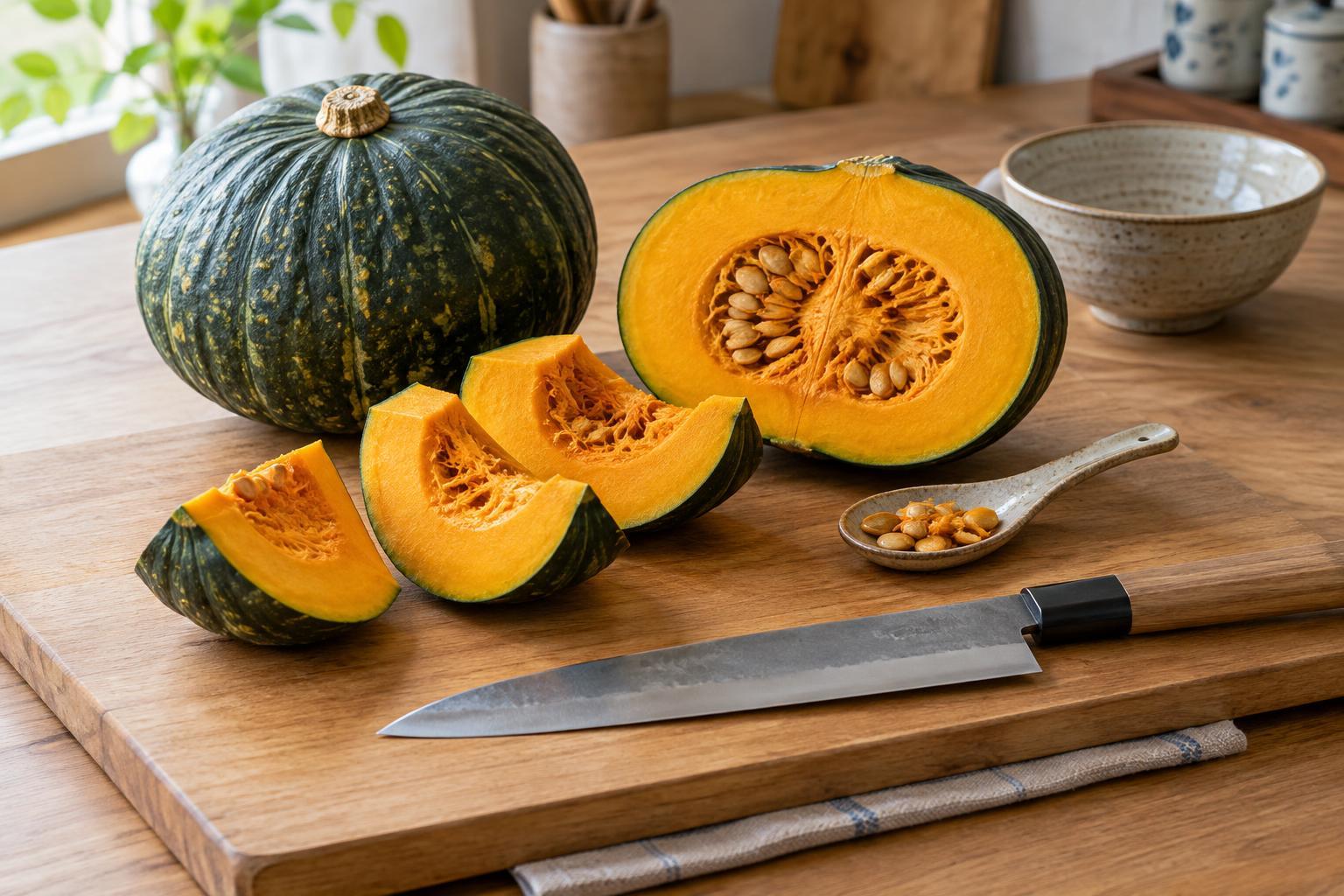
Kabocha is a winter squash with a firm rind and dense, sweet flesh. It is often dark green with lighter streaks, though appearance varies by variety. Its compact shape can make it look easy to handle, but the rind and flesh can be surprisingly resistant to a knife. If you are new to cutting it, a smaller squash that sits steadily on a cutting board is a sensible choice.
Pick up the squash and check that it feels heavy for its size. Look for a firm rind without soft spots, leaking areas, or extensive damage. Dry, superficial scuffs are usually less concerning than a spot that yields under gentle pressure. A dry, intact stem is useful, but do not rely on color or stem appearance alone to judge the inside. If the shop sells cut pieces, check that their flesh looks firm and that the cut surfaces are not slimy or badly dried out.
Set up before you make the first cut
Give yourself room to work. Put a large cutting board on a stable counter, with a damp kitchen towel underneath if the board tends to slide. Use a sharp, sturdy chef’s knife that you can control; a dull blade is more likely to slip when pressed against a hard rind. Keep your hands, the knife handle, and the squash dry. Wash the outside of the squash and dry it thoroughly, since the blade can carry anything on the rind into the flesh.
Before cutting, decide whether the squash is manageable for you. You should not need to lean your full weight onto the knife or rock an embedded blade back and forth. If the knife will not advance with controlled pressure, stop. Buying a pre-cut piece, asking the seller to cut it, or cooking it in larger pieces after someone else halves it are reasonable alternatives. There is no benefit to wrestling with a squash that feels unsafe to handle.
Halve the squash without forcing the stem
Set the squash on its most stable side and keep the fingers of your holding hand well away from the planned cut. Aim to cut through the rind and flesh beside the woody stem, not directly through it. Start with a controlled cut where the knife rests securely, then work along the squash in short, deliberate motions. Reposition the squash as needed so it stays supported on the board. Cutting one side and then the other is easier to control than trying to drive the knife through the entire squash in one push.
If the blade sticks, keep your free hand clear and do not twist the handle sharply to pry it loose. Ease the blade back out and try a different angle or stop cutting. Once the cuts meet, the halves may pull apart; if the stem still connects them, carefully cut around that area rather than wrenching the halves apart. The goal is two usable halves, not a perfectly straight cut.
Remove the seeds and make useful pieces
Scoop out the seeds and stringy center with a sturdy spoon. Place each half cut-side down to give it a broad, stable base before slicing it into smaller wedges. Work one piece at a time, keeping your guiding hand to the side of the blade’s path. For cubes, cut the wedges into shorter sections first, then make the final cuts with each piece resting flat on the board.
Kabocha skin is often cooked and eaten when it has softened, so peeling is optional for many dishes. If you prefer to remove it, doing so after cutting the squash into manageable pieces—or after cooking—may be easier than trying to peel the whole squash. Thin wedges suit roasting, while chunks work well in simmered dishes and soups. Try to make pieces roughly similar in size so they cook at a similar pace.
Store it with your next meal in mind
Keep an uncut kabocha in a cool, dry, well-ventilated place and check it occasionally for soft spots. Once cut, cover the pieces and refrigerate them promptly. Use cut squash while it still looks and smells fresh; discard it if it becomes slimy, develops mold, or smells unpleasant. For longer storage, you can freeze cooked kabocha in portions suited to soup, mash, or another dish you make often.
You do not have to cut the entire squash into final-size pieces at once. Halving and seeding it today may be enough preparation for tomorrow’s meal. Whether you roast wedges or simmer chunks, begin with a stable board, a clear cutting path, and pieces you can handle comfortably. Those simple choices matter more than cutting quickly.