What is yuzu kosho?
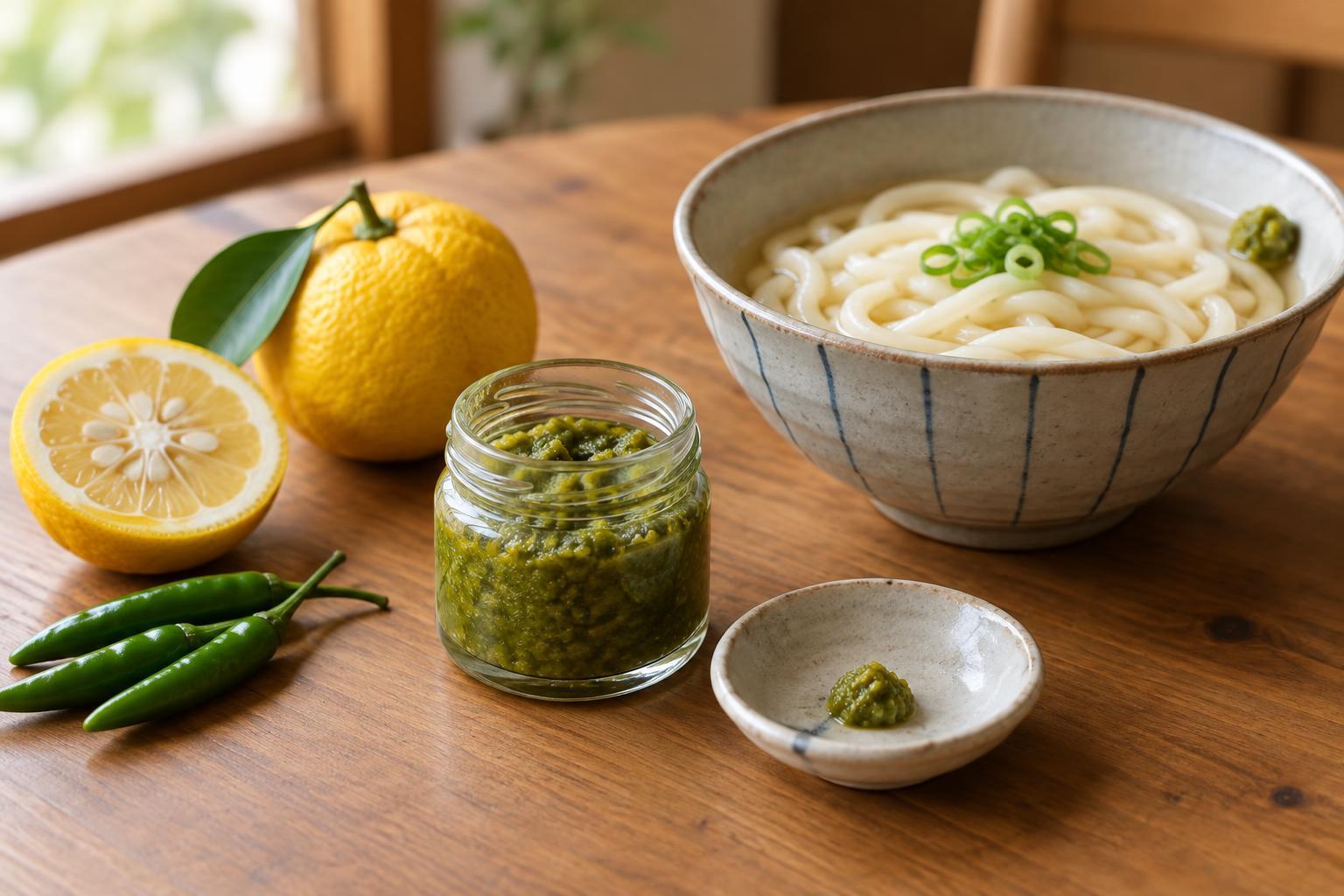
Yuzu kosho is a Japanese condiment commonly made from yuzu peel, chile peppers and salt. It is usually sold as a coarse paste in a small jar or tube. Although kosho can suggest pepper, the heat in yuzu kosho generally comes from chiles rather than black pepper. A small amount can season a whole bowl of food because it combines three strong elements: citrus aroma, heat and salt.
Yuzu has a bright fragrance that is difficult to describe by comparison with a single familiar citrus fruit. In the paste, that fragrance meets the chile’s sharp warmth and the salt’s savory effect. Yuzu kosho is not typically sweet, and it is not a substitute for yuzu juice: the peel contributes aroma, while the paste contributes substantial seasoning. Think of it as a finishing condiment, not something to spread thickly.
Green and red: what changes?
Green yuzu kosho is commonly made with green yuzu peel and green chiles. It often tastes especially fresh and lively, with an immediate grassy-citrus impression. Red versions are generally made with ripe-colored ingredients and may seem rounder or deeper in flavor. These are useful descriptions, not fixed rules: recipes vary, and either color can be quite hot or salty.
If you are buying a jar for the first time, choose by the dish you expect to make rather than looking for a universally “best” color. Green is an easy starting point for clear soups, simply cooked vegetables and delicate proteins. Red can be appealing with grilled foods or richer broths. Either can work in both settings, so let a tiny taste—and the product’s saltiness—guide you.
Start small, then adjust
The easiest way to overuse yuzu kosho is to treat it like a mild sauce. Start with a dab about the size of a small pea for an individual portion, then taste before adding more. For a larger dish, mix a little into a spoonful of broth or dressing first. This distributes the paste more evenly and prevents one bite from carrying all the heat.
Consider the salt already in the food. If you plan to add yuzu kosho to soup, a dipping sauce or a marinade, hold back some soy sauce, miso or salt until you have tasted the finished mixture. Adding more seasoning is simple; removing it is not. Heat can also soften some of the citrus fragrance, so for a clear yuzu note, stir the paste in near the end of cooking or offer it at the table.
Everyday ways to use a little
For a quick introduction, put a tiny dab beside grilled fish, chicken, tofu or mushrooms and let each person add it bite by bite. It is also good stirred into a bowl of udon or a simple soup just before eating. In these uses, the food provides a mild base, making it easier to notice what the condiment adds without letting it take over.
Yuzu kosho can also brighten a dressing. Whisk a small dab with a little neutral oil and a mild acid, then taste it on a leaf of lettuce or a piece of cooked vegetable before dressing the entire bowl. For a dipping sauce, dissolve a little in water or another unsalted liquid before adding soy sauce to taste. The goal is to let the citrus lift the other ingredients, not make every mouthful taste only of the paste.
Try it with butter on hot potatoes or with mayonnaise for a sandwich or vegetable dip. Both soften the heat and make a small amount easier to spread. Mix thoroughly, taste, and add more only if needed.
Keeping its flavor in the jar
Because yuzu kosho is potent, a small container may last through many meals. Follow the storage directions on its label, keep the lid closed, and use a clean utensil each time. If the aroma seems muted after opening, use the paste in a mixed sauce rather than expecting it to provide a vivid finishing note.
There is no need to build an entire meal around yuzu kosho. Keep it within reach when a dish tastes nearly complete but could use a little brightness, warmth and salt. Add a dab, taste, and stop while you can still enjoy the ingredients underneath.