What does negi mean?
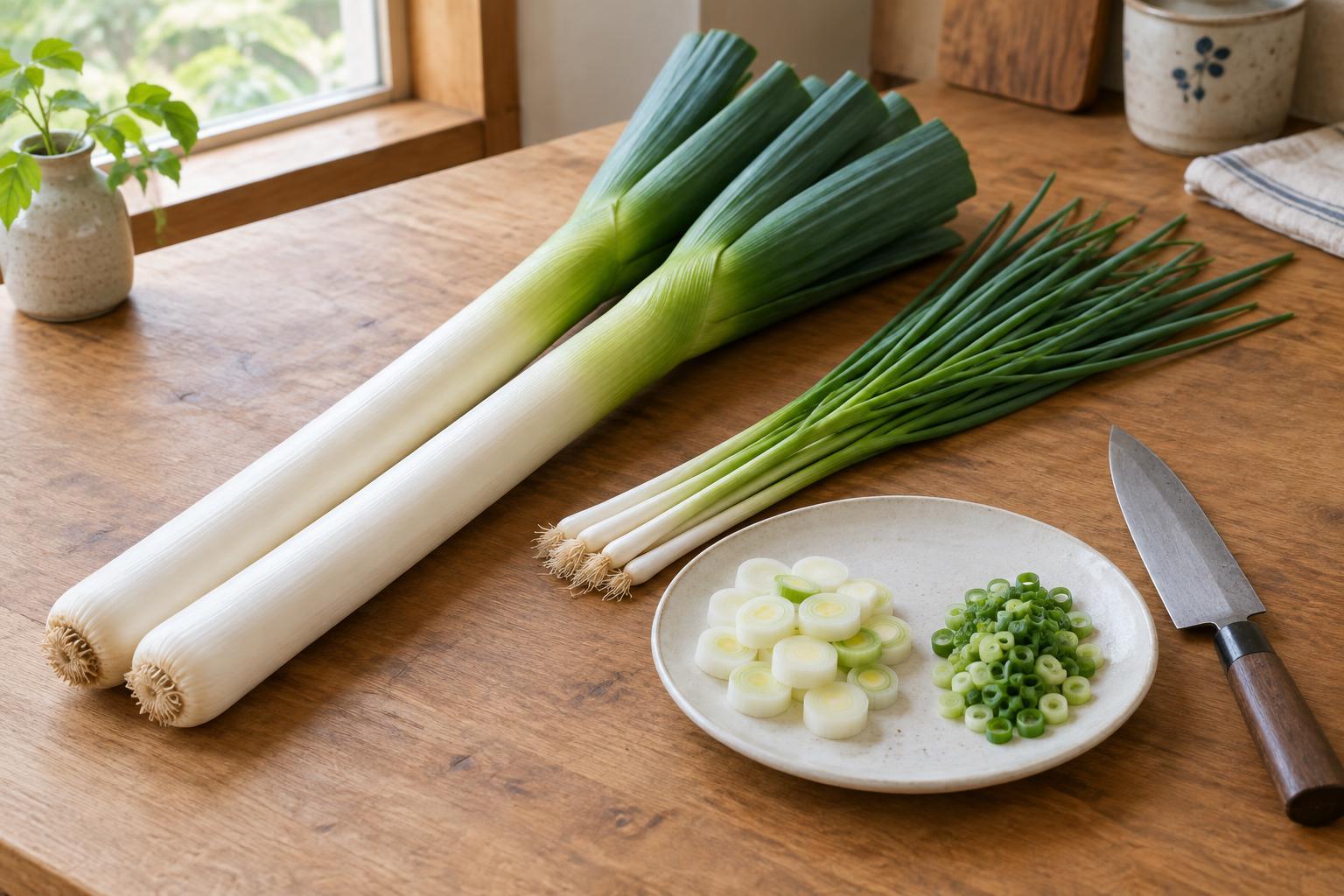
In Japanese cooking, negi is a broad term for alliums used much like green onions. Depending on the recipe and region, it may refer to a slender green onion or a thicker type with a long white stalk, often called naga negi. That is why a recipe that simply says “negi” can be confusing when you shop outside Japan.
In English-language recipes, “Japanese negi” often means the long, thick-stalked type. It usually has more substantial white and pale-green sections than the scallions commonly sold in bunches. The dark-green leaves may also be firmer. If a recipe shows large pieces simmered in broth or grilled until soft, long negi is likely what it has in mind. If it calls for a fine scattering of raw green slices, ordinary scallions may be closer to the intended result.
How flavor and texture change with cooking
Raw long negi has a pronounced onion-like bite, especially in its white portion. Slicing it very thinly makes that bite easier to distribute through a dish. Scallions also taste sharp when raw, but their narrower stalks and tender green tops make them convenient for a quick garnish. The flavor of either can vary with the individual bunch, so taste a small piece before adding a large amount raw.
Heat softens both, but their different sizes matter. Thick pieces of long negi hold their shape in soups, braises and grilled dishes; given time, they become tender and mellow. Scallions cook much faster and can lose their texture if simmered for the same length of time. Neither is automatically the better choice: think about whether the negi is meant to be a substantial ingredient or a fresh finishing touch.
Substituting scallions for long negi
When long negi is cooked in a dish, use the white and pale-green parts of scallions first. Add enough to provide roughly the same amount of chopped vegetable rather than swapping one stalk for one stalk: a thick negi stalk can be much larger than a scallion. If the recipe calls for large lengths of negi, leave the scallions in longer pieces or bundle several together so they do not disappear into the dish.
Adjust the timing as well as the amount. In a soup or simmered dish, add scallions later and check them as they soften. For a stir-fry, cook their white parts briefly before adding the tender greens near the end. As a raw topping, finely sliced scallions are usually an easy substitute. Start with a modest handful, then add more to taste; their thin green tops can cover a dish quickly.
Substituting long negi for scallions
For a cooked recipe that calls for scallions, slice long negi more thinly so its thicker stalk cooks through. The white part can go in first, followed by tender green sections if you are using them. If the recipe relies on scallions for a delicate raw garnish, shave or mince the negi finely and use a little less at first. A short rinse in cold water can temper some of its sharpness, though it will also wash away some flavor; drain it well before serving.
Do not assume every dark-green leaf should be chopped into a topping. If a leaf feels tough, it may be better added to a broth for flavor and removed before serving. A tender leaf can be sliced and used much like scallion greens. Let texture guide you rather than treating every part of the stalk the same way.
Choosing, preparing and using what you have
Look for stalks that feel firm, with no slimy areas or strong off odors. Dirt can collect between the layers near the base, particularly on thicker negi, so trim and rinse as needed. To prepare either allium, separate the white and green sections when a dish calls for different cooking times. Keeping them apart on the cutting board makes it easier to add each at the right moment.
If you cannot find either ingredient, a little finely chopped onion can provide onion flavor in a cooked dish, though it will not supply the same shape or fresh green finish. Leek may work where thick negi is simmered or grilled, but it often needs more cooking and should be washed carefully between its layers. For most substitutions, the useful question is not “What is the exact equivalent?” but “Does this dish need a tender garnish, a quick-cooking aromatic or a substantial piece of onion?” Answer that, and the adjustment becomes much simpler.