What a donabe is good at
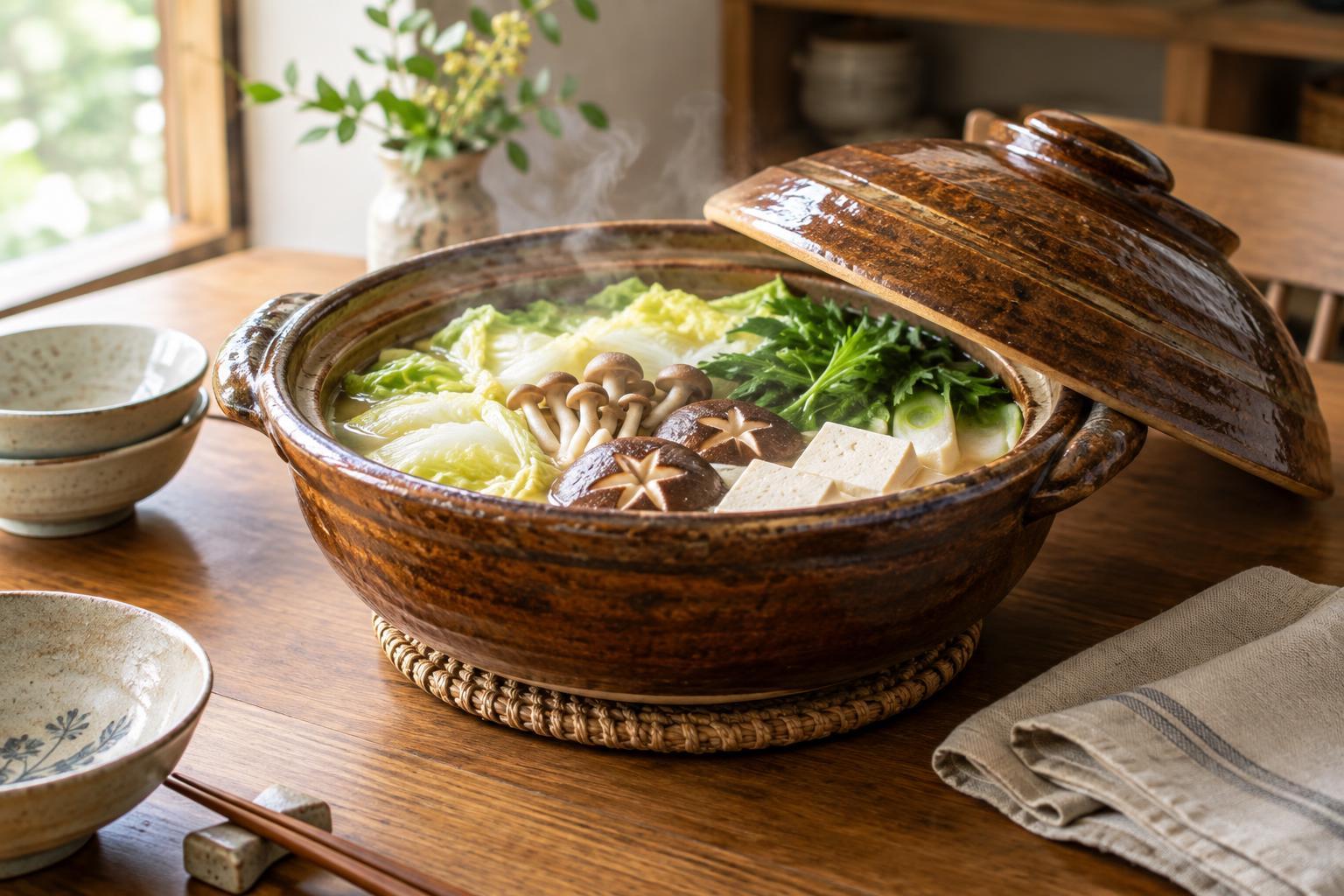
A donabe is a Japanese clay cooking pot, often fitted with a lid and designed for dishes served at the table. It is especially handy for nabemono, a broad term for hot-pot meals in which vegetables, tofu, meat, or seafood simmer in broth. Depending on its design, a donabe may also be used for rice or other gently cooked dishes. The clay holds heat, so food can continue to stay warm after the pot leaves the burner.
A donabe is not simply a ceramic version of a metal saucepan. Clay, glazes, and pot construction differ, and so do the ways individual pots tolerate heat. Before buying or using one, read the maker’s directions for your specific pot. Those directions take priority over general donabe advice, particularly for first use, burner settings, and cleaning.
Choose a pot for your stove and meals
Start with the heat source. Many traditional donabe are intended for gas flames, but that does not mean every clay pot works on every gas stove. Induction requires a pot specifically labeled as compatible; an ordinary clay base will not work just because it fits on the cooktop. Check the pot’s instructions before considering an oven, grill, or other heat source as well.
Next, think about what you want to cook and where you will serve it. A broad, shallow pot makes it easy for diners to reach ingredients in a shared hot pot. A deeper pot offers more room for broth, while a rice-focused donabe may have a different shape or lid arrangement. Choose a size that suits your usual number of diners without being awkward to lift when full. Check that the lid sits securely and that the handles give you a comfortable grip with oven mitts.
Look over a prospective pot for chips or damage, especially at the rim, base, and handles. Some handmade surfaces show small variations, so appearance alone does not always tell you whether a mark is a problem. If you are unsure about a visible crack, ask the seller or maker before heating the pot.
First use and everyday heating
Some donabe need a first-use treatment sometimes called seasoning, or medome, to help seal the clay’s tiny pores. Others arrive ready to use. There is no single treatment that suits every donabe: follow the instructions supplied with yours rather than applying a rice-water method by default.
For everyday cooking, avoid abrupt temperature changes. Begin with the contents and heat level recommended for your pot, and increase heat gradually if needed. Do not heat an empty donabe unless its maker expressly says that is safe. Before placing it on a burner, check that the outside of the base is dry; water trapped against the hot base may stress the clay. Keep the flame beneath the pot rather than letting it climb the sides, if your stove allows that control.
When cooking ends, set the hot pot on a dry, heat-safe trivet, not a wet counter or cold surface. Use dry, sturdy mitts for the handles, and protect your table from heat. Let the pot cool before washing it or adding cold water to it. These habits cannot guarantee that a clay pot will never crack, but they avoid common sources of thermal shock.
Wash, dry, and store it with care
Wash the cooled donabe according to the maker’s guidance. For many pots, gentle hand-washing with a soft sponge is preferable to abrasive scrubbing or a dishwasher. If food sticks, soaking briefly in warm water may loosen it, provided the instructions permit soaking. Avoid leaving an absorbent clay pot in water longer than necessary, and rinse away any detergent thoroughly so it does not linger in porous areas.
Drying matters as much as washing. Wipe the pot, then leave it uncovered in a well-ventilated spot until the body, base, and lid are fully dry. Storing a damp donabe with its lid closed can encourage odors or mold. Once dry, keep it where it will not be knocked against heavier cookware; a cloth or paper layer can help protect surfaces if you need to stack items nearby.
Know when to stop using a damaged pot
A crack is not always easy to judge by sight. Some glazed pots have fine surface lines, while a crack through the body can allow liquid to seep out or widen during heating. If you notice a new line, leakage, a chipped handle, or an unusual sound followed by visible damage, stop cooking and let the pot cool safely. Consult the maker’s guidance or a knowledgeable seller before using it again.
Do not rely on household glue to make a leaking cooking pot safe for direct heat or food contact. Replacing a damaged pot may be disappointing, but it is preferable to having hot broth escape while cooking or carrying it. With a suitable pot and steady care, donabe cooking can remain a simple part of everyday meals rather than a delicate ritual.