Why keep dried shiitake in the pantry?
Dried shiitake are fresh shiitake mushrooms that have had most of their moisture removed. They keep well in a sealed container and give cooks two useful ingredients: the softened mushrooms and the liquid left after soaking them. That liquid has a savory flavor and can become part of a soup or simmering broth. Dried shiitake taste more concentrated than fresh ones, so even a few can contribute a great deal to a dish.
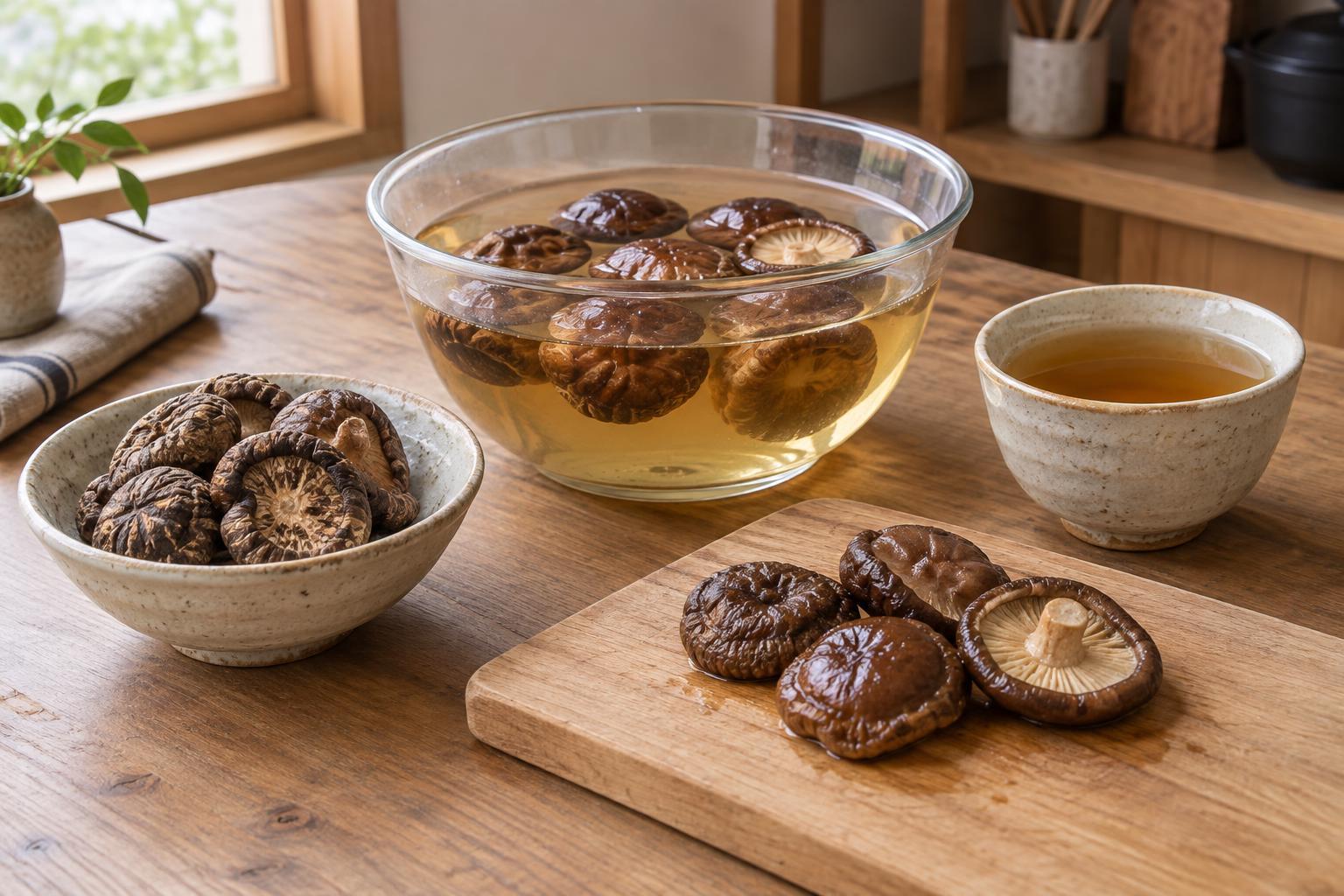
You may see thick, rounded caps sold as donko and thinner, more open caps sold as koshin. Either kind works for home cooking. Thicker caps have a substantial bite and generally need longer to soften; thinner caps are convenient when you plan to slice the mushrooms. Choose mushrooms that smell pleasantly earthy, and store them airtight in a cool, dry place. If they develop an off smell or visible mold, discard them.
A gentle cold-water soak
Put the dried mushrooms in a bowl or container and add enough cold water to cover them generously. They will expand as they absorb water, so give them room. A small plate set on top can keep floating caps submerged. Cover the container and refrigerate it until the mushrooms feel flexible throughout. Thin caps may soften in a few hours, while thick ones can benefit from an overnight soak. The texture matters more than the clock: if the center still feels firm and dry, let them soak longer.
Lift the mushrooms out rather than pouring the entire bowl over them; any grit can then settle at the bottom. Gently squeeze excess liquid from the caps. Trim away the tough stems before slicing or cooking the caps. You can add the stems to a broth for flavor, but they often remain too woody to enjoy as a vegetable.
If you need the mushrooms sooner, use warm—not boiling—water and check them as they soften. This is convenient, though a slow cold soak is an easy way to get evenly hydrated caps. Refrigerate mushrooms and soaking liquid during a long soak rather than leaving them on the counter overnight.
Save the soaking liquid
Before using the soaking liquid, pour it slowly through a fine sieve or a strainer lined with a clean cloth or paper filter. Stop before the last gritty spoonful at the bottom of the bowl. Taste the strained liquid: its strength varies with the mushrooms and the amount of water used. If it seems strong, dilute it; if mild, use it in place of some of the water called for in your dish.
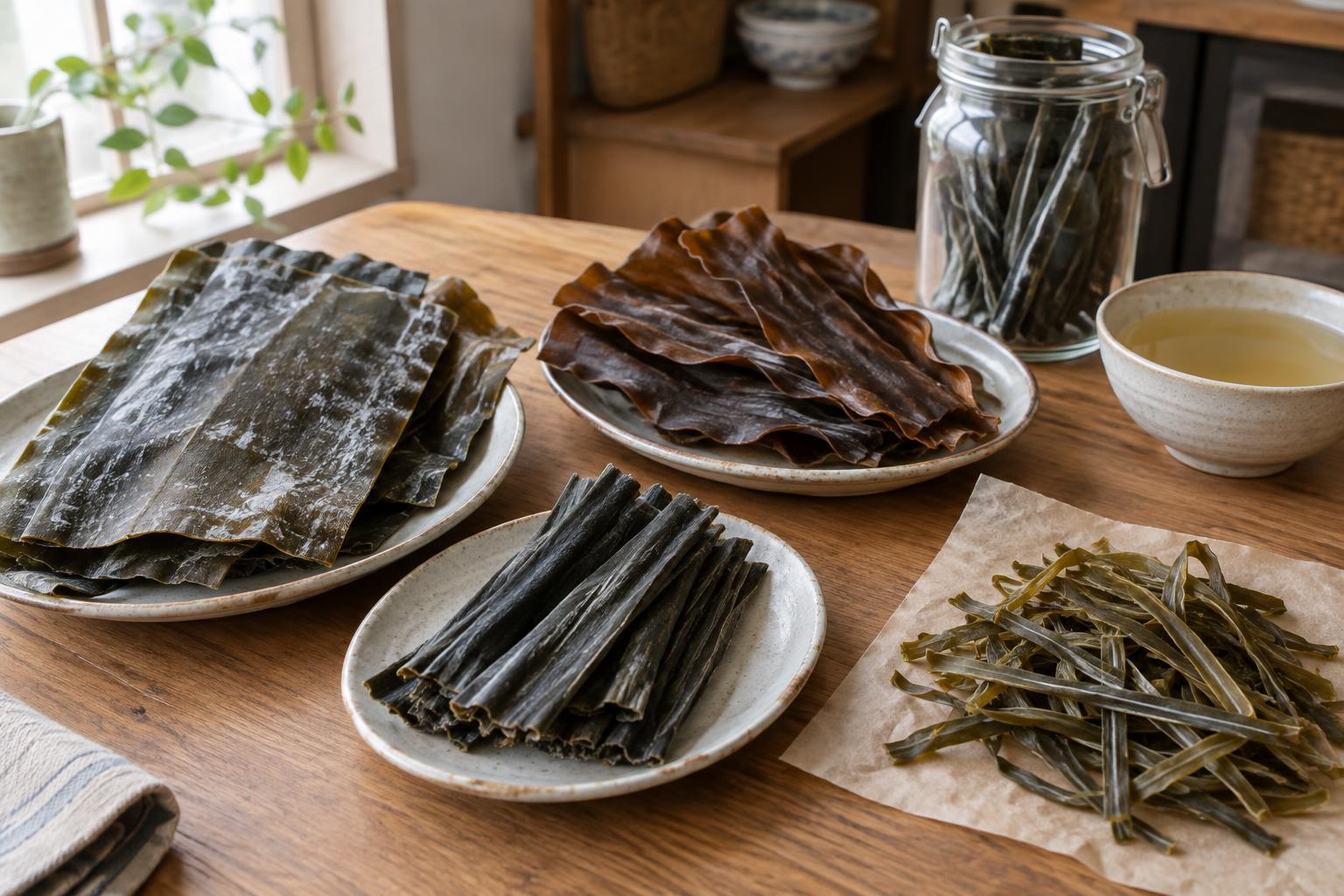
In Japanese home cooking, shiitake soaking liquid can contribute to dashi, the broth used as a foundation for many dishes. It is especially handy in a vegetable-based dashi, sometimes alongside kombu, the dried kelp. It also works as part of the liquid for simmered vegetables, noodle broth, or rice. Because it already has a distinct mushroom flavor, add seasonings gradually and taste before serving.
Cook the softened mushrooms
Rehydrating changes the mushrooms’ texture, but it is not the final cooking step. Slice or quarter the softened caps and cook them as the dish requires, until they are tender and heated through. For a simple simmered side dish, cook sliced shiitake with a little of their strained soaking liquid, soy sauce, and a small amount of sugar or mirin. Let the liquid reduce until the mushrooms are seasoned to your liking. You can serve them warm or let them cool before adding them to a meal.
For mixed rice, chop the caps into small pieces and cook them with the rice and other ingredients, using some strained soaking liquid as part of the measured cooking liquid. The pieces also fit into soups, noodle dishes, and stir-fries. In a quick stir-fry, give thicker slices enough time to become tender before adding delicate vegetables that cook rapidly.
Make the most of a small batch
You do not need to soak a whole package at once. Start with the number of mushrooms your dish needs, plus enough water to cover them. If you have extra softened caps, refrigerate them promptly in a covered container and use them within a few days, or freeze them in portions with some strained soaking liquid. Freezing the liquid separately in small portions makes it easy to add a little mushroom flavor to a future soup.
The basic routine is simple: soak until flexible, lift out the caps, strain the liquid, trim the stems, and cook the mushrooms. Once you are familiar with their flavor, dried shiitake become an adaptable pantry ingredient rather than one reserved for a special recipe.