What is katsuobushi?
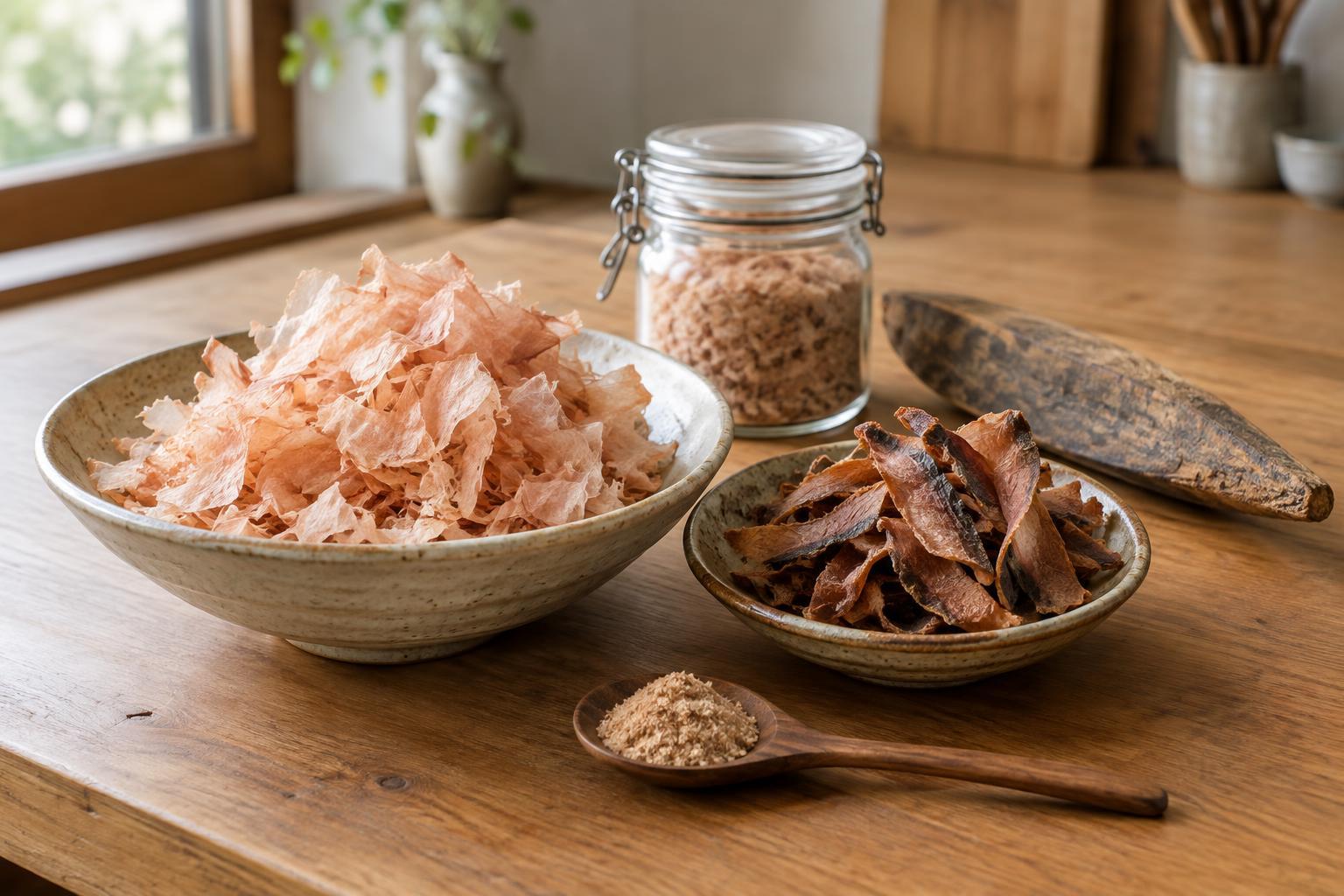
Katsuobushi is preserved skipjack tuna, usually shaved into pieces for cooking. Making it involves cooking, drying, and smoking the fish; some varieties also undergo a longer mold-curing process. The finished product is firm, concentrated, and valued for its savory flavor. In an everyday kitchen, you are most likely to encounter it already shaved and packed in a bag.
You may see several related words on packages. Kezuribushi broadly means shaved fish, while katsuobushi identifies skipjack as the fish used. Hanakatsuo often refers to the broad, delicate flakes that curl like petals. Terminology and package descriptions can vary, so the most useful clues are the shape and thickness of the contents, along with any suggested use on the label.
Thin flakes, thick shavings, and powder
Thin flakes are the most flexible choice for a first purchase. They soften quickly when added to a hot dish and can be sprinkled straight onto tofu, rice, noodles, or vegetables. Their light texture also makes them suitable for a quick dashi, the savory cooking liquid used in many Japanese dishes. If you want one package for both toppings and stock, start here.
Thicker shavings, sometimes labeled atsukezuri, are better suited to simmering. They release flavor more gradually and are easier to strain from a stock after cooking. They are less convenient as a final garnish because they remain fairly firm. Fine shavings or powder can be stirred into dressings, rice, or mixtures for savory pancakes, though they disperse differently from airy flakes. Choose the cut based on what you plan to do with it rather than assuming one is better than another.
How to use katsuobushi at home
For a simple topping, add a small pinch of thin flakes just before serving. Their flavor is noticeable on mild foods such as chilled tofu or blanched greens, especially with a little soy sauce. Warm, moist food makes the flakes move and soften; this is a normal effect of their thinness, not a sign that anything is wrong.
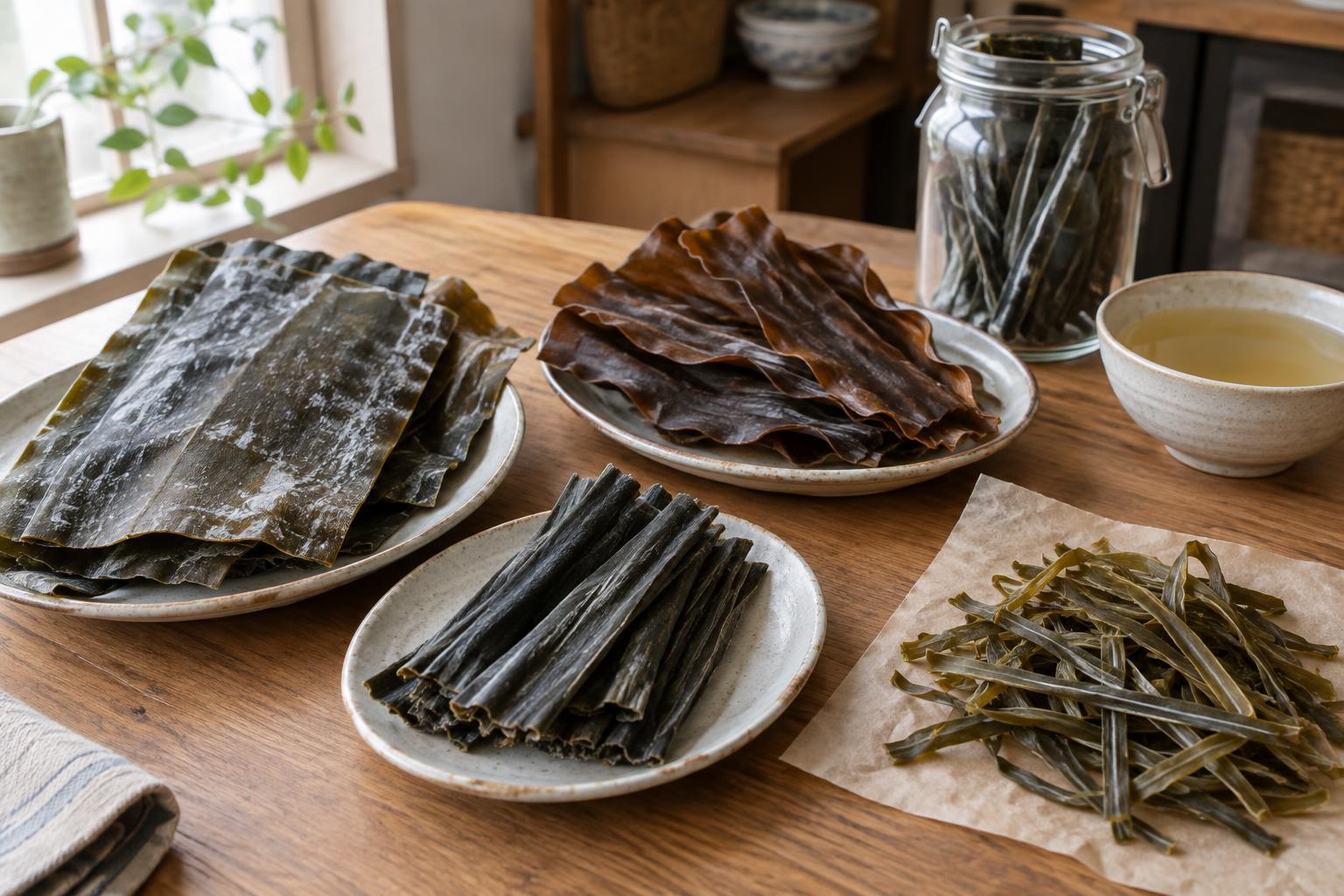
For a basic dashi, steep thin flakes briefly in hot water and strain them out. Kombu, a type of kelp, is often used alongside katsuobushi for a fuller stock, but the two ingredients can also be used separately. Avoid pressing the strained flakes hard if you want a clearer-tasting liquid. Thick shavings generally need more time in hot water to give up their flavor, so follow the package directions when switching between cuts.
You can also use a modest amount of katsuobushi to finish cooked vegetables or season a rice mixture. Begin with less than you think you need: its smoky, savory character can become dominant in a lightly seasoned dish. Taste before adding extra salt or soy sauce, particularly when katsuobushi is one of several flavorful ingredients.
Storage that protects flavor and texture
Keep an unopened package according to its label, away from heat and moisture. After opening, press out excess air, seal the package tightly, and store it as directed by the maker. If the bag cannot be resealed well, transfer the contents to a clean, airtight container. A cool refrigerator can be useful for an opened bag, while freezing well-wrapped portions is an option if you use katsuobushi only occasionally.
Moisture is the main thing to avoid when handling the flakes. Use a dry spoon or clean, dry hands, and close the container promptly. If you freeze a portion, let its sealed container come toward room temperature before opening it; this helps keep condensation off the contents. Follow any use-by guidance on the package, and discard the flakes if they develop an unusual odor, visible mold, or signs of dampness.
Buying an amount you will actually use
Small packets are handy when you mainly want a garnish: each can be opened close to serving time, leaving the rest protected. A larger bag may make sense if you prepare dashi regularly, provided you can seal and store it carefully. Check the ingredient list if you want plain shaved fish, since some ready-to-use products are seasoned or blended with other ingredients.
Whole katsuobushi blocks can be shaved at home with a dedicated tool, giving you control over the cut, but they are not necessary for everyday cooking. Pre-shaved flakes offer an approachable starting point. Once you know whether you reach for katsuobushi more often as a topping or a stock ingredient, choosing a cut and package size becomes much simpler.