What the name on the package tells you
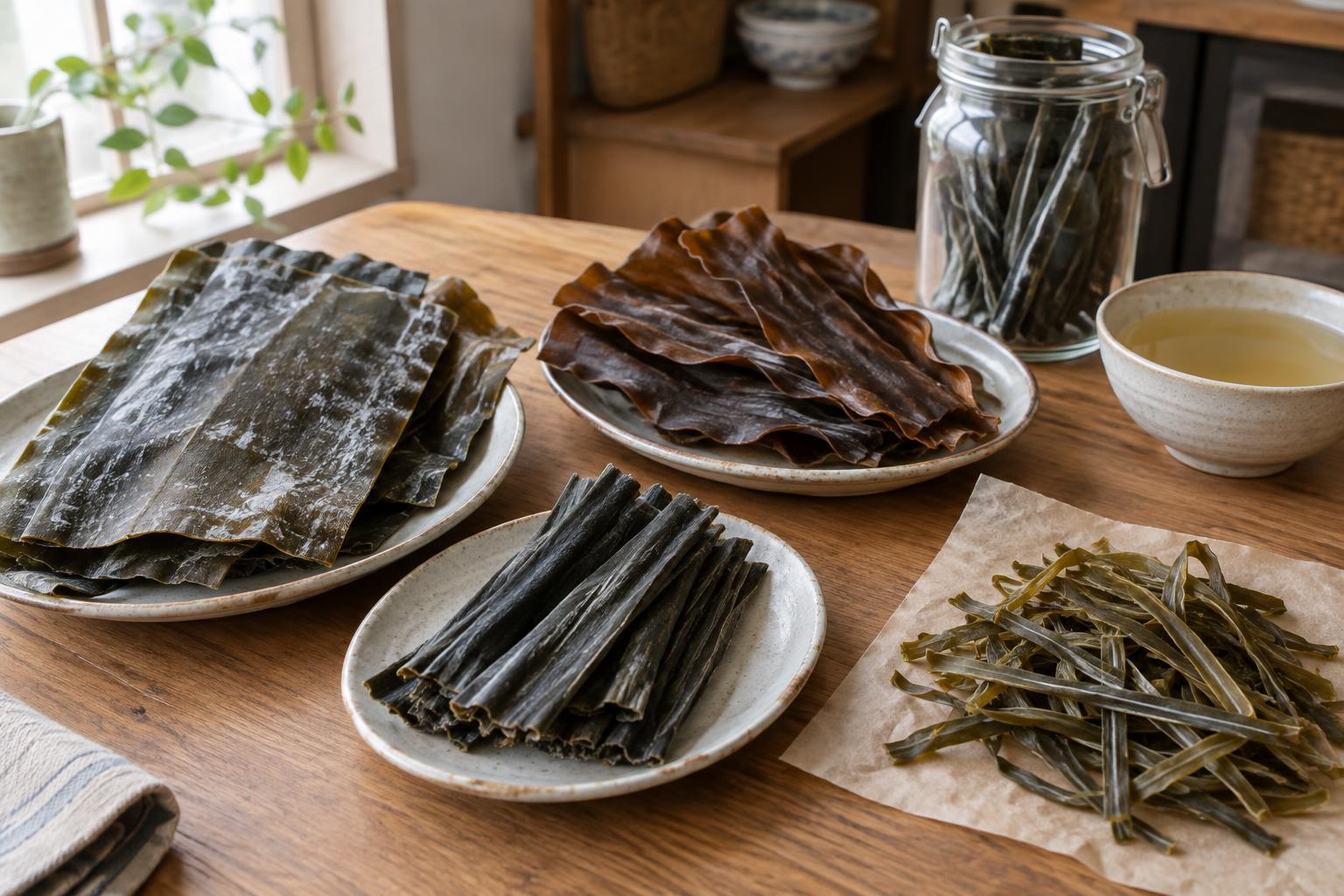
Kombu is dried kelp used in Japanese cooking, most often to give dashi its savory depth. It can also be cooked with beans, rice or vegetables, or simmered until tender as part of a dish. Although any package labeled kombu may seem interchangeable, different varieties can produce noticeably different broths and textures.
Names such as Ma, Rishiri, Rausu and Hidaka help describe what you are buying, but they are starting points rather than guarantees. The cut, thickness and condition of the kelp also affect the result. If a shop carries only one kind, you can still make useful dashi with it. The best pantry choice is one that suits the food you cook regularly.
Four varieties worth recognizing
Ma kombu is a versatile choice for dashi. It generally gives a balanced, rounded flavor and a relatively clear broth, making it useful when you want the kombu to support other ingredients without dominating them. If you are buying a single variety primarily for soups and cooking liquid, Ma kombu is a sensible place to start.
Rishiri kombu is often chosen for a delicate, clean-tasting dashi. It suits dishes where you want to notice the broth itself, such as a simple clear soup. Rausu kombu tends to make a fuller, more assertive broth, sometimes with a darker or less transparent appearance. It can be appealing when a rich kelp flavor is the goal.
Hidaka kombu is a practical option if you want to eat the kelp as well as make stock with it. It typically softens more readily than some thicker dashi-focused varieties, so it works well in simmered preparations. You can also use it for everyday broth; the distinction is about what each variety tends to do well, not a rule that limits how it can be cooked.
Choose for the meals you make
For a first purchase, think about whether you mainly want a clear cooking liquid or a kelp you can add to the finished dish. Ma or Rishiri kombu is a useful choice for a lighter dashi; Rausu is worth trying if you prefer a stronger kelp presence. For simmering and eating, consider Hidaka. A package simply labeled “kombu for dashi” is also reasonable when the variety is not specified.
Whole sheets are easy to portion as needed, while precut pieces are convenient for a small pot of broth. Look for kelp that feels dry and has no damp or musty smell. A pale, powdery coating can be a normal part of dried kombu and contributes flavor, so there is no need to scrub it away. If a package shows signs of moisture or visible fuzzy growth, choose another.
Make a simple broth before comparing flavors
To get to know a new kombu, put a piece in cool water and let it soak until it has softened and the water has taken on some flavor. A short soak can be useful, while an overnight soak in the refrigerator is convenient for planning ahead. Heat the water gradually if you want a warm dashi. Many cooks remove the kombu before the water boils vigorously to keep the broth relatively clear and gentle-tasting.
Taste the broth before adding soy sauce, miso or other seasonings. Its flavor may be subtle on its own, but it provides a savory base that becomes more apparent in a finished dish. When comparing two varieties, use similar amounts of kelp and water and the same soaking method. That makes their differences easier to notice without treating any one result as the only correct version of dashi.
The used kombu need not go straight into the bin. If it is tender enough, slice it finely and add it to a simmered dish or cook it further until it reaches a texture you enjoy. Thicker pieces may need more time than thin ones.
Keep your pantry choice simple
Store dried kombu tightly wrapped or in a sealed container in a cool, dry place, away from steam near the stove. Take out only what you need and use dry hands or utensils so moisture does not reach the rest of the package. As with other concentrated ingredients, a little kombu can go a long way; adding more is not always the best route to a better broth.
You do not need to collect every variety. Start with one package, learn how it behaves in your usual soups or simmered dishes, and try another when you want a different flavor or texture. That small comparison will tell you more about your own pantry needs than a ranking of which kombu is supposedly best.