Start with texture, not just the label
Tofu is made by coagulating soy milk and gathering the resulting curds into a block. How those curds are set, pressed, and packaged affects the tofu’s texture. That texture matters in Japanese home cooking: a tender piece that feels lovely in a chilled dish may break apart if you try to flip it in a pan.
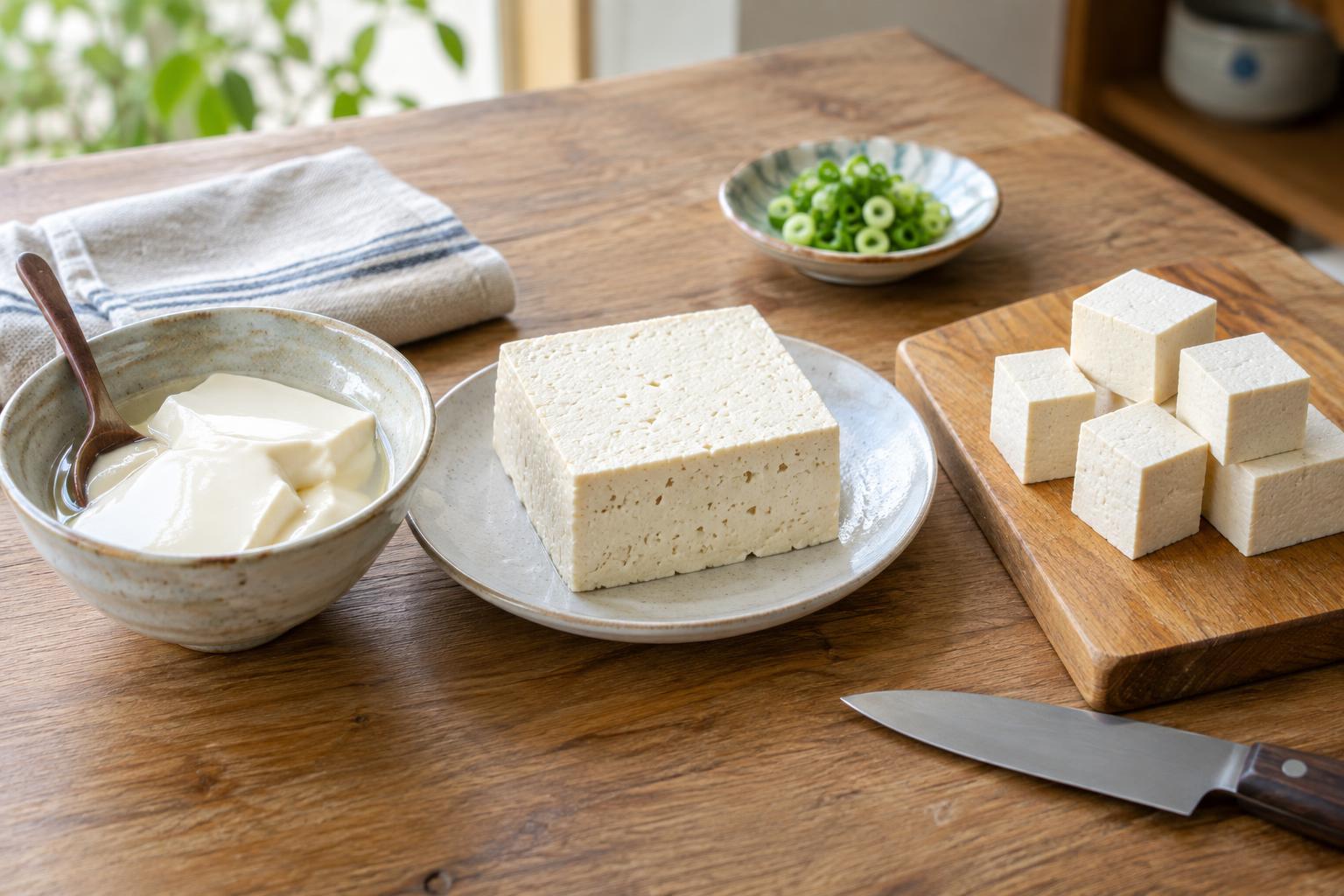
Two useful Japanese terms are kinugoshi-dofu and momen-dofu. Kinugoshi, often translated as “silken tofu,” has a smooth, delicate texture. Momen, often translated as “firm tofu,” is typically pressed and has a more open, slightly grainier structure. The words refer to familiar styles, but English-language package labels do not always line up perfectly with them. When in doubt, consider both the label and the dish you plan to make.
Silken tofu: gentle dishes and smooth textures
Silken tofu is a natural choice when you want tofu to feel soft and creamy. Serve it chilled as hiyayakko with a little soy sauce, grated ginger, and sliced scallion, or slip pieces into miso soup near the end of cooking. It also suits light broths and simple simmered dishes where the pieces will not need much stirring. For a softer result, cut it into generous cubes rather than tiny ones.
Handle silken tofu with a broad spoon or spatula, and let it slide from its container onto a plate before cutting. If a recipe asks you to drain it, a brief rest in a sieve is gentler than pressing it under a weight. Some stores sell both soft and firm varieties of silken tofu; even the firmer kind may remain smoother and more fragile than pressed momen tofu.
Firm tofu: the adaptable everyday choice
Firm tofu is useful when pieces need to hold their shape through moderate handling. It works well in a simmered pot, a stir-fry with vegetables, or a lightly browned tofu dish. Momen tofu’s structure can give a dish a pleasant contrast: the exterior takes on seasoning while the inside remains tender. It is also a good starting point when a recipe simply says “tofu” but involves moving the pieces around in a pan.
For pan-frying, drain firm tofu and pat its surface dry. A short rest on a clean towel can remove excess surface moisture without making the tofu overly dense. Add it to a heated, lightly oiled pan and give the first side time to brown before turning. If you are making a soup, you can usually skip that preparation and add the tofu directly; vigorous boiling or stirring is more likely to break it than the broth itself.
Extra-firm tofu: useful, but not always interchangeable
Extra-firm tofu is common in many English-language grocery stores. It generally contains less free moisture and stands up well to slicing, pressing, and browning. Use it when you want neat cubes for a quick skillet meal or slices with a pronounced browned surface. Its sturdiness can be convenient, especially if you are new to handling tofu.
That strength comes with a trade-off. Extra-firm tofu may seem chewy or dry in a dish intended to showcase tofu’s softness, such as hiyayakko or a delicate soup. It is not a direct substitute for kinugoshi, and it can feel firmer than the momen tofu a Japanese recipe expects. If extra-firm is all you have, cut it smaller for a simmered dish and avoid extended cooking; for a chilled dish, choose a softer tofu if you can.
A simple way to choose and prepare a block
Before shopping, picture what the tofu will do in the finished dish. Will it be eaten with a spoon and little else? Choose silken. Will it be stirred, simmered, or gently fried? Start with firm. Will it be turned repeatedly or browned as slices? Extra-firm can make that easier. These are guides rather than rules: brands vary, and you may find that one maker’s firm tofu feels much softer than another’s.
Drain tofu according to the dish, not by habit. Surface-dry tofu browns more readily, while tofu for soup or chilled serving rarely needs pressing. For seasoning, pair the texture with a suitable approach: a spoonful of sauce on silken tofu, a seasoned broth around firm tofu, or a glaze on browned extra-firm pieces. Follow the package directions for storage, keep opened tofu refrigerated, and use it within the time recommended by the maker. The best choice is the one that gives you the texture you want at the table.