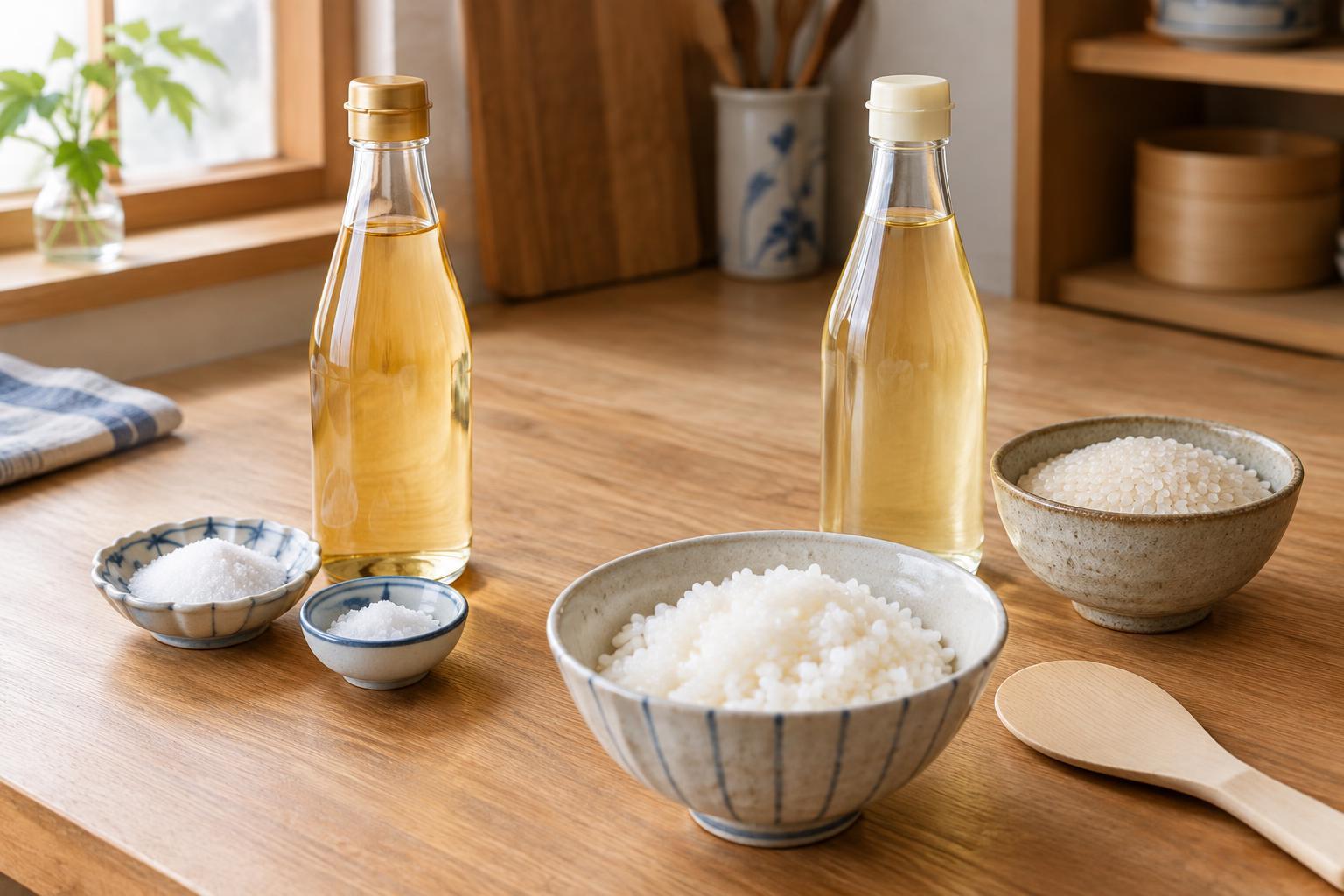
Start with the product name, not the front-label promise
Mirin brings sweetness to many Japanese home-cooked dishes, including simmered vegetables, fish preparations and sauces. Yet a bottle marked “mirin” may contain traditional hon mirin or a seasoning designed to taste similar. Both can be useful. The distinction matters because their alcohol, sweetness and salt levels can affect how a dish turns out.
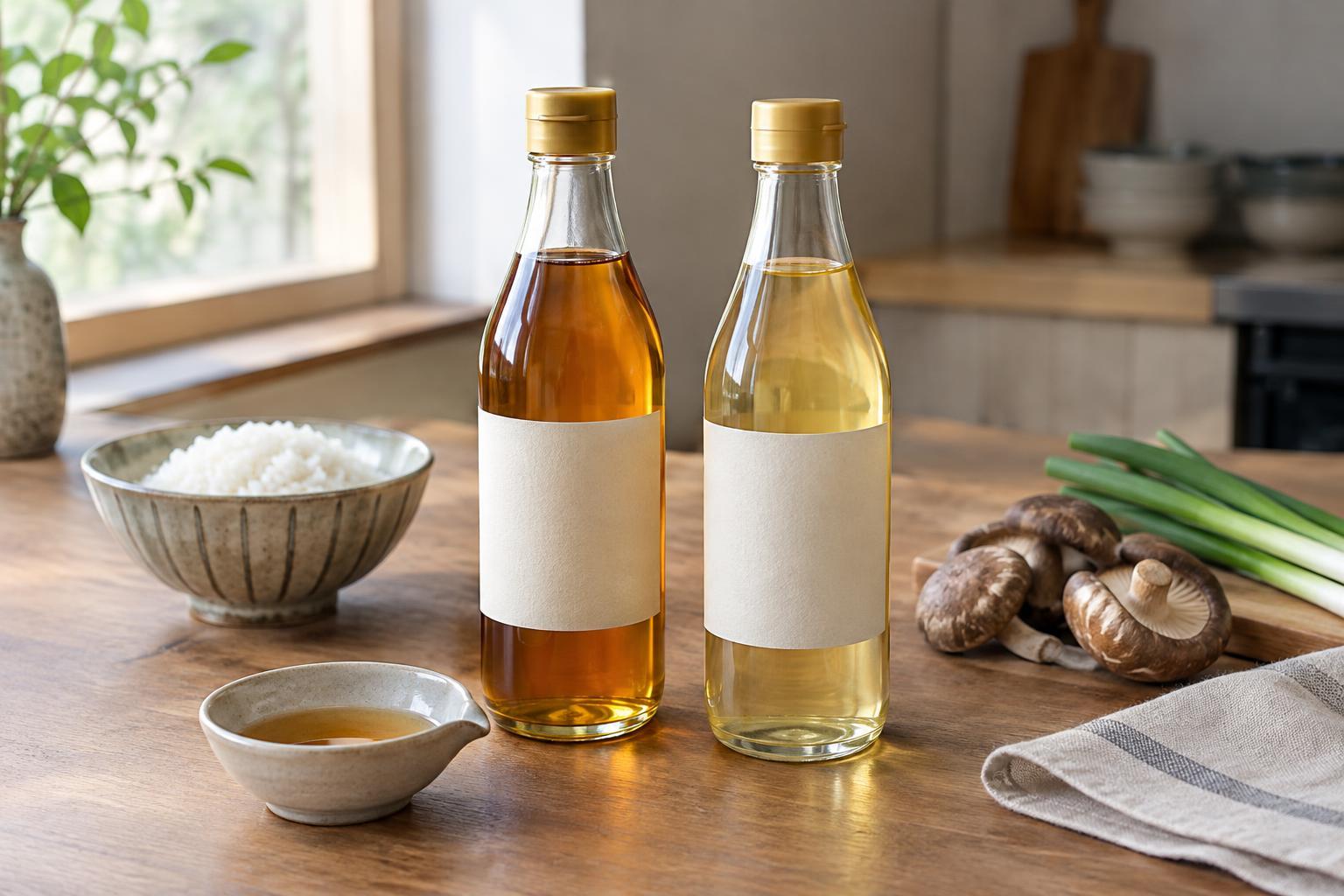
Look for “hon mirin,” sometimes written 本みりん, in the product name. It is made with glutinous rice, rice koji and alcohol, and is typically matured to develop its flavor. “Mirin-style seasoning,” often labeled みりん風調味料 or mirin-fu chōmiryō, is formulated to provide a mirin-like sweetness and flavor with little alcohol. Naming and labeling conventions vary by market, so treat the name as a starting point rather than the whole answer.
Read the ingredients, alcohol content and salt
On a bottle of hon mirin, expect to see rice-related ingredients and an alcohol source. The details vary by maker, so the ingredient list is more useful than assuming every bottle follows one recipe. On a mirin-style seasoning, you may instead find sugars or syrups, acidulants and flavoring ingredients. Those additions do not automatically make it a poor choice; they tell you how the seasoning was built and help you anticipate its taste.
Next, check the alcohol content. Hon mirin generally has substantial alcohol, while mirin-style seasoning generally has very little. If avoiding alcohol matters to you, do not rely on a general rule or assume cooking removes it all. Read the specific bottle and choose a product that fits your needs.
Finally, look for salt in the ingredients or nutrition panel. Some mirin-related cooking seasonings contain added salt. Products labeled “fermented seasoning,” 発酵調味料, or “shio mirin,” 塩みりん, may be different from both hon mirin and a low-alcohol mirin-style seasoning. If a sauce already includes soy sauce or miso, an unexpectedly salty mirin substitute can make the finished dish harder to balance.
Choose according to the dish
Hon mirin is a good choice when a recipe calls for mirin and you want its characteristic balance of sweetness and depth. It works particularly well in simmering liquids and sauces that cook long enough for their flavors to come together. Mirin-style seasoning can be a convenient alternative for everyday cooking, especially when the goal is straightforward sweetness rather than a close match to hon mirin’s flavor.
Neither bottle is simply a spoon-for-spoon source of sugar. Their sweetness can differ, and a mirin-style product may contain salt or have a sharper taste. If you are making a small batch of teriyaki-style sauce or seasoning vegetables, start with the recipe’s suggested amount, taste when it is safe to do so, and adjust the other seasonings gradually. Add soy sauce last if you are unsure whether the mirin product contains salt.
Substitute with small adjustments
When replacing hon mirin with mirin-style seasoning, use a similar amount as a first test, then taste the cooked dish before adding more sweetness. If the substitute contains salt, consider reducing other salty ingredients slightly. For a sauce that will reduce in the pan, begin cautiously: both sweetness and salt become more noticeable as liquid evaporates.
If a recipe calls for mirin-style seasoning and you have hon mirin, you can usually begin with the same amount in a cooked dish. You may need a little more sweetness, but wait until you taste the result before adding sugar. For an uncooked dressing or dipping sauce, remember that hon mirin contributes alcohol; choose a suitable low-alcohol product if that distinction matters for the people eating it.
The most reliable habit is simple: read beyond the large word “mirin.” Identify the product type, scan the ingredients, and check alcohol and salt before deciding how much to use. After cooking with a bottle once or twice, a brief note on how it tastes in your usual dishes can make the next shopping trip much easier.