Color is a clue, not a complete guide
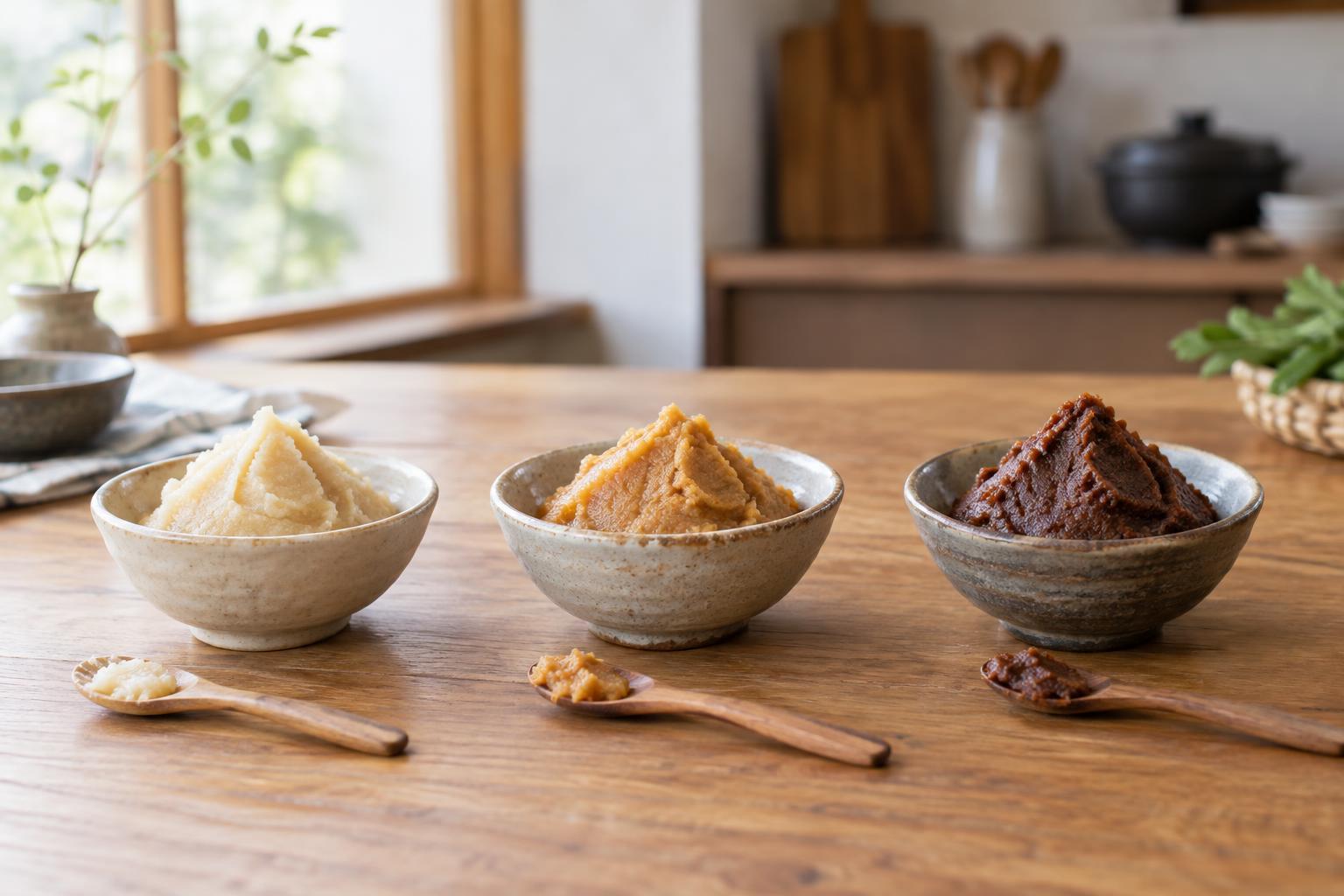
Miso is a fermented paste commonly made from soybeans, salt, and koji, a culture grown on a grain such as rice or barley. The proportions of those ingredients, along with fermentation time and other production choices, shape the finished paste. In shops, miso is often described as white, yellow, or red. These color names can help you decide where to start, but they are broad descriptions rather than fixed recipes.
A lighter miso often tastes gentler, while a darker one may have a more pronounced fermented flavor. Saltiness is less predictable. A white miso can taste sweet without being low in salt, and two red misos can differ noticeably from each other. When salt matters to your cooking, check the package information and taste a small amount rather than relying on color alone.
White miso: mild and often sweet
White miso, or shiro miso, is usually light beige to pale yellow. Many versions have a relatively soft, rounded flavor and a noticeable sweetness, making them easy to use in dressings, sauces, and gentle soups. That sweetness may come partly from the balance of koji and soybeans; it does not mean every white miso contains added sugar.
White miso works well when you want miso flavor without making it the dominant note. Try whisking a little into a dressing with rice vinegar, thinning it with warm water for a sauce, or adding it to a soup with mild vegetables. Because brands vary, begin with less than you think you need. Taste before adding extra salt, soy sauce, or other salty seasonings.
Yellow miso: a flexible middle ground
Yellow miso is a broad label for pastes that fall between pale and dark red in color. Some are sold as shinshu miso, though names and styles do not map neatly onto one universal flavor scale. Yellow miso often offers a balance of savory depth and mild sweetness. Its flavor may be more noticeable than that of a delicate white miso without being as assertive as some red varieties.
For a first tub to keep in the refrigerator, a medium-flavored yellow miso can be a practical choice. It can season a simple miso soup, a vegetable glaze, or a marinade for tofu. If a recipe does not specify a type, yellow miso is often a reasonable starting point. The result may still need adjusting, especially when the recipe was developed with a sweeter or saltier paste.
Red miso: deeper flavor, but not a fixed salt level
Red miso, or aka miso, ranges from reddish brown to deep brown. It often brings a stronger savory character and a less overtly sweet impression than lighter miso. Depending on the paste, you might notice a roasted or earthy quality. Its fuller taste can stand up to mushrooms, hearty vegetables, and richer broths.
Red miso is frequently described as saltier than white miso. That may match your experience with particular products, but it is not a dependable rule for every tub. Strong flavor can also make a paste seem more intense even when salt is not the only reason. Use a small amount at first, then adjust after the miso has been mixed thoroughly into the dish.
Choosing and cooking with miso
To compare misos, look beyond the color on the front label. The ingredient list can tell you whether the koji was made with rice or barley, and the nutrition panel can help you compare sodium across products using the same serving size. At home, taste each paste diluted in a little warm water. This makes it easier to judge its sweetness, saltiness, and depth than tasting a concentrated dab straight from the container.
You can usually substitute one color for another, but expect the dish to change. A red miso may make a delicate sauce taste heavier; a sweet white miso may make a robust stew taste softer. Start with a modest quantity and adjust gradually. For soup, dissolve miso in a ladleful of warm broth before stirring it into the pot. Adding it near the end and avoiding a hard boil can help preserve its aroma.
There is no single best color for every meal. White, yellow, and red miso are useful starting categories, while the taste of the particular paste is your most reliable guide. Once you know what is in your tub, you can season with more confidence and make small adjustments that suit the rest of the ingredients.