What the two bottles contain
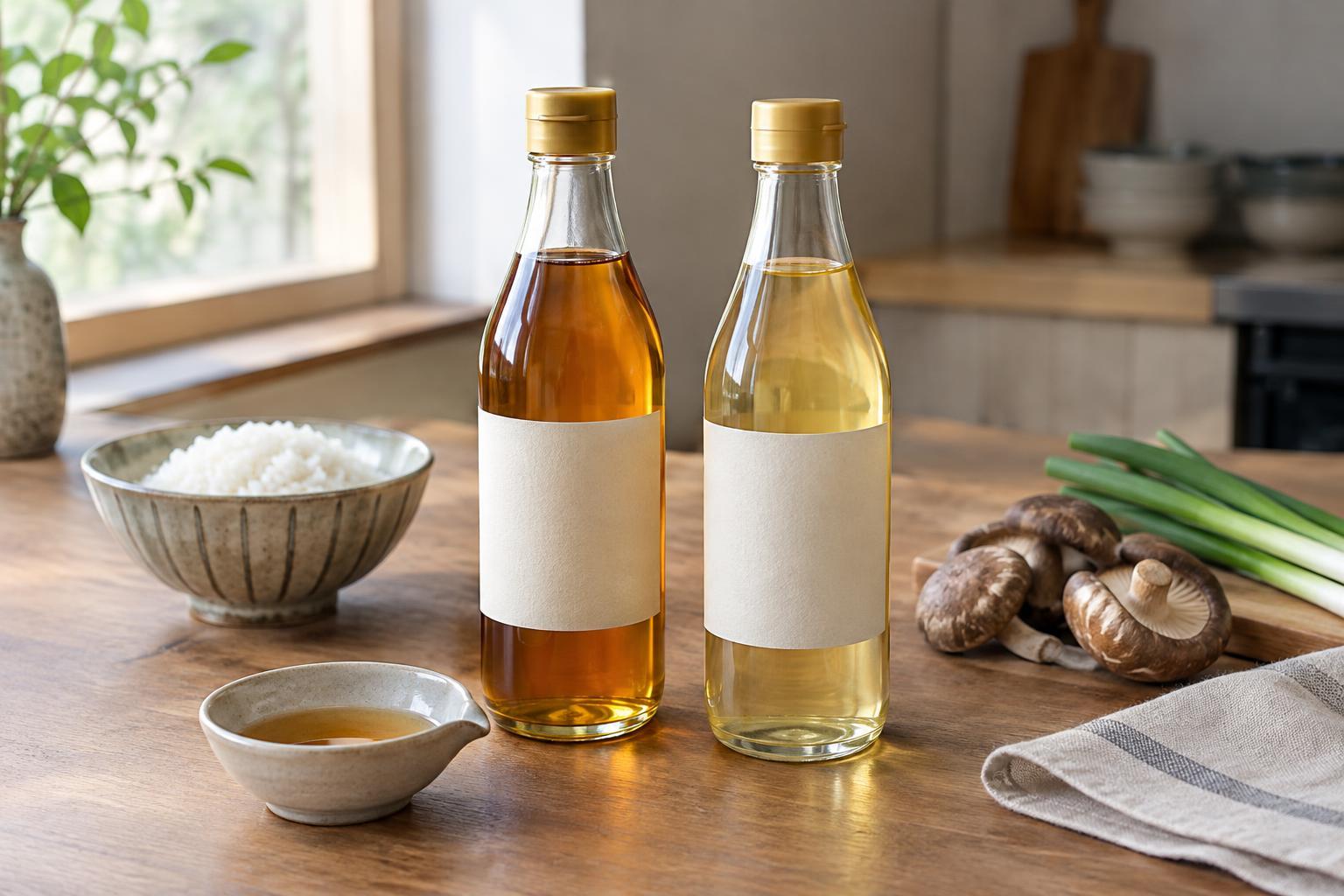
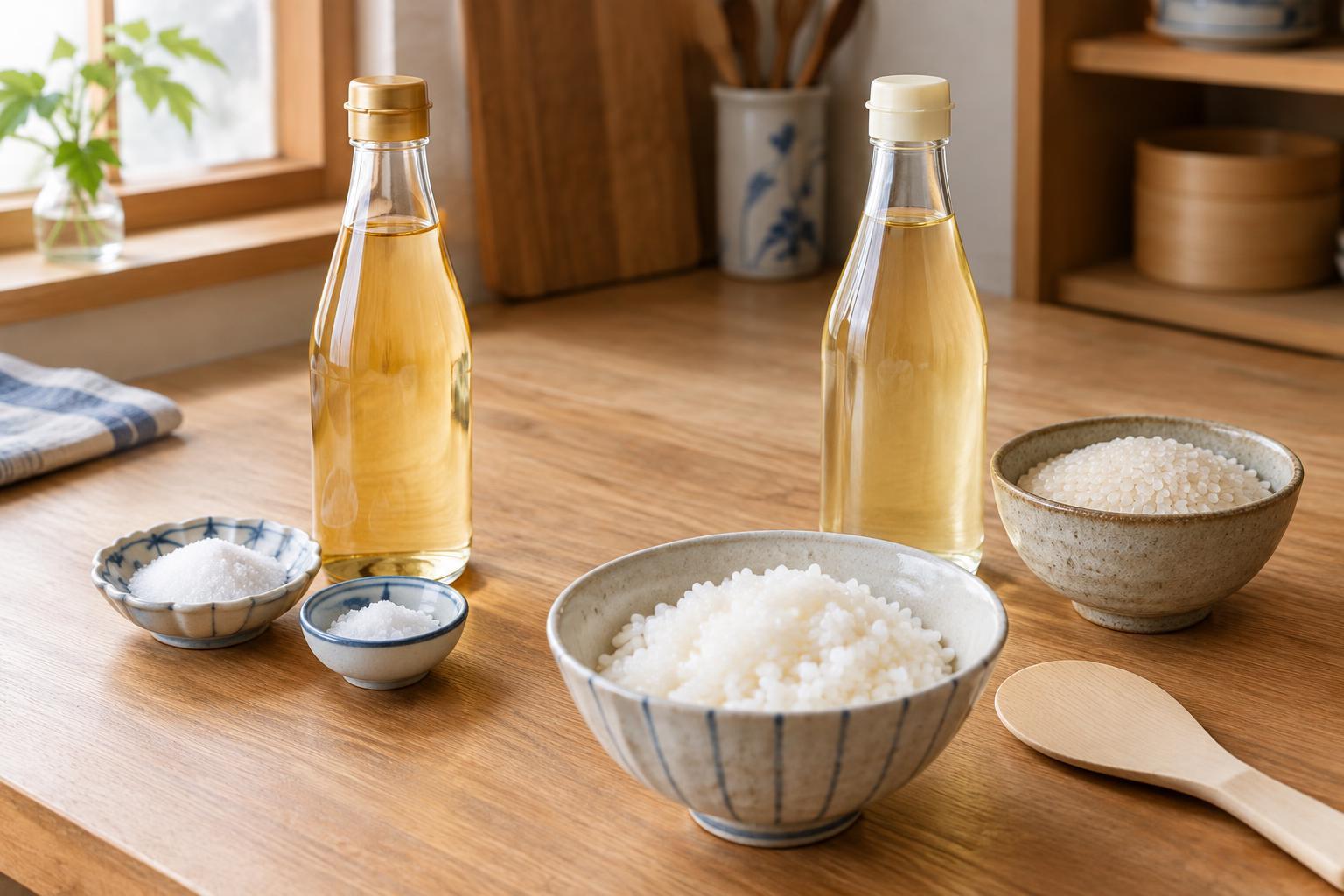
Unseasoned rice vinegar is the simpler ingredient: a vinegar made from rice, with a mild-tasting acidity that works in many Japanese dishes. It is sometimes labeled “rice vinegar” or “rice wine vinegar.” The word “unseasoned” matters when you need to control a dish’s sweetness and saltiness yourself.
Seasoned rice vinegar has sugar and salt added. It is designed to make tasks such as seasoning sushi rice convenient, but the exact balance can vary between products. A bottle labeled “sushi vinegar” may also be seasoned. Rather than relying on the name alone, check the ingredients and taste a small amount if you are unsure. Both types are acidic; “seasoned” does not mean less vinegar, only that other flavors have been added.
Why the distinction matters in a recipe
Japanese home cooking often balances sourness with sweetness, saltiness and savory flavors. In a cucumber salad, for example, vinegar provides a bright contrast to the vegetable, while sugar and salt round out the dressing. If a recipe calls for unseasoned vinegar and adds those seasonings separately, using seasoned vinegar without adjustment may make the result too sweet or salty.
The reverse is also true. Unseasoned vinegar can replace seasoned vinegar, but it will not produce the same flavor on its own. This difference is especially noticeable in sushi rice, where the seasoning is mixed through a large quantity of plain cooked rice. Neither bottle is better for every purpose. The useful question is whether the recipe expects the vinegar to contribute only acidity or to bring sweetness and salt along with it.
Where each type is useful
Choose unseasoned rice vinegar when you want flexibility. It works well in dressings, dipping sauces and quick vegetable dishes because you can add sugar, salt, soy sauce or other ingredients to suit the food. It is also a dependable choice when following a recipe that gives separate amounts for vinegar and seasonings.
Seasoned rice vinegar is convenient for sushi rice and simple salads. A splash can dress thinly sliced cucumber or other vegetables with little additional work. It can also add brightness to a sauce, though you may need less of any other sweet or salty ingredient. For lightly pickled vegetables, either type can work if you adjust the rest of the mixture to taste. Use a tested recipe, rather than a casual substitution, for pickles intended for long-term storage.
How to substitute thoughtfully
If a recipe calls for unseasoned vinegar and you have only seasoned, begin with the stated amount of vinegar but hold back some or all of the recipe’s added sugar and salt. Taste before adding them back gradually. In a dressing or sauce, you can usually make these adjustments as you mix. With sushi rice, start with a modest amount of seasoning and fold it in gently; you can add more, but you cannot easily remove it.
If you have unseasoned vinegar but need seasoned, add a little sugar and salt, stirring until they dissolve. There is no universal ratio because bottled products and recipes differ. Aim for a pleasant balance rather than trying to match an unknown brand exactly. Make the adjustment in a small bowl first when possible, then add the mixture to your dish. Remember that soy sauce and other salty ingredients already contribute to the final flavor.
A simple way to stock your kitchen
If you keep just one bottle, unseasoned rice vinegar offers more control. You can build a sushi-rice seasoning or a sweet-sour dressing from it, yet still use it in recipes where added sugar would be unwelcome. If you make sushi rice or quick salads often, a second bottle of seasoned vinegar may save a step.
Store either bottle according to its label, keep the cap closed, and use a clean spoon when measuring. Before cooking, read the recipe and the bottle side by side. Those few seconds can prevent a common mix-up: treating a ready-seasoned ingredient as though it were plain vinegar. Once you know which role your bottle plays, it becomes much easier to make small, confident adjustments at the table or stove.