One New Year Soup, Many Family Versions
Ozoni is a soup eaten for the Japanese New Year, with mochi, or pounded rice cake, at its center. Beyond that shared feature, there is no single standard bowl. The broth may be clear or seasoned with miso; the mochi may be round or rectangular, simmered or grilled; and the other ingredients often reflect local produce and family preferences. Even two households in the same town may make ozoni differently.
That flexibility is part of what makes ozoni interesting. A family recipe can carry memories of where relatives grew up, which ingredients were available to them and how they prefer to welcome the new year. Regional descriptions are useful starting points, but they are not rules that every home follows.
Clear Broth and White Miso: Two Familiar Patterns
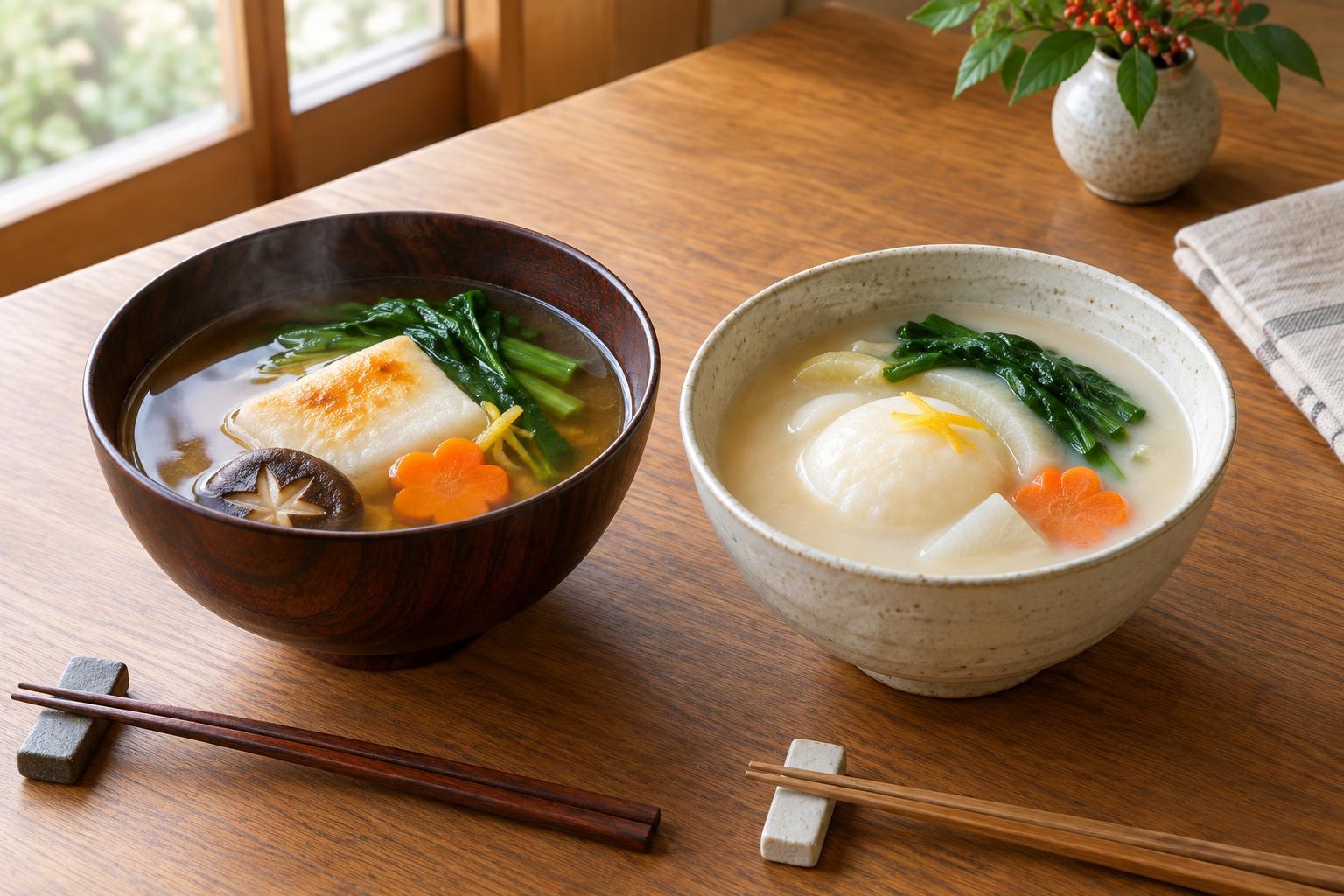
A commonly described eastern Japanese style uses a clear, soy-seasoned broth and rectangular mochi, often grilled before it goes into the bowl. Chicken, leafy greens, mushrooms or other vegetables may accompany it. Grilling gives the mochi a lightly browned surface and can add a toasted note to the soup. The exact seasoning and toppings still depend on the household.
In and around Kyoto, a well-known style uses a pale white-miso broth with round mochi. The mochi is often simmered until tender rather than grilled, and vegetables such as daikon and taro may be included. White miso gives the broth a gentle sweetness, making it taste quite different from a clear soup. These east–west examples are helpful for comparison, but Japan’s ozoni traditions extend far beyond two tidy categories.
Local Ingredients Change the Bowl
The ingredients added to ozoni can express a place as clearly as its broth does. In some coastal areas, fish or other seafood plays an important role; elsewhere, chicken and vegetables are more familiar additions. Greens, root vegetables and mushrooms bring different textures and flavors, while a finishing garnish might add color or fragrance. What feels essential in one family’s bowl may be absent from another’s.
Some variations surprise people who expect ozoni to be entirely savory. Kagawa Prefecture is known for versions made with anmochi—round mochi filled with sweet bean paste—in a white-miso soup. The contrast between sweet filling and savory broth is deliberate. In parts of Tottori Prefecture, a sweet red-bean preparation is also called ozoni. Such examples show why it is better to ask what is in a particular ozoni than to assume every version shares the same flavor.
Why Mochi Shape and Preparation Matter
Round and rectangular mochi are often used as shorthand when explaining regional ozoni, but shape is only one choice among many. Grilled mochi can hold its form at first and contribute a roasted aroma. Mochi simmered directly in soup softens throughout and may make the broth slightly cloudy. Both approaches have their appeal, and either can be adjusted to suit the soup and the cook’s preference.
The eating experience changes as well. A clear broth lets the flavor of grilled mochi stand out, while a richer miso broth coats a tender piece of mochi. Because mochi becomes stretchy and sticky when hot, it is sensible to serve manageable pieces and eat them slowly, particularly when sharing the meal with children or older adults.
A Way to Explore Ozoni at Home
To appreciate regional differences, start with one combination rather than trying to make a supposedly definitive ozoni. For a clear-broth version, use a gently seasoned dashi, cook vegetables and a protein you enjoy, then add prepared mochi shortly before serving. For a white-miso version, dissolve the miso into warm dashi without boiling it vigorously, and pair it with tender mochi and mild vegetables. These are approachable starting points, not claims to reproduce a particular family’s recipe.
When you encounter someone else’s ozoni, notice the small decisions: how the mochi was cooked, what gives the broth its flavor and which ingredient the cook considers indispensable. Those details reveal more than a simple regional label can. Ozoni is a New Year food, but it is also an everyday lesson in how a shared dish takes shape through local ingredients and household habits.