Start with the dishes you make
Ginger and scallions often appear in small amounts in home cooking. A slice of ginger can bring warmth to a simmered dish, while chopped scallions can finish a bowl of soup or rice. Freezing them in usable portions means you can take out what you need instead of preparing a whole piece or bunch each time.
Think about how you usually cook before reaching for a knife. If you add ginger to broths, save some in slices. If you use it in a quick stir-fry or a sauce, keep some grated or finely chopped. For scallions, short lengths suit simmered dishes, while thin rounds are handy for miso soup, noodles and rice bowls. A few small packages are more flexible than one large bag of mixed cuts.
Prepare and portion ginger
Choose firm ginger and wash away any soil, paying attention to the creases. Dry it well. You can leave the thin skin on if it is clean and you like using it that way, or peel it with a spoon or peeler. Trim away any damaged or soft areas.
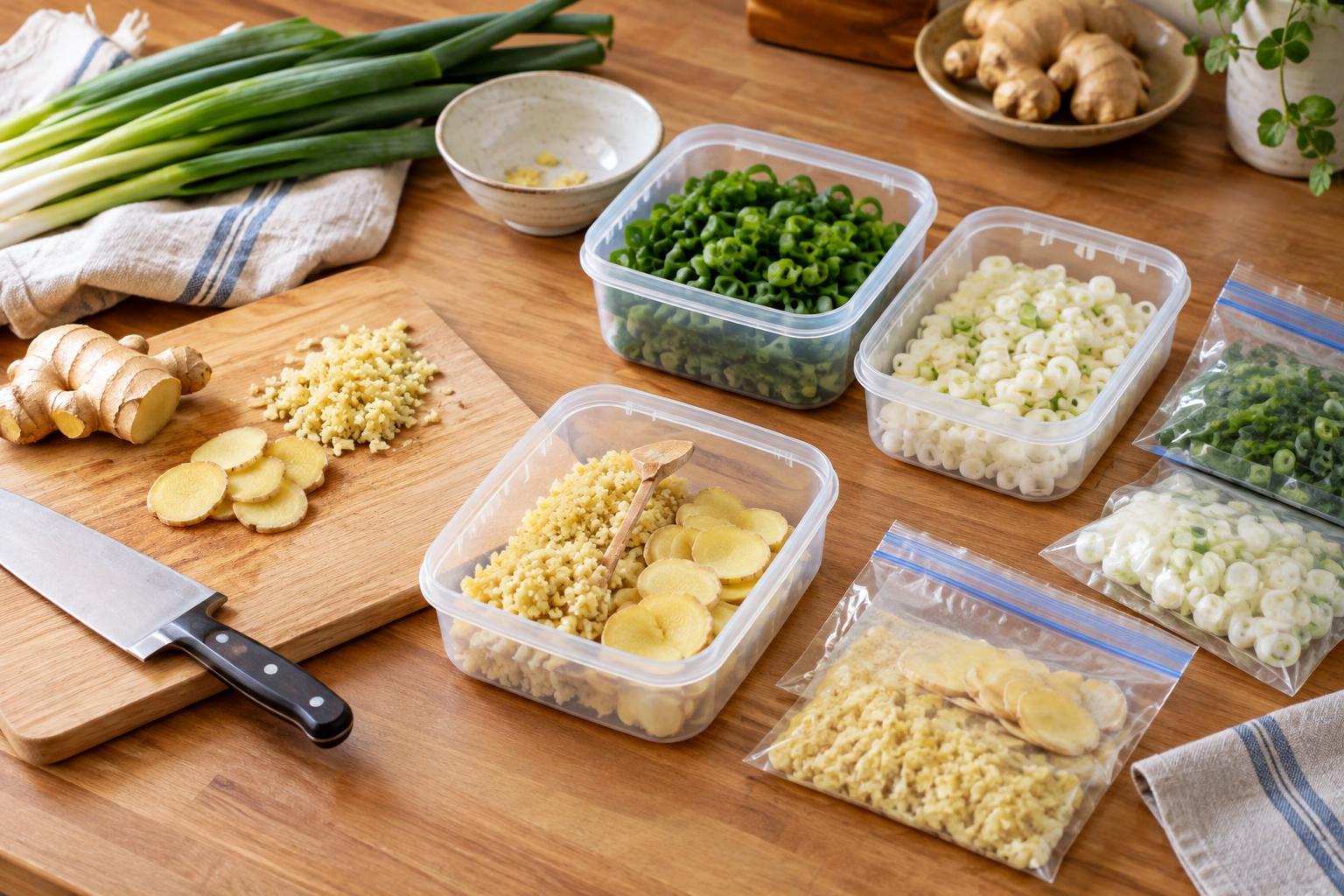
For slices, cut pieces to a thickness you would normally add to a pot. Lay them apart on a small tray or plate lined with freezer-safe paper, freeze until firm, then transfer them to a labeled freezer bag or container. This first step helps keep the slices separate. Another option is to freeze small, dry chunks of ginger and grate them as needed. Hold a chunk with care or use a grater with a secure grip, and return the unused portion to the freezer promptly.
For grated ginger, divide it into small mounds roughly equal to the amount you would use in one dish. Freeze the mounds separately before packing them together, or spread the ginger in a thin layer inside a freezer bag and mark gentle portion lines through the bag. Finely chopped ginger can be packed the same way. Press out excess air without crushing the contents, and label the package with the cut and the date.
Freeze scallions by cut and color
Remove any wilted parts, wash the scallions thoroughly and dry them as well as you can. Water clinging to the leaves forms ice and can make chopped pieces stick together. A clean towel or salad spinner helps, followed by a short rest to let any remaining moisture evaporate.
Cut the scallions according to their likely use. Keep the firmer white and pale green sections separate from the tender green tops if you often add them at different stages of cooking. Thinly sliced greens can go into soup near the end; chopped white sections can go into a hot pan earlier. Spread the pieces in a thin layer to freeze before bagging, or pack modest amounts in small, flat bags. Gently break up any loose pieces through the closed bag before returning it to the freezer.
Frozen scallions lose some of their crispness when thawed, so reserve fresh ones for uses where a lively crunch matters. Frozen pieces work especially well when they will be heated or stirred into a hot dish. They may also be used as a garnish when texture is less important, though they will not look quite like freshly cut scallions.
Pack for easy cooking
Use clean, freezer-safe bags or containers that close tightly. Flat packages take up less room and let you remove a small amount without exposing the rest for long. Label each one clearly: “ginger slices,” “grated ginger” or “sliced scallion greens” is more useful than a date alone. Keep new packages behind older ones so the older portions are used first.
Small portions help limit repeated thawing. If a bag has frozen into a solid block, avoid leaving it on the counter until you can break it apart. Instead, take out the amount you need if possible, or use that package for a dish that calls for the full amount. Freezing slows spoilage but does not turn ingredients that were already deteriorating into fresh ones, so begin with good-quality produce and handle it with clean utensils.
Cook with them straight from frozen
In most cooked dishes, there is no need to thaw these portions first. Add a ginger slice to a simmering broth, stir grated ginger into a sauce as it heats, or scatter frozen scallions into soup shortly before serving. If adding frozen ingredients to hot oil, take care: any surface ice or moisture can make the oil spatter. Start gently and stir as the pieces warm through.
Use the freezer as a convenient backup, not a place to forget ingredients indefinitely. Flavor and texture gradually decline, and packages that are poorly sealed can dry out. When you make your next batch, notice which cuts you reached for and which sat unused. Adjusting the portions to your actual meals is what makes this small preparation habit worthwhile.