Start with the meal you want to make
Frozen fish can be a convenient starting point for a Japanese-style home meal. A fillet might become miso-marinated salmon, while a smaller portion could be salted and grilled as shioyaki. Thawing gives you a chance to pat the fish dry, check for bones, and season it evenly before cooking.
Choose your method according to when you plan to cook. Refrigerator thawing is the simplest choice when you can plan ahead. Cold water works when you need the fish sooner. A microwave is a last-minute option, but the fish must be cooked immediately afterward. Whatever the method, keep raw fish and its juices away from foods that will be eaten without cooking.
Use the refrigerator when you can plan ahead
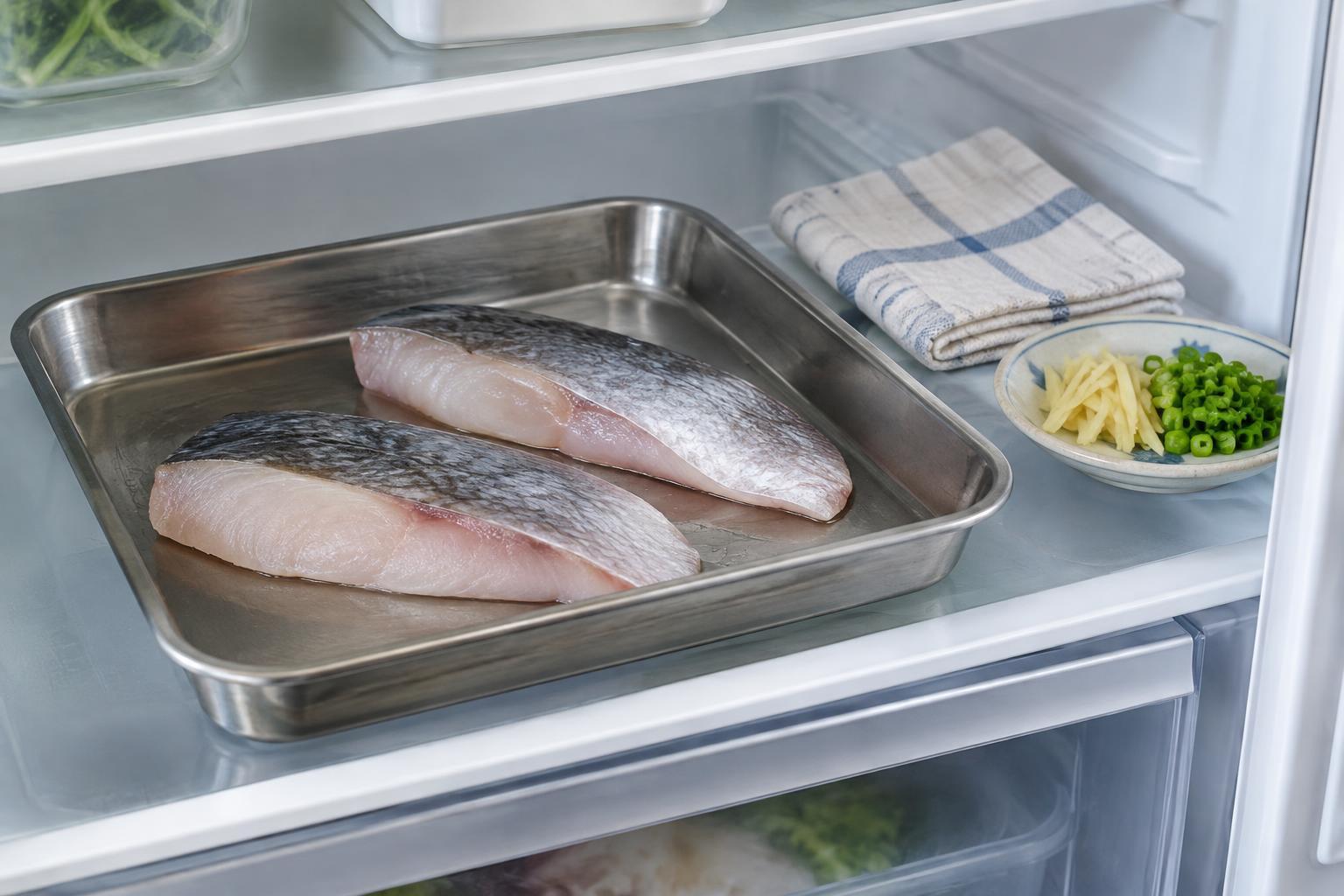
Place the fish in a covered container or on a rimmed tray on a low refrigerator shelf. This catches any liquid and helps prevent drips onto other food. Keep the refrigerator at 40°F (4°C) or below. A thin fillet may thaw overnight; a thick piece or several pieces frozen together can take longer, so check the center before you begin preparing the meal.
If the fish is in vacuum-sealed packaging, read the package directions. Remove fish from airtight vacuum packaging before refrigerator thawing, then place it in a covered container. This precaution matters because low-oxygen packaging can create conditions in which certain harmful bacteria may grow if fish is handled improperly. Ordinary wrapping that is not vacuum-sealed can be left in place if it is intact, with a tray underneath.
Once refrigerator-thawed fish is fully defrosted, aim to cook it within one or two days. Keep it chilled while you prepare the rest of the meal. If plans change, fish thawed in the refrigerator can generally be refrozen before cooking, though its texture may be less pleasing after another freeze and thaw.
Thaw with cold water when time is short
For a quicker thaw, put the fish in a clean, leakproof bag and submerge it in cold tap water. If it came vacuum-sealed, first remove it from that packaging and transfer it to a fresh bag. Weigh the bag down if needed so the fish stays submerged, and change the water about every 30 minutes to keep it cold. Thin, individually frozen portions will thaw more quickly than a thick block.
Check the fish as it softens rather than relying on a fixed time. It should be flexible through the center, with no hard ice remaining where seasoning or heat needs to reach. Cook fish thawed by this method promptly. Do not leave it soaking after it has thawed, and do not use warm water to speed things along: the outside can become too warm while the center remains frozen.
Know when to skip thawing—or use the microwave
Some fish can be cooked from frozen, especially thin fillets headed for a covered pan or a gentle simmer. Allow extra cooking time and follow any reliable directions on the package. For preparations that depend on a dry surface—such as pan-seared fish or salted grilled fish—thawing first makes it easier to dry and season the flesh and judge how evenly it cooks.
If you use a microwave, follow its defrost setting and stop while the fish is still a little icy but pliable. Microwave thawing can warm or partially cook the edges, so cook the fish immediately. Do not put microwave-thawed fish back in the refrigerator to cook later. Wash hands, utensils, and surfaces after handling raw fish.
Finish with texture and temperature in mind
After thawing, drain away liquid and pat the fish dry with clean paper towels. This helps a salted fillet brown and keeps a miso coating from becoming watery. If you are marinating fish, do so in the refrigerator, not on the counter. Discard marinade that has touched raw fish unless you cook it thoroughly before using it as a sauce.
Never thaw fish on the countertop or in hot water. For a straightforward safety check when cooking, use a food thermometer and cook fish to 145°F (63°C). The flesh should also look opaque and separate easily with a fork. With a safe thawing method chosen before you start, the rest of the meal—from rice to vegetables—can come together without a last-minute scramble.