Start with the meals you actually make
Thinly sliced pork and beef are useful in Japanese home cooking because they cook in minutes and fit into many dishes. A few slices can go into a bowl of udon, while a larger handful can become ginger pork, a vegetable stir-fry, or the topping for a rice bowl. Freezing the meat in meal-sized portions means you can take out only what dinner needs instead of trying to separate a solid block.
Before packing, picture two or three meals you commonly prepare. Make smaller portions for soups and noodle dishes, where vegetables and broth do much of the work. Make larger portions for dishes in which the meat is the main component. If you cook for more than one person, portion for your usual table rather than relying on a universal weight. Keep the slices cold while you work, and freeze them promptly after portioning.
Separate slices without making a stack
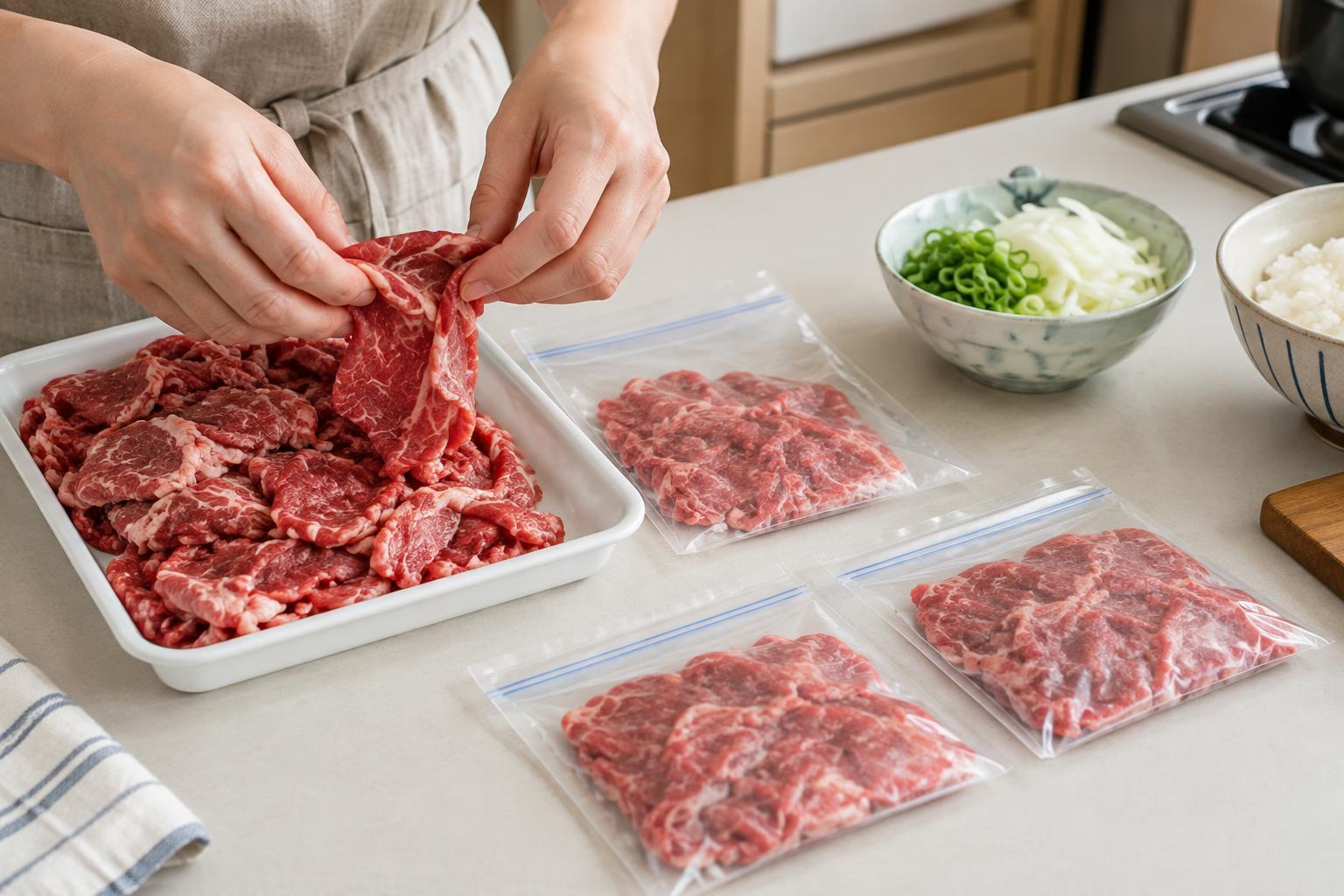
Thin meat tends to cling to itself, especially when pressed together in its original tray. Set out your freezer bags or containers before opening the package. With clean hands or utensils, divide the meat into loose meal-sized groups. If the slices peel apart easily, lay them in a single layer or a shallow, overlapping row. You do not need to separate every slice perfectly; the aim is to avoid one thick lump that takes a long time to thaw.
For portions you may want to cook straight from frozen, place small pieces of freezer-safe parchment between groups of slices. This can make it easier to lift out part of a package. For a portion you expect to use all at once, the simplest approach is to spread it thinly inside a freezer bag. Wash hands, utensils, and surfaces that touch raw meat before using them for vegetables or ready-to-eat food.
Pack flat, label clearly, and keep the freezer organized
Press excess air from each freezer bag without crushing the meat, then seal it securely. A thin, flat package freezes and thaws more evenly than a rounded bundle and is easier to file upright once firm. If you use a rigid container, choose one that fits the portion reasonably closely. Freezer-safe wrapping around the meat can help protect it when the container has extra space.
Write the type of meat, the portion’s intended use, and the freezing date on the package. Labels such as “pork for two rice bowls” or “beef for udon” are more helpful at dinnertime than an unlabeled packet. Put newer packages behind older ones so you can use the older meat first. Freezing keeps food safe when it stays properly frozen, but quality can decline over time; careful wrapping and a simple first-in, first-out habit help you make good use of what you have.
Thaw with the next meal in mind
The most flexible approach is to move a portion to the refrigerator ahead of time, keeping it in a dish or on a tray to catch any liquid. A flat packet may thaw relatively quickly, but the time depends on its thickness and your refrigerator. Keep raw meat separate from foods that will not be cooked, and follow any safe-handling guidance on its packaging.
If dinner plans change at the last minute, a sealed bag can be thawed in cold water; change the water regularly and cook the meat promptly once thawed. A microwave’s defrost setting is another option if you cook the meat immediately afterward. Avoid leaving raw meat on the counter to thaw. Some loose, thin slices can also be cooked from frozen: start over moderate heat and gently separate them as they soften, making sure the meat cooks through.
Turn one portion into a complete weeknight dish
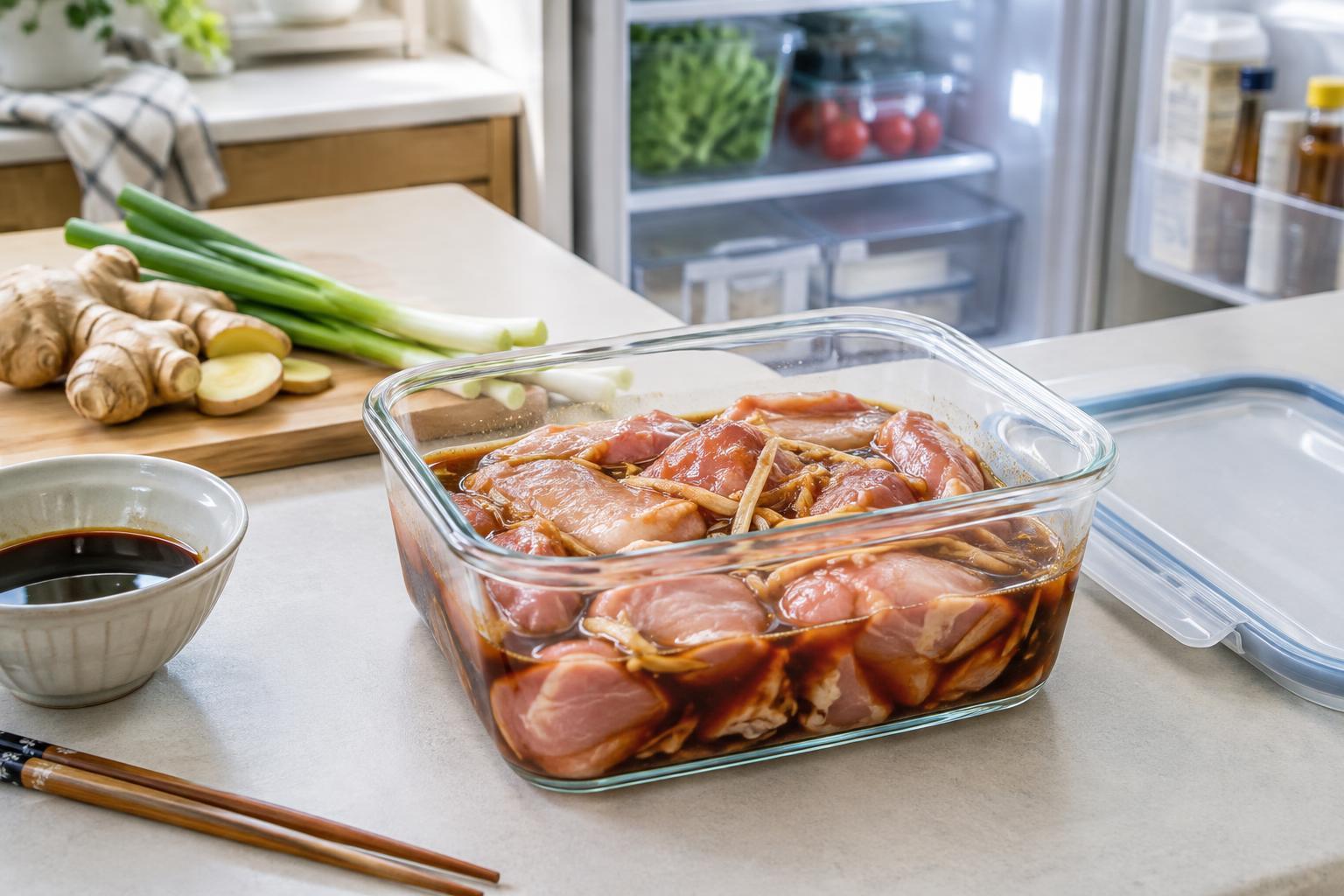
Keep a few straightforward combinations in mind so the frozen portions have a purpose. For ginger pork, cook thawed pork slices with onion, then season with ginger, soy sauce, and a little sweetness to taste. For a rice bowl, simmer sliced beef or pork with onion in a lightly seasoned liquid and spoon it over hot rice. For a quick soup, add a small portion of meat to simmering broth with mushrooms, greens, and noodles, cooking it thoroughly before serving.
Thin slices cook fast, so prepare the vegetables and sauce before the meat goes into the pan. Give the slices room when browning them, or cook in batches if the pan is crowded. This small bit of planning makes a modest freezer supply more useful: the meat is already divided for the meal, and dinner can be built around the ingredients you have on hand.