Start with storage, not the stove
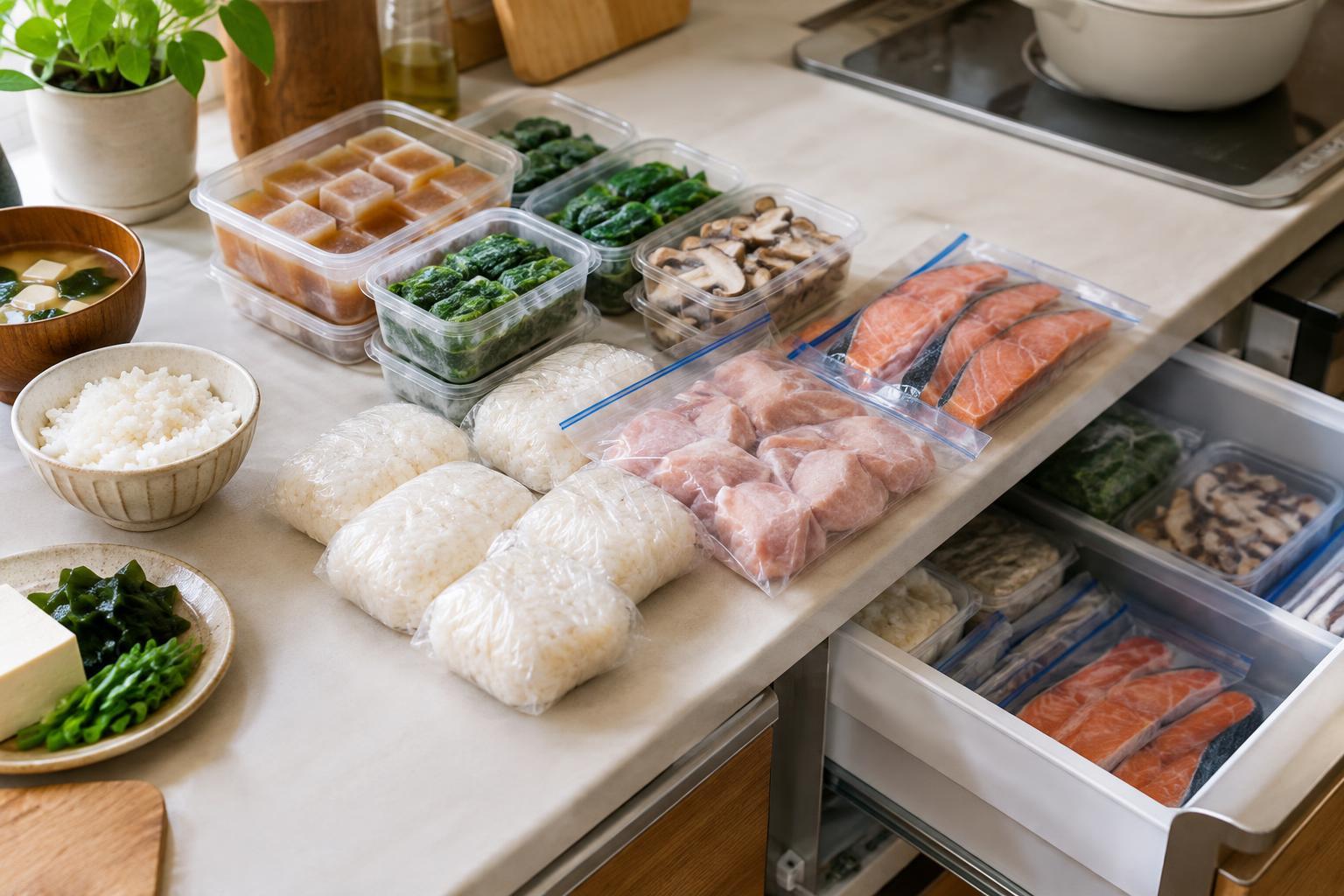
Good reheating begins before the leftovers go into the refrigerator. Divide a large batch into smaller, shallow containers so it can cool promptly, and refrigerate perishable food without leaving it out for an extended period. Keep rice, fish, and simmered vegetables in separate containers when possible. That lets you warm each one in the way it needs, rather than drying out the fish while waiting for a dense portion of rice to heat through.
Save a little cooking liquid with simmered vegetables. It helps protect them from drying and carries their seasoning into the next meal. Cover cooked rice so its surface does not harden in the refrigerator, or freeze individual portions if you will not eat them soon. Reheating cannot make poorly stored food safe: if a leftover has been left out too long or its storage history is uncertain, it is better to discard it.
Bring rice back with a little steam
Cold rice often feels firm because it has lost the soft texture it had just after cooking. The aim is to heat it through while giving its grains enough moisture to soften. For a single serving, place the rice in a microwave-safe bowl, sprinkle on a small amount of water, and cover loosely with a microwave-safe lid or plate. Heat in short intervals, then fluff and check the center. If it still feels firm, add a few more drops of water before heating again.
A steamer also works well: spread the rice in a heatproof dish and warm it covered over simmering water. For frozen rice, reheating it from frozen while covered generally helps retain moisture. Avoid pouring in so much water that the grains turn soggy. Once warmed, serve the rice promptly rather than repeatedly cooling and reheating the same portion.
Warm fish gently instead of cooking it again
Grilled salmon, salted mackerel, and other cooked fish can become dry or tough when reheated at high heat. A covered skillet gives you more control than a hot oven: add a small splash of water or sake, if you use it in cooking, set the fish in the pan, and warm it over low heat. Keep the lid on for much of the process so the gentle steam reaches the thickest part. Take care when lifting the lid, since escaping steam can burn.
If you use a microwave, cover the fish loosely and heat it in short bursts, checking between them. The goal is to warm it thoroughly without leaving thin edges under prolonged heat. Fish with a crisp skin will soften under a lid; if crispness matters, finish it briefly skin-side down in a lightly oiled skillet after the flesh is warm. Another option is to flake the warmed fish into rice, where small pieces are easier to heat evenly.
Use the cooking liquid for simmered vegetables
Nimono, the broad term for simmered dishes, often reheats especially well when its vegetables stay in some of their broth. Put the vegetables and a little reserved liquid in a small saucepan, cover, and warm over low to medium-low heat. Turn pieces gently so they heat evenly without breaking apart. If the liquid has reduced too much, add a small splash of water rather than increasing the heat.
Different ingredients may need different handling. Tender kabocha can fall apart if stirred vigorously, while thick pieces of daikon may take longer to warm through. If a dish contains both, you can lift out the softer pieces once they are hot and give the firmer ones more time. A microwave-safe covered dish is convenient for a small portion; pause partway through to rearrange the pieces and check for cool spots.
Build a better second meal
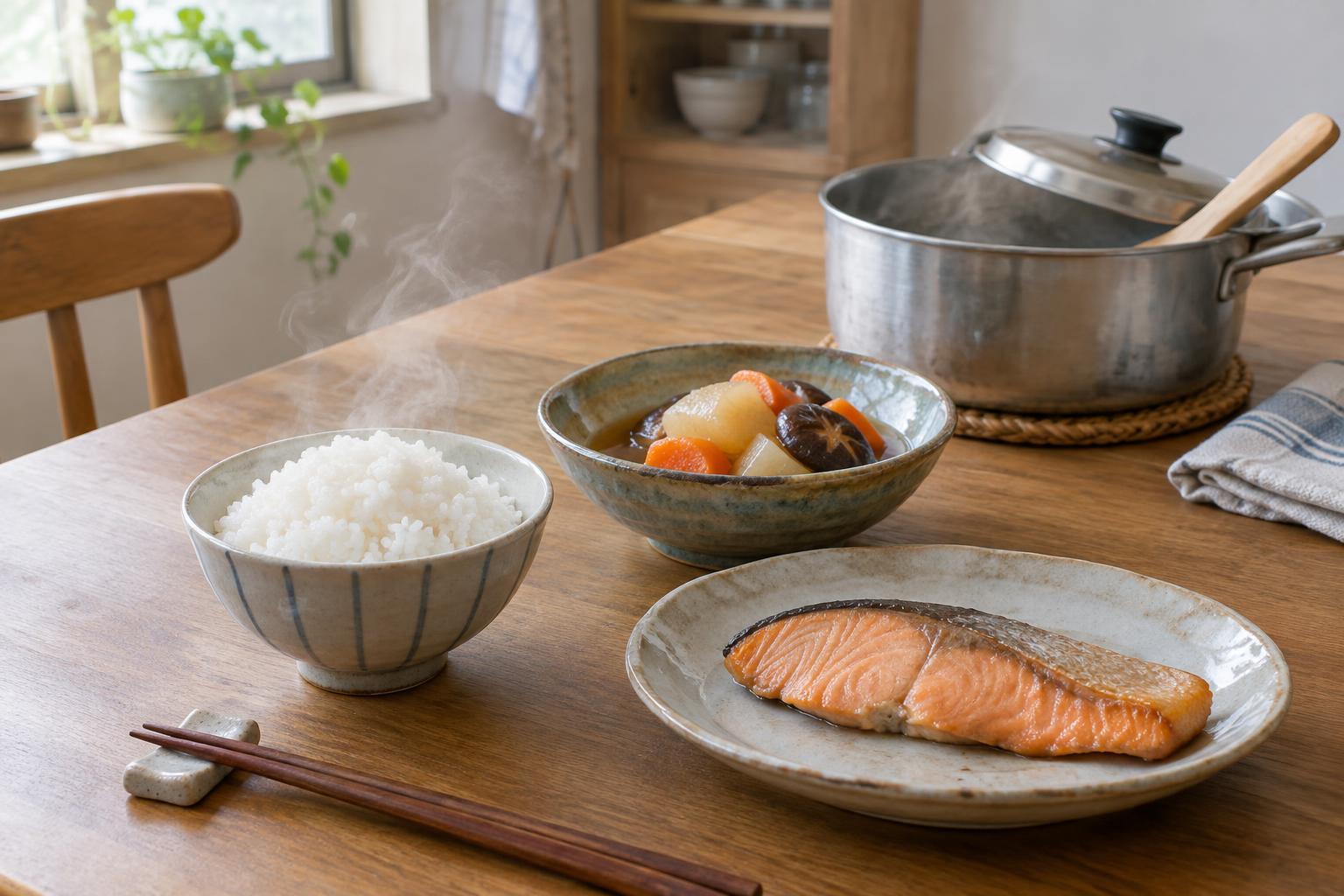
Reheating everything separately may sound fussy, but it often makes a simple meal easier. Start the rice first, warm simmered vegetables in their liquid, and heat fish last so it spends as little time as possible under heat. A bowl of miso soup, if you are making one, can round out the meal without requiring every leftover to be transformed into a new recipe.
You can also choose a preparation that suits the food’s new texture. Firm leftover rice makes a useful base for fried rice once it is heated thoroughly. Flaked fish can top a rice bowl, and a small portion of simmered vegetables can sit alongside freshly cooked greens. The guiding idea is simple: add moisture where food needs it, use moderate heat, and stop heating once the food is hot throughout.