Why curry roux can form lumps
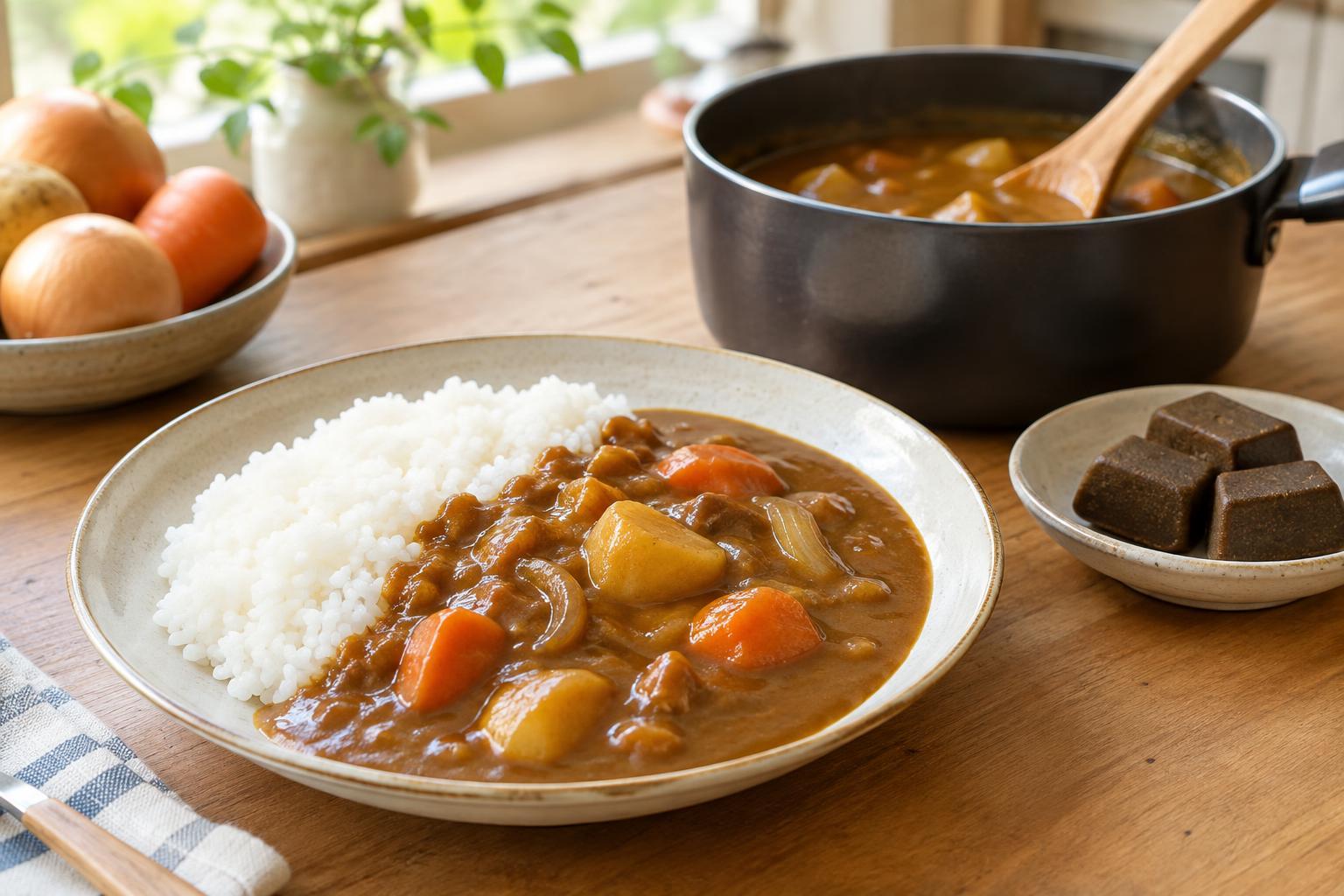
Japanese curry rice, or kare raisu, is a familiar home-cooked meal of rice topped with a thick, savory sauce. A common version starts with meat or another protein, onions, carrots, and potatoes simmered until tender. Store-bought curry roux blocks provide the seasoning and thicken the cooking liquid, making the dish practical for a weeknight.
The blocks need time to disperse. Dropped into a vigorously boiling pot, a block may soften on the outside while a firm piece remains inside. It can also cling to a potato or the bottom of the pan, where it is harder to stir apart. The simplest prevention is to pause the cooking before adding the roux: turn off the heat, let the bubbling settle, and break the blocks into smaller pieces.
Cook the ingredients before adding the roux
Start by checking the package for its suggested amount of ingredients and water. Roux brands and block sizes vary, so the package is a better guide than a fixed amount from another recipe. Cut the vegetables into pieces that will cook at roughly the same pace. Brown the meat if you like, then add the vegetables and the specified water. Simmer until the vegetables are tender and any meat is cooked through.
Wait to add the roux until this simmering stage is complete. Once the sauce thickens, vegetables can be more difficult to cook evenly, and the heavier mixture needs more attention to keep it from catching on the bottom. If the liquid level has dropped substantially, add a little water before the roux goes in. You can adjust the finished sauce later, but it is easier to dissolve the blocks when there is enough liquid to stir.
Dissolve the blocks gently
Turn off the heat and wait until the pot is no longer bubbling hard. Break the roux into small pieces and add them a few at a time, stirring through the liquid rather than pressing them into the vegetables. Lift the spoon occasionally to check for pieces hiding beneath potatoes or along the side of the pot. Give each addition a moment to soften before stirring again.
For extra control, put the broken roux in a heatproof bowl and ladle in some hot cooking liquid. Stir or whisk until smooth, adding a little more liquid if needed, then pour the mixture back into the pot. This is especially helpful when the pan is crowded with vegetables. Handle the hot liquid carefully, and use only enough to make a pourable mixture.
Simmer to finish and adjust the sauce
Once the roux has dissolved, return the pot to low or medium-low heat. Stir gently across the bottom as the curry comes back to a simmer, then cook for the time indicated on the package. The sauce should thicken as it heats. Avoid a hard boil, which can make splashes and increase the chance of sticking.
If the curry becomes thicker than you want, stir in a little water at a time and let it warm through before deciding whether it needs more. If it seems thin, give it time to simmer gently before changing anything; a sauce that has just had its roux added may not show its final texture yet. Serve the curry alongside or over warm rice, with a spoon so everyone can combine the sauce and rice to taste.
What to do if lumps are already there
A few small lumps do not mean the curry is lost. Turn the heat down or off, find any visible roux pieces, and press them against the side of the pot with a spoon. Stir the softened pieces into the liquid, then reheat gently. If a lump will not break apart, lift it out with a little sauce, smooth it in a small bowl, and return it to the pot.
When serving leftovers, warm the curry slowly and stir from the bottom; it often thickens after cooling and may need a splash of water. For the next pot, remember the short sequence that does the most work: simmer the ingredients first, stop the boil, dissolve small pieces of roux, then finish over gentle heat. It keeps the method simple without leaving dry pockets of roux in the sauce.