What makes oyakodon a comforting home meal
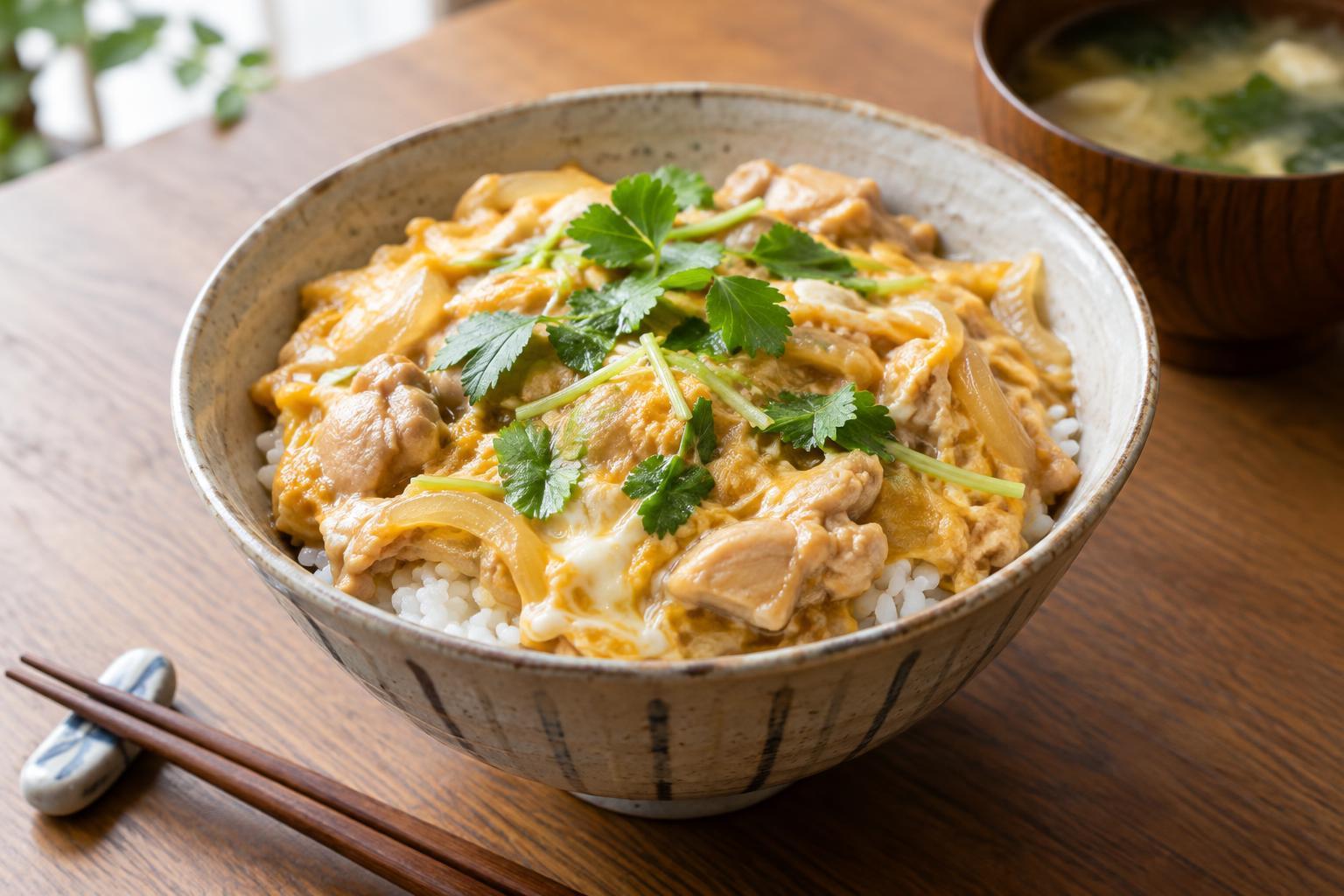
Oyakodon is a donburi, or rice bowl, topped with chicken and egg simmered together in a seasoned broth. Its name refers to the “parent and child” pairing of chicken and egg. The dish is a useful weeknight meal because the topping cooks quickly while the rice provides a warm, filling base.
The aim is not to brown the chicken or make a firm omelet. Instead, the onion softens in the broth, the chicken cooks gently, and beaten egg settles around both ingredients. Some people like the egg barely set; others prefer it cooked through. Either way, serve the topping as soon as it is ready, while the rice is hot.
Ingredients and equipment for two bowls
You will need 2 bowls of freshly cooked rice; about 250 g boneless chicken thigh or breast, cut into small bite-size pieces; 1 small onion, thinly sliced; and 4 eggs. For the broth, combine 160 ml dashi, 2 tablespoons soy sauce, 2 tablespoons mirin and, if you prefer a sweeter topping, 1 teaspoon sugar. Sliced scallions are an optional garnish. Chicken thigh stays tender easily, while breast also works if you take care not to overcook it.
Dashi is a Japanese cooking stock that gives the broth depth, but water is a workable choice if dashi is unavailable. The result will taste lighter. Mirin contributes sweetness as well as flavor; if you do not have it, use water with a little extra sugar and adjust to taste. Because soy sauce brands and homemade stocks vary, taste the mixed broth before adding the chicken and dilute it with a splash of water if it seems too salty.
A small skillet, roughly 18 to 20 cm across, makes it easier to cook one bowl’s topping at a time. You will also need a lid or a loose cover, a bowl for beating the eggs and a utensil that can lift the topping onto the rice. Divide the chicken, onion, broth and eggs into two portions before you begin.
Cook the topping in two batches
Put half the broth and half the onion in the skillet. Bring them to a gentle simmer over medium heat and cook for a few minutes, until the onion starts to soften. Spread half the chicken among the onion slices rather than piling it in the center. Cover and simmer gently, turning the pieces if needed, until the chicken is cooked through. The exact time depends on the size of the pieces. For a reliable check, the thickest piece should reach 74°C (165°F).
While the chicken cooks, lightly beat 2 eggs for the first bowl. Leave a few streaks of white and yolk if you enjoy a varied texture. Once the chicken is done, pour the eggs evenly over the pan. Cover again and cook over low heat until the egg reaches your preferred doneness. The egg will continue to firm up briefly after the pan leaves the heat, so watch closely near the end. For fully set eggs, give them more time under the lid.
Slide the topping, along with its broth, over one bowl of hot rice. Repeat with the remaining ingredients for the second bowl. If the first serving needs to wait, cover it loosely to keep it warm. Add scallions just before eating, if using.
Adjusting the balance and making the meal your own
The broth should season the rice without leaving it swimming in liquid. If the pan dries out before the chicken cooks, add a spoonful of water and lower the heat. If there is more broth than you want, use a slotted utensil to transfer the topping and spoon over only as much liquid as you like. A gentle simmer helps the chicken stay tender and gives the egg time to set without sticking.
For the smoothest workflow, cook the rice first and keep it warm while you prepare the topping. Cut the chicken into similarly sized pieces so they finish together, and have the eggs ready before the chicken is done. Once you know how much broth and egg you like in each bowl, oyakodon is easy to adjust to your own table.