What makes nikujaga comforting
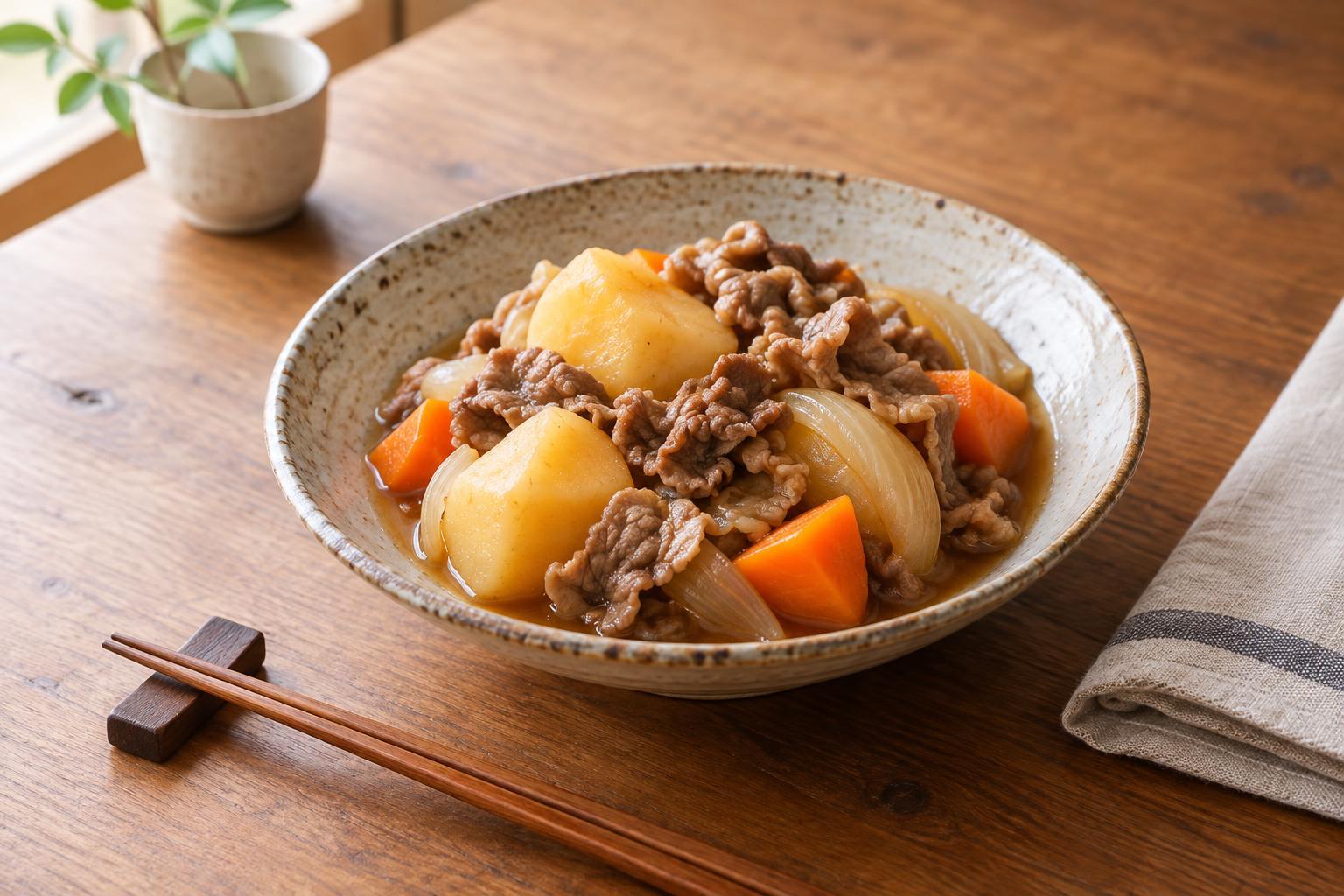
Nikujaga combines potatoes, thinly sliced meat and onions in a broth seasoned with soy sauce, mirin and sugar. The potatoes absorb the savory-sweet liquid while the onions soften around them. It is everyday home cooking rather than a dish with one fixed formula: beef or pork can work, and some cooks add carrots or shirataki noodles.
The aim is potatoes that are tender all the way through but still easy to lift with chopsticks or a spoon. That depends less on a special ingredient than on a few habits: cut the pieces generously, use only enough liquid to simmer them, and resist stirring once they begin to soften.
Ingredients and potato preparation
For about three to four servings, use 400 to 500 g potatoes, 200 g thinly sliced beef or pork, one medium onion and, if you like, one carrot. For the simmering liquid, start with 300 ml water or unsalted dashi, 3 tablespoons soy sauce, 2 tablespoons mirin and 1 tablespoon sugar. A tablespoon of sake is optional. You will also need a little neutral oil for the pan. Taste the finished broth before serving; soy sauces vary in saltiness, and you can adjust it with a little water or soy sauce.
Choose potatoes that tend to hold their shape when cooked, such as a waxy variety or an all-purpose potato. Peel them if you prefer, then cut them into roughly equal, large bite-size pieces. Very small pieces soften quickly and are more likely to crumble. Cut the onion into thick wedges and the carrot, if using, into pieces that will cook in about the same time as the potatoes.
If you have time, round off the sharp corners of the potato pieces with a knife. This optional step, called mentori, gives the corners less chance to catch and break against other pieces in the pot. It is useful, but careful simmering matters more. If you rinse the cut potatoes, drain them well before adding them to the pan.
Build the broth, then lower the heat
Use a wide saucepan or shallow pot that lets the ingredients sit in a fairly even layer. Warm the oil over medium heat and briefly cook the meat, separating the slices as they change color. Add the onion and cook until it starts to soften, then add the potatoes and carrot. Turn the ingredients gently once or twice to coat them; there is no need to brown the potatoes.
Add the water or dashi, sugar, mirin and optional sake. Bring the liquid just to a boil, then skim off any foam if you wish. Add the soy sauce and reduce the heat to a gentle simmer. The liquid does not have to cover every potato piece. Set a drop lid directly over the food, or use a circle of baking parchment with a small opening in the center. It helps circulate the liquid and limits how much the pieces move.
Simmer until a skewer enters the center of a potato with little resistance, often around 15 to 25 minutes depending on the variety and size of the pieces. Look for small, steady bubbles rather than a rolling boil. Check by lifting the lid and testing a piece, not by stirring the pot. If the pan looks dry before the potatoes are cooked, add a small splash of water.
Keep the pieces intact at the finish
Potatoes often break in the last few minutes, when they are tender and the urge to stir is strongest. Leave them in place while they finish cooking. To check the seasoning, spoon up some broth from the edge of the pan. If you want it slightly more concentrated, remove the lid and simmer briefly, watching closely rather than boiling hard.
Turn off the heat once the potatoes are tender. Let the nikujaga rest in the pot for 10 to 15 minutes so the ingredients can settle and take on more flavor. Serve warm, lifting the potatoes out carefully with a broad spoon. Leftovers can be refrigerated promptly and reheated gently with a splash of water; vigorous stirring during reheating can break the softened pieces.