What makes salt-grilled fish simple and satisfying
Salt-grilled fish, or shioyaki, is a familiar approach in Japanese home cooking: season fish with salt, cook it until the surface browns, and serve it with little else competing for attention. The method works especially well when you want the fish itself to be the center of the meal. A bowl of rice, a vegetable side and soup can turn one modest fillet into a complete dinner.
You do not need a dedicated fish grill. A frying pan, oven broiler or outdoor grill can all work. The details differ, but the goal stays the same: give the surface enough heat to brown while keeping the inside moist. Starting with a dry fillet and watching it closely matter more than using a particular piece of equipment.
Choose and prepare the fillets
Salmon, mackerel, sea bream and other firm fish are good candidates. Choose fillets of similar thickness if you are cooking several at once; they will be easier to finish together. Skin-on fillets are useful because the skin helps hold the fish together and can become pleasantly crisp. Boneless pieces are convenient, but check for pin bones before cooking.
If the fish is frozen, thaw it in the refrigerator, then blot it thoroughly with paper towels. Keep raw fish chilled until you are ready to prepare it, and clean any utensils and surfaces that touch it. Check the label before adding salt: some packaged fish, particularly salted mackerel or salmon, is already seasoned and may need little or none.
Salt evenly, then remove surface moisture
Sprinkle a light, even coating of salt over both sides of each unsalted fillet. Pay attention to thicker areas, but avoid piling salt onto the thin edges. Set the fish on a plate or rack in the refrigerator for about 15 to 30 minutes. This short rest gives the salt time to season the surface and draws out some moisture. A very thin fillet may need less time; a thick piece can take a little longer.
Before cooking, pat the fish dry again. You may see beads of moisture on the surface; removing them helps the fish brown instead of steam. Do not add another full coating of salt automatically. Once you have cooked the method a few times, you can adjust the initial amount to suit the fish and your taste. If you plan to serve the fish with soy sauce, remember that it will add salt at the table.
Cook with steady heat, not constant turning
For a frying pan, warm a thin film of neutral oil over medium heat. Place skin-on fillets skin-side down and press each one gently for a few seconds if it curls. Let the skin cook undisturbed until it releases readily and looks browned. Turn the fish carefully and cook the other side until the center is done. Lower the heat if the surface colors too quickly, and avoid crowding the pan.
For a broiler, place the fillets on a lightly oiled rack or a lined, broiler-safe tray, leaving space between pieces. Position them far enough from the heat that they can brown without scorching. Check frequently, since broilers vary and thin edges cook fast. On an outdoor grill, begin with a clean, well-oiled grate and move the fish only after it releases easily. Cooking time depends on thickness and heat, so use the thickest part as your guide. The flesh should turn opaque and separate easily; if you use a food thermometer, follow the food-safety guidance that applies where you live.
Serve it while the surface is at its best
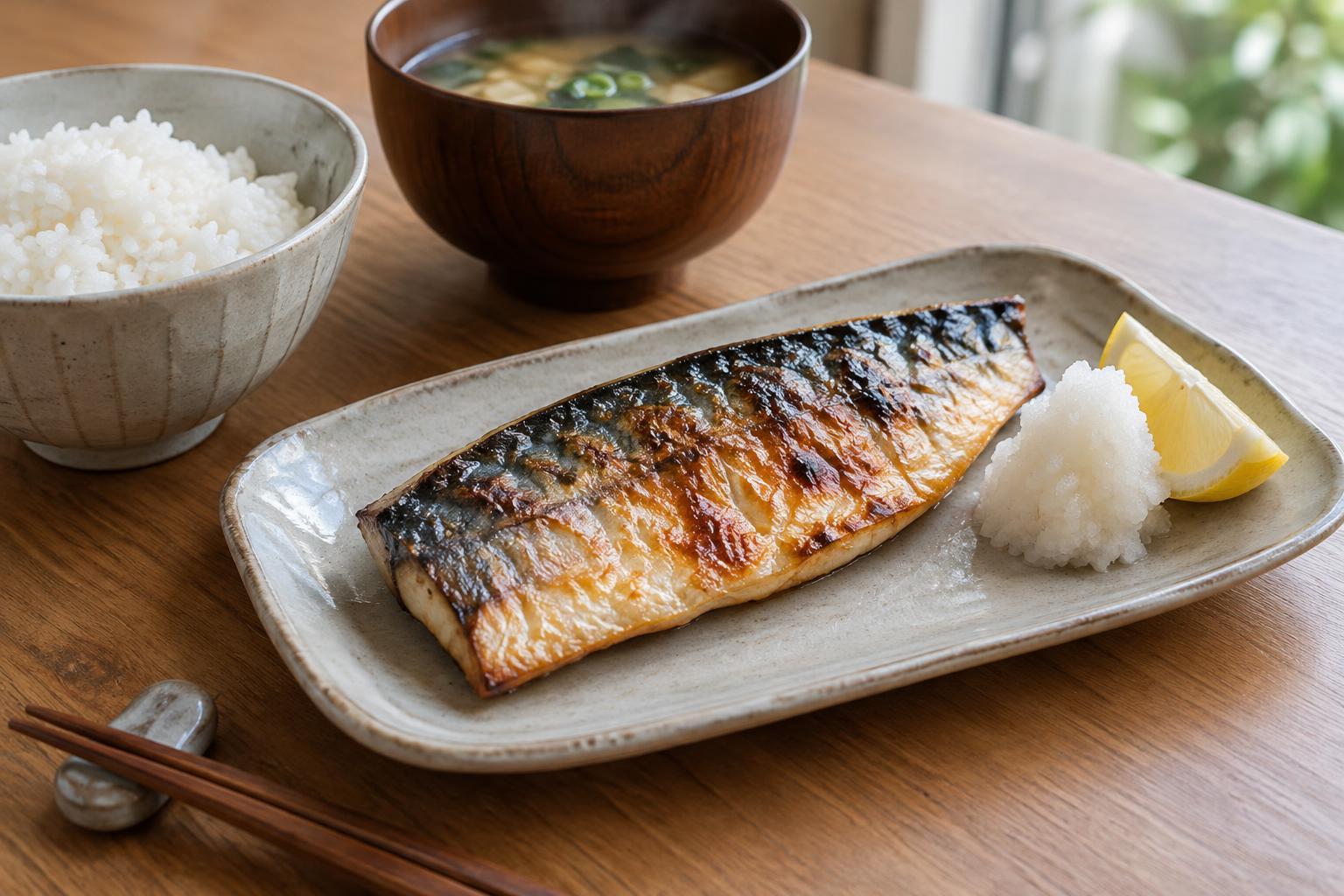
Move the cooked fish to a plate and let it rest briefly while you finish the meal. Serve it warm with rice and a simple vegetable, such as lightly cooked greens or a cucumber salad. A squeeze of lemon is an easy finishing touch. Grated daikon is another common accompaniment; its cool, mild bite is especially welcome alongside richer fish.
The first time you make salt-grilled fish, keep the plate uncomplicated. That makes it easier to notice whether the fillet needed more salt, a drier surface or gentler heat. Those small adjustments are the heart of the method. Once you know how your pan or broiler behaves, salt-grilled fish becomes a flexible way to prepare whichever suitable fillet you have on hand.