What is shogayaki?
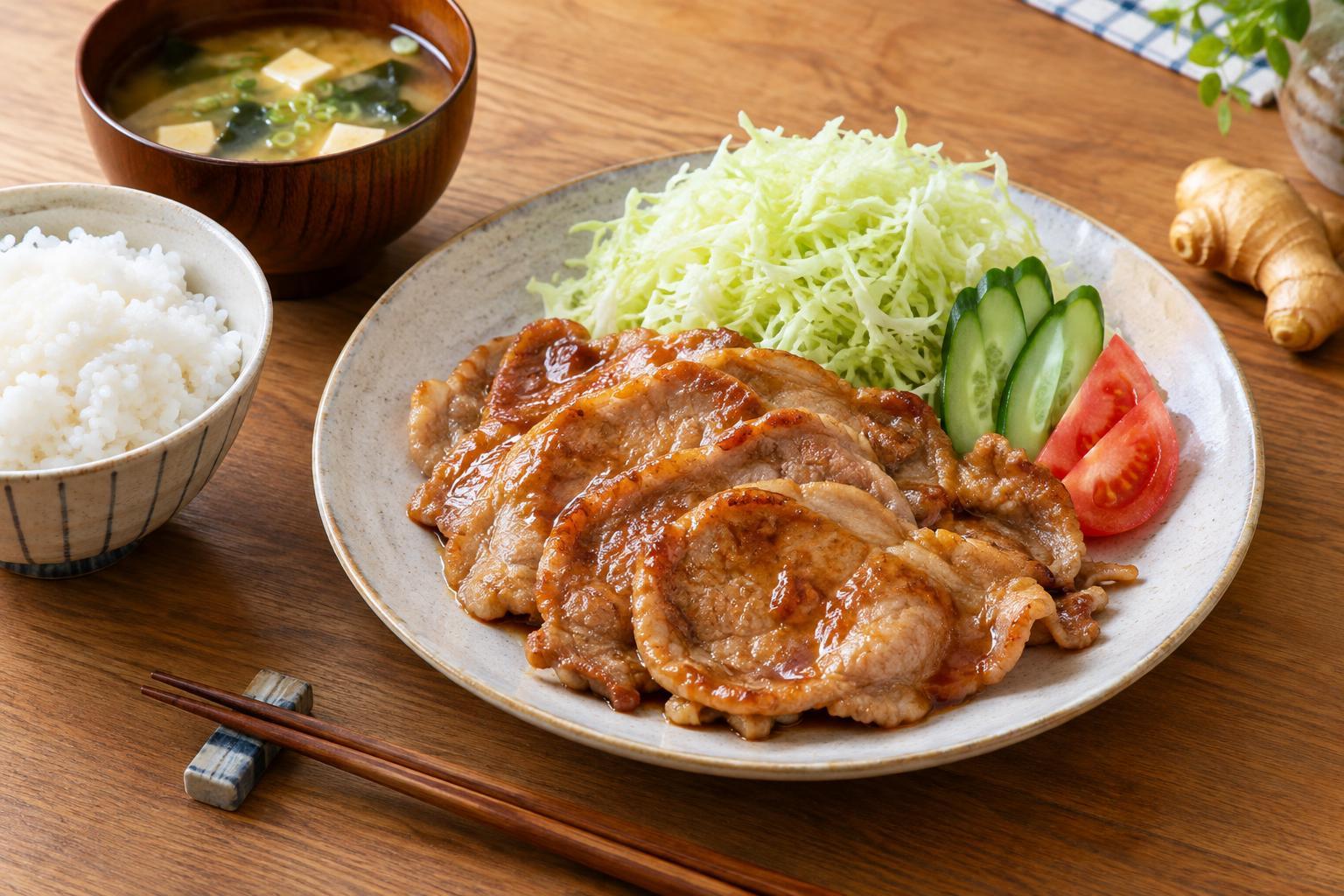
Shogayaki means “ginger-grilled,” though a home version is usually cooked in a frying pan. Thin slices of pork are coated in a sauce built around fresh ginger and soy sauce. The result is savory, gently sweet, and quick enough for a weeknight meal. It is often served with rice and finely shredded cabbage, which provide a simple contrast to the rich pork.
There is room for variation: some cooks add onion, some marinate the meat, and others pour the sauce into the pan near the end. The method below skips marinating. That keeps the preparation short and lets the pork brown before the sauce coats it.
Gather the pork and sauce ingredients
For two to three servings, use about 300 g (10 to 11 oz) of thinly sliced pork, such as loin or shoulder. Look for slices that will cook quickly and remain easy to pick up with chopsticks. If you cannot buy pork sliced for shogayaki, briefly chill a boneless piece until firm, then slice it thinly across the grain with a sharp knife. Keep raw pork separate from ready-to-eat ingredients as you work.
For the sauce, combine 2 tablespoons soy sauce, 2 tablespoons mirin, 1 tablespoon sake, 1 tablespoon freshly grated ginger, and 1 teaspoon sugar. Stir until the sugar mostly dissolves. You will also need about 1 tablespoon neutral cooking oil. A small onion, thinly sliced, is optional. Mirin supplies sweetness as well as liquid; if you do not have it, use water with a little extra sugar and adjust the finished sauce to taste. Water can replace the sake, too. These substitutions make a useful dinner, even if the flavor is different.
Cook the pork, then add the sauce
Set a large frying pan over medium-high heat and add the oil. If using onion, cook it first for a few minutes, stirring until it begins to soften, then transfer it to a plate. Spread the pork in the pan in a loose layer. Cook in batches if necessary: a crowded pan traps moisture and makes browning harder. Let the slices take on a little color, turn them, and cook until the pork is cooked through. Because thin slices cook quickly, stay near the stove rather than relying on a fixed cooking time.
Return any onion to the pan. Give the sauce another stir and pour it over the pork. Toss gently for about a minute, until the meat is coated and the sauce has reduced slightly. If the pan looks dry before the pork is fully cooked, add a spoonful of water. If there is too much liquid, keep tossing briefly so some of it evaporates. The goal is a glossy coating, not a deep pool of sauce.
Serve it as a balanced plate
Spoon the shogayaki onto plates with hot rice and a mound of finely shredded raw cabbage. The cabbage catches some of the sauce, but it can also be eaten plain. Sliced cucumber, steamed greens, or a simple vegetable side work well if cabbage is not available. For a fuller meal, add miso soup or another uncomplicated soup.
Taste before adding anything at the table: soy sauce brands and the sweetness of mirin vary. If the pork tastes too salty, serve it with more unsauced rice or vegetables. If it needs a brighter finish, a small squeeze of lemon can cut through the richness, though it is entirely optional.
Make the next batch your own
The easiest way to adjust shogayaki is to change the balance of ginger, sweetness, and sauce. Add a little more grated ginger for a sharper bite, or reduce the sugar if your mirin already makes the sauce sweet enough. Pork shoulder may be more forgiving in the pan because it has more fat; leaner loin benefits from especially brief cooking. Whichever cut you choose, prepare the sauce before turning on the heat so the thin slices do not wait in the pan while you measure.
Shogayaki is best served soon after cooking, when the sauce still clings to the pork and the cabbage is crisp. For a packed lunch, let the cooked pork cool before packing it with rice, and keep raw cabbage separate if you want it to retain its crunch. Once the basic pan method feels familiar, it is easy to fit this dish around the ingredients and sides you already have.