What makes pan-steamed gyoza work
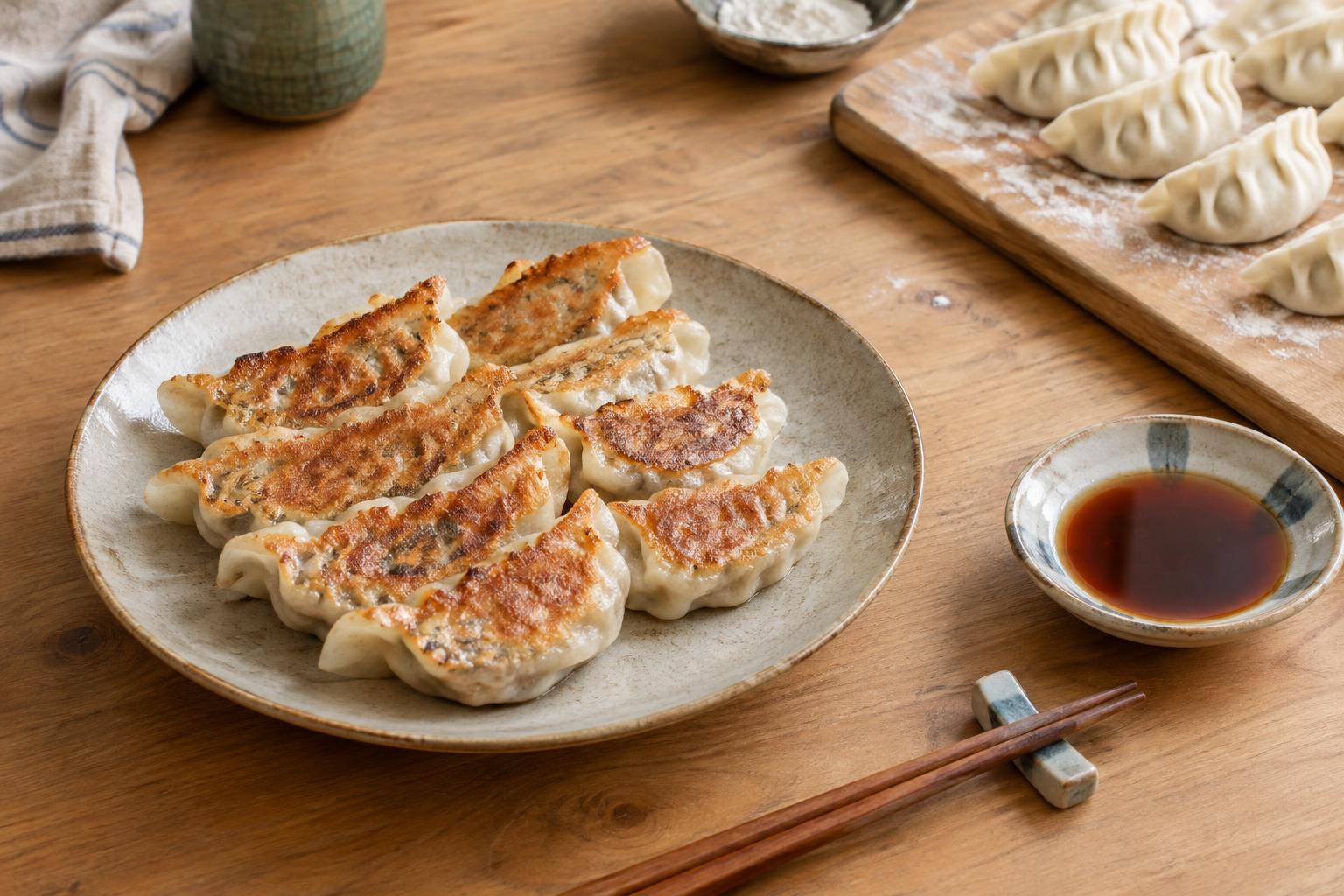
Japanese gyoza are small dumplings commonly cooked by frying their bottoms, adding water to steam the filling, then uncovering the pan to restore the crisp crust. The method gives you two textures without requiring a deep fryer: a browned base and a soft, slightly chewy upper wrapper. You do not need elaborate pleats to make good gyoza. A well-sealed edge and a filling that is moist but not watery matter more.
For about 24 dumplings, gather 24 round gyoza wrappers, 250 g ground pork, 150 g finely chopped cabbage, two finely chopped scallions, one teaspoon grated ginger, one tablespoon soy sauce, and one teaspoon sesame oil. You will also need a little salt, neutral cooking oil, and water for sealing and steaming. Wrapper sizes vary, so you may have a spoonful of filling left over or need a few extra wrappers.
Mix a filling that holds together
Cabbage brings sweetness and lightness, but excess water can loosen the filling and make wrappers difficult to seal. Toss the chopped cabbage with a small pinch of salt, let it stand for about ten minutes, then squeeze it firmly in a clean towel or with your hands. Add it to the pork with the scallions, ginger, soy sauce, and sesame oil. Mix in one direction with a spoon until the mixture looks cohesive rather than crumbly. Keep the filling chilled while you set up your folding space.
The mixture should be soft enough to scoop but not runny. If you want to check its seasoning, cook a small piece thoroughly in a skillet and taste it before filling the wrappers. This is more useful than tasting raw filling. Set out a small bowl of water, a tray or plate, and a damp towel to keep unused wrappers covered; exposed wrappers can dry out and crack.
Fold and seal without overfilling
Place a wrapper in your palm and put a modest teaspoon of filling in its center. Dampen the rim of one half with water. Fold the wrapper into a half-moon, pressing the center edges together first. For an easy seal, press the remaining edges flat, pushing out any obvious pockets of air as you go. If you would like pleats, make two or three small folds on the front edge of each side and press them against the smooth back edge. The bottom should sit relatively flat so it can brown evenly.
Set each finished gyoza on the tray without letting it touch its neighbors. Avoid piling on extra filling to use it up: an overstuffed dumpling is harder to close and more likely to leak in the pan. If an edge will not stick, wipe away any filling caught in the seam and press it again with a little water. Cover the folded dumplings loosely while you finish the batch.
Fry, steam, then crisp
Heat a nonstick or well-seasoned skillet over medium heat and add about a tablespoon of neutral oil. Arrange the gyoza flat-side down in a single layer, leaving a little room between them. Cook until the bottoms begin to turn golden, roughly two to three minutes. Carefully pour in about 80 ml (one-third cup) water and immediately cover the skillet. The water will hiss and steam, so keep your hands clear and use a lid that fits securely.
Steam for about five to seven minutes, adjusting the time if your dumplings are especially large or tightly packed. Remove the lid and let the remaining water evaporate; cook for another minute or two until the bottoms are crisp again. Cooking time alone cannot confirm that ground meat is done. If you are unsure, check a dumpling from the batch with a food thermometer: a pork filling should reach 71°C (160°F). Work in batches rather than crowding the pan, adding fresh oil and water as needed.
Serve and save a batch
Lift the gyoza out with a thin spatula and serve them while the bottoms are still crisp. A simple dipping sauce is equal parts soy sauce and rice vinegar; add a few drops of chili oil if you like heat. The sauce is optional, especially if you have seasoned the filling generously. For an everyday meal, pair the dumplings with rice, soup, or a plainly dressed vegetable dish.
To prepare ahead, arrange uncooked gyoza in one layer on a tray and freeze them until firm, then transfer them to a freezer container. Cook them from frozen using the same fry-and-steam method, allowing extra steaming time and checking that the filling is cooked through. Keep raw meat filling refrigerated during preparation, and wash hands, utensils, and work surfaces after they have touched it. With the filling, seal, and pan method familiar, you can adjust the vegetables and seasonings to suit your table.