What makes greens into ohitashi?
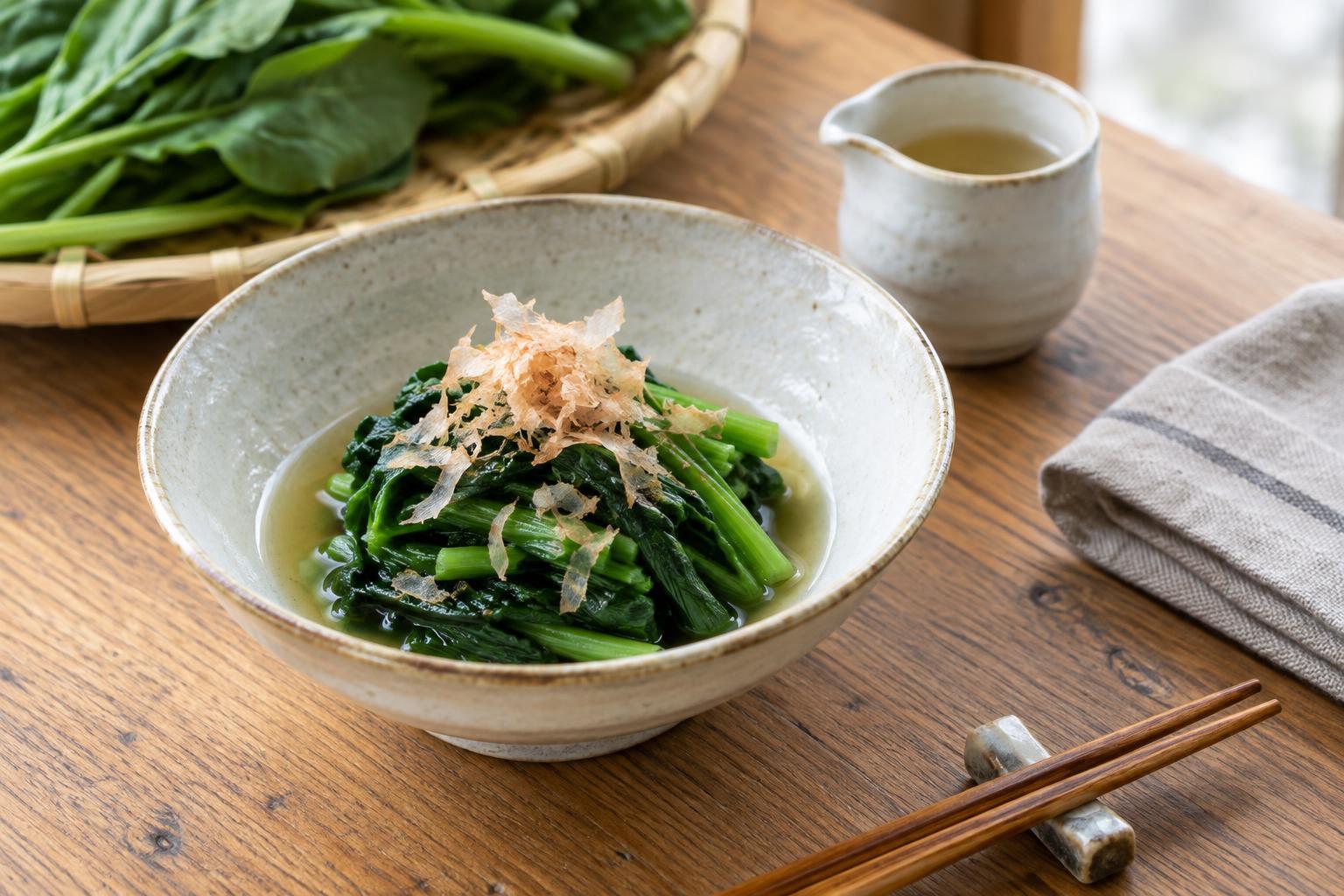
Ohitashi is a Japanese home-cooking preparation in which vegetables, often leafy greens, are briefly cooked and seasoned with a light, savory liquid. The name is commonly associated with soaking: rather than coating the greens in a thick sauce, you let a small amount of seasoning settle into them. Served cool or at room temperature, ohitashi makes a gentle contrast to a rich main dish.
Spinach is a familiar choice, but komatsuna, a leafy green also called Japanese mustard spinach, works well too. Tender bok choy or other greens with similar stems and leaves can be used if those are easier to find. Different greens vary in bitterness, thickness and cooking time, so treat the blanching time as something to judge by texture rather than by a fixed rule. The goal is tender, vividly colored greens that still have a little structure.
Prepare the greens and seasoning
For a small side dish, start with one bunch of greens, roughly enough to serve two to four people alongside a meal. Wash the leaves carefully, especially where the stems meet; grit can hide at the base. Trim only tough or damaged ends. If the stems are thick, keep them together so you can lower them into the boiling water before the leaves.
A straightforward seasoning is dashi with a little soy sauce and, if you like, a small amount of mirin. For about one bunch of cooked greens, begin with roughly ½ cup dashi, 1 to 2 teaspoons soy sauce and 1 teaspoon mirin. Taste the liquid before adding the greens: it should be pleasantly savory but not as salty as a dipping sauce. Dashi made with kombu gives a plant-based option; check packaged dashi if you need to avoid fish ingredients. You can also omit the mirin and use a small pinch of sugar if you prefer.
These amounts are a starting point, not a strict formula. The volume of greens shrinks considerably during cooking, while the amount of water left in them affects how strong the seasoning tastes. Make the liquid a little lighter than you think you need; it is easy to add another few drops of soy sauce at the table.
Blanch, cool and squeeze
Bring a generous pot of water to a boil. Set a bowl of cold water nearby. Add the greens, lowering thicker stems into the water first for a short head start, then submerging the leaves. Stir gently so everything cooks evenly. Tender leaves may need only a brief dip; sturdier stems need longer. Lift a stem out and bite it to check. It should be easy to chew without feeling limp or mushy.
Transfer the greens promptly to the cold water to stop the cooking. Once cool, gather them into manageable handfuls and squeeze gently. Removing excess water keeps the seasoning from becoming diluted, but wringing the greens hard can crush them. Lay the greens on a cutting board, align the stems and leaves, and cut them into bite-size lengths. Keeping the pieces together as you cut makes them easier to portion neatly.
Let the flavor settle in
Mix the dashi, soy sauce and optional mirin in a shallow container. Add the cut greens and turn them gently so the liquid reaches all the pieces. Let them rest in the refrigerator for about 15 to 30 minutes before serving. A longer rest can deepen the flavor, though the greens may gradually lose some of their fresh texture. If you are short on time, toss them with the seasoning and serve right away; the result will be lightly dressed rather than thoroughly soaked.
Serve the greens in small bowls with a spoonful of the seasoning liquid. For a finishing touch, add toasted sesame seeds or a few bonito flakes, if those fit your meal. Both are optional: the appeal of ohitashi is that you can still taste the vegetable. If you use a garnish, add it just before serving so its texture remains distinct.
Make it part of an everyday meal
Ohitashi is useful when a meal needs a vegetable side that does not require last-minute pan space. Prepare it before cooking rice or the main dish, then leave it chilled until you are ready to eat. It pairs comfortably with grilled fish, tofu, eggs or a bowl of rice and soup. Leftover seasoned greens can be kept covered in the refrigerator and enjoyed soon after making; use clean utensils when serving.
Once the basic method feels familiar, vary one element at a time. Try a different leafy green, adjust the dashi-to-soy balance, or serve the greens with a little grated ginger. Keep the same core steps—cook briefly, cool, remove excess water and season lightly—and the vegetable remains the focus.