What makes karaage different?
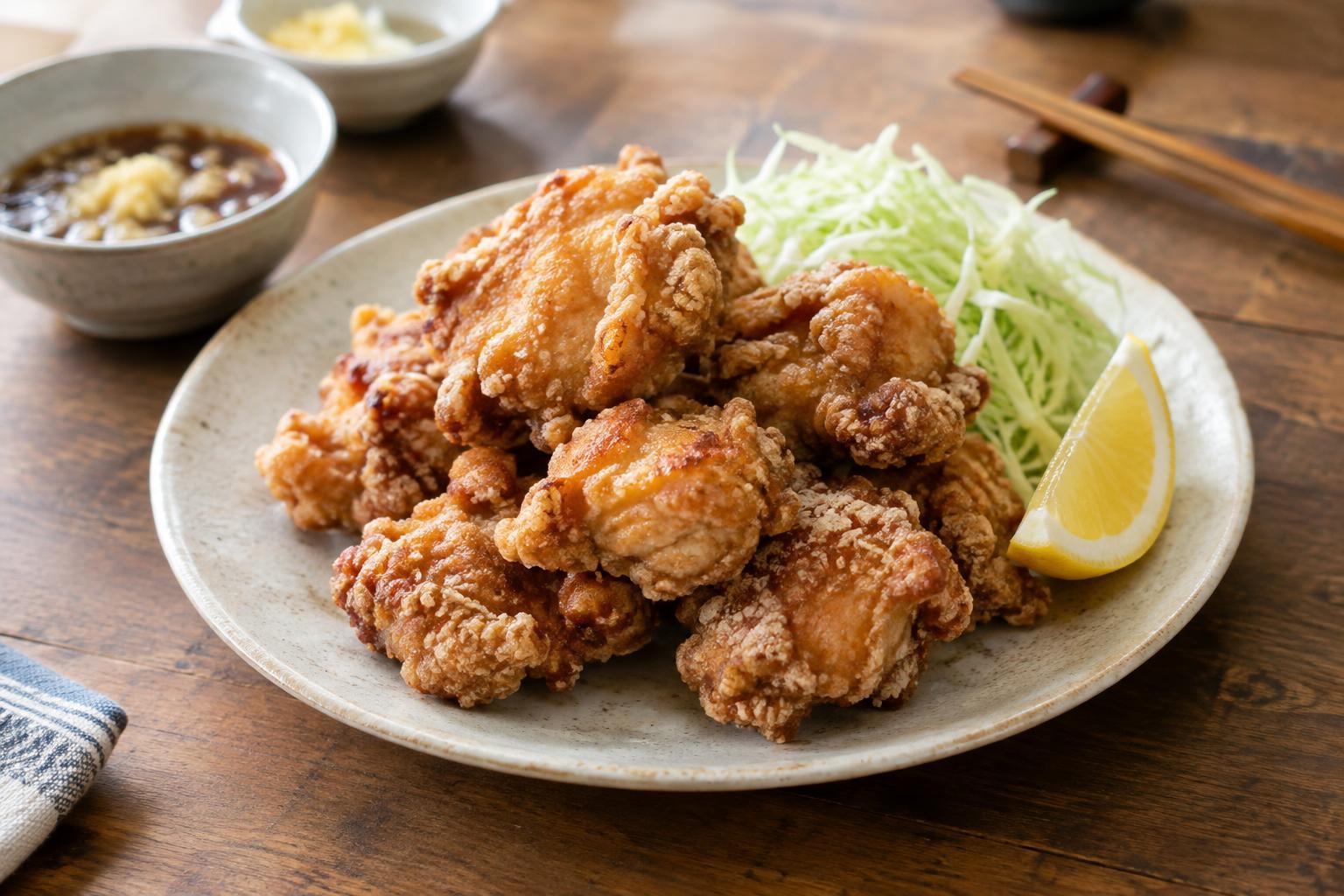
Karaage is a Japanese style of cooking in which small pieces of food are seasoned, lightly coated, and fried. Chicken karaage is especially familiar in home meals, lunch boxes, and casual dining. Unlike chicken with a thick batter, it has a thin, craggy coating that lets the seasoning of the meat come through.
Boneless chicken thigh is a forgiving choice for a first batch: it stays relatively juicy while the outside browns. Breast meat also works, but its leaner texture makes it easier to overcook. Cut whichever you choose into pieces of roughly equal size, about 3 to 4 cm across, so they finish cooking at a similar rate. The aim is a crisp coating and fully cooked chicken, not a particular shade of brown alone.
Make a simple soy-ginger marinade
For about 500 g of boneless chicken thigh, combine 2 tablespoons soy sauce, 1 tablespoon sake, 1 teaspoon finely grated ginger, and 1 small grated garlic clove. If you do not use sake, substitute water. A teaspoon of sesame oil is optional. Toss the chicken thoroughly in the mixture, cover it, and refrigerate for 20 to 60 minutes. This gives the seasoning time to reach the surface of every piece without requiring an overnight plan.
Soy sauce brands vary in saltiness, so there is no need to add salt before tasting the finished chicken. If you prefer a milder garlic flavor, leave it out; ginger and soy sauce make a good base on their own. When the chicken is ready to coat, lift it from the marinade and let excess liquid drip off. Discard the used marinade rather than serving it as a sauce.
Coat the chicken without a heavy crust
Put about 1/2 cup potato starch in a shallow dish, adding more if needed. Coat each piece of chicken on all sides, pressing gently so the starch clings to the moist surface. Shake off loose powder. You want an even, thin layer with a few irregular patches, not clumps of dry starch. If liquid collects in the dish, replace the damp starch rather than continuing to dredge in it.
Potato starch produces the light, crisp finish many people associate with karaage. Cornstarch is a useful substitute if potato starch is unavailable, though the texture may be slightly different. Set the coated pieces on a plate while the oil heats; a brief rest gives the coating a chance to adhere. Keep raw chicken and its plate separate from anything you will use to serve the cooked batch.
Fry in small batches and check for doneness
Pour neutral frying oil into a sturdy, deep pot, filling it no more than one-third full. Heat it to around 170 to 175°C (340 to 350°F). A cooking thermometer helps because the temperature drops when chicken goes in and rises again between batches. Carefully lower in a few pieces at a time, leaving room for them to move. Turn them occasionally and fry until the coating is golden and crisp, typically several minutes; thicker pieces will take longer.
Use a clean thermometer to check that the thickest part of the chicken reaches 74°C (165°F). Color alone is not a reliable doneness test. Lift the cooked pieces onto a wire rack so oil can drain and steam can escape. Let the oil return to temperature before adding the next batch. If you want an extra-crisp exterior, you can give fully cooked pieces a brief second fry in slightly hotter oil after they have rested, but a careful single fry is enough for a satisfying home version.
Serve while the coating is at its best
Karaage is most crisp soon after frying. Serve it with lemon wedges if you like a bright finish, alongside rice and a simple vegetable dish for an everyday meal. A small dish of mayonnaise is another optional accompaniment; taste the chicken first, since the marinade may provide all the seasoning you want.
For leftovers, refrigerate the cooked chicken promptly in a covered container. Reheat it until hot throughout, preferably on a rack in an oven or air fryer so air can reach the coating. It may not regain every bit of its fresh-fried crunch, but avoiding a covered pan helps keep the exterior from becoming soggy.