A small side dish with plenty of texture
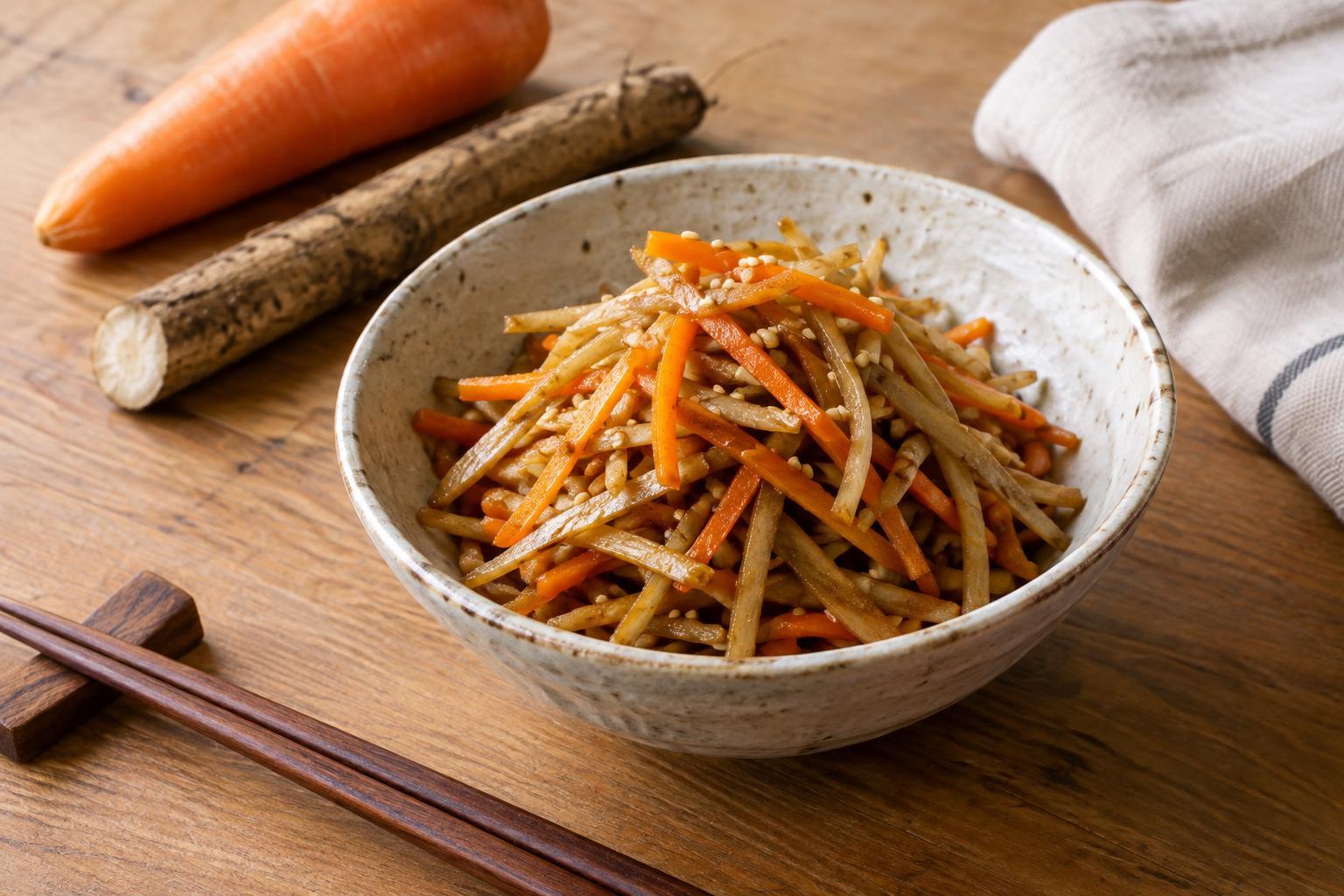
Kinpira gobo is a Japanese home-cooking dish of thinly cut burdock root, often paired with carrot, cooked in a savory-sweet seasoning. The vegetables retain a little bite rather than becoming completely soft. That texture, along with burdock’s earthy flavor, makes the dish a useful contrast to rice and milder main dishes.
Gobo is the Japanese name for burdock root. You may find it fresh in an Asian grocery store as a long, slender root with brown skin. Choose roots that feel firm rather than limp. If burdock is new to you, kinpira is a practical introduction: cutting it thinly helps it cook quickly, while carrot adds sweetness and color.
Ingredients and preparation
For about four small side-dish portions, use roughly 200 grams of burdock root and 100 grams of carrot. For the seasoning, measure 1 tablespoon soy sauce, 1 tablespoon mirin and 1 teaspoon sugar. You will also need 1 tablespoon neutral cooking oil or a mix of neutral and sesame oil. Have a tablespoon or two of water ready in case the pan becomes dry before the vegetables are tender. Toasted sesame seeds are optional for finishing.
Scrub the burdock well under running water; there is no need to remove all of its skin if it is clean. Cut it into thin matchsticks, about the length of a finger. Cut the carrot to a similar size so both vegetables are easy to toss and eat together. A sharp knife gives the most even pieces, but a julienne peeler can make the work quicker. Thicker cuts will need a little longer in the pan.
Burdock darkens after cutting. If you are preparing it ahead of cooking, put the pieces in a bowl of water briefly, then drain them thoroughly. A long soak is unnecessary and can wash away some of its distinctive flavor. Patting the vegetables dry also helps them stir-fry rather than steam when they first hit the pan.
How to cook kinpira gobo
Mix the soy sauce, mirin and sugar in a small bowl before heating the pan. Set a wide frying pan over medium heat and add the oil. Add the drained burdock and carrot, then stir-fry for several minutes, tossing often. The vegetables should begin to soften while keeping their shape. If they brown too quickly, lower the heat.
Pour in the seasoning and stir to coat everything evenly. Continue cooking, turning the vegetables as the liquid reduces. If the pan dries out while the burdock still tastes too firm for you, add a splash of water and cook a little longer. The finished kinpira should look lightly glazed, not sit in a pool of sauce. Taste a piece before serving: thin cuts may be ready in just a few minutes after seasoning, while thicker ones take longer.
Soy sauces vary in saltiness, so it is worth tasting before adding more. For a less sweet version, reduce or omit the sugar. If you do not have mirin, a little water with sugar can help the seasoning coat the vegetables, though it will not give quite the same flavor.
Ways to vary the dish
Once you are comfortable with the basic method, adjust the balance rather than treating the measurements as fixed. A little more carrot makes the dish sweeter; more burdock brings its earthy flavor forward. For gentle heat, add a small pinch of dried chili flakes while stir-frying. A few drops of sesame oil at the end can add aroma without overwhelming the vegetables.
Kinpira is also a useful way to practice cooking by texture. Some people prefer the vegetables distinctly crisp, while others like them softer. Keep the pieces narrow for a quick-cooking side, or cut them slightly thicker and add a splash of water during cooking. Either way, stir often so the soy-based seasoning reduces evenly instead of catching in one spot.
Serving and keeping leftovers
Serve kinpira gobo warm or at room temperature alongside rice, soup and another dish. Its concentrated seasoning means a small portion can add interest to a simple meal. It also works as a filling for a rice ball, provided you chop the strands shorter and use just enough to keep the rice easy to shape.
Let leftovers cool, then refrigerate them promptly in a covered container. They can be eaten chilled or gently reheated within a few days. If you plan to make kinpira as part of meal preparation, keep it separate from rice until serving so each retains its texture.