Why the type of rice matters
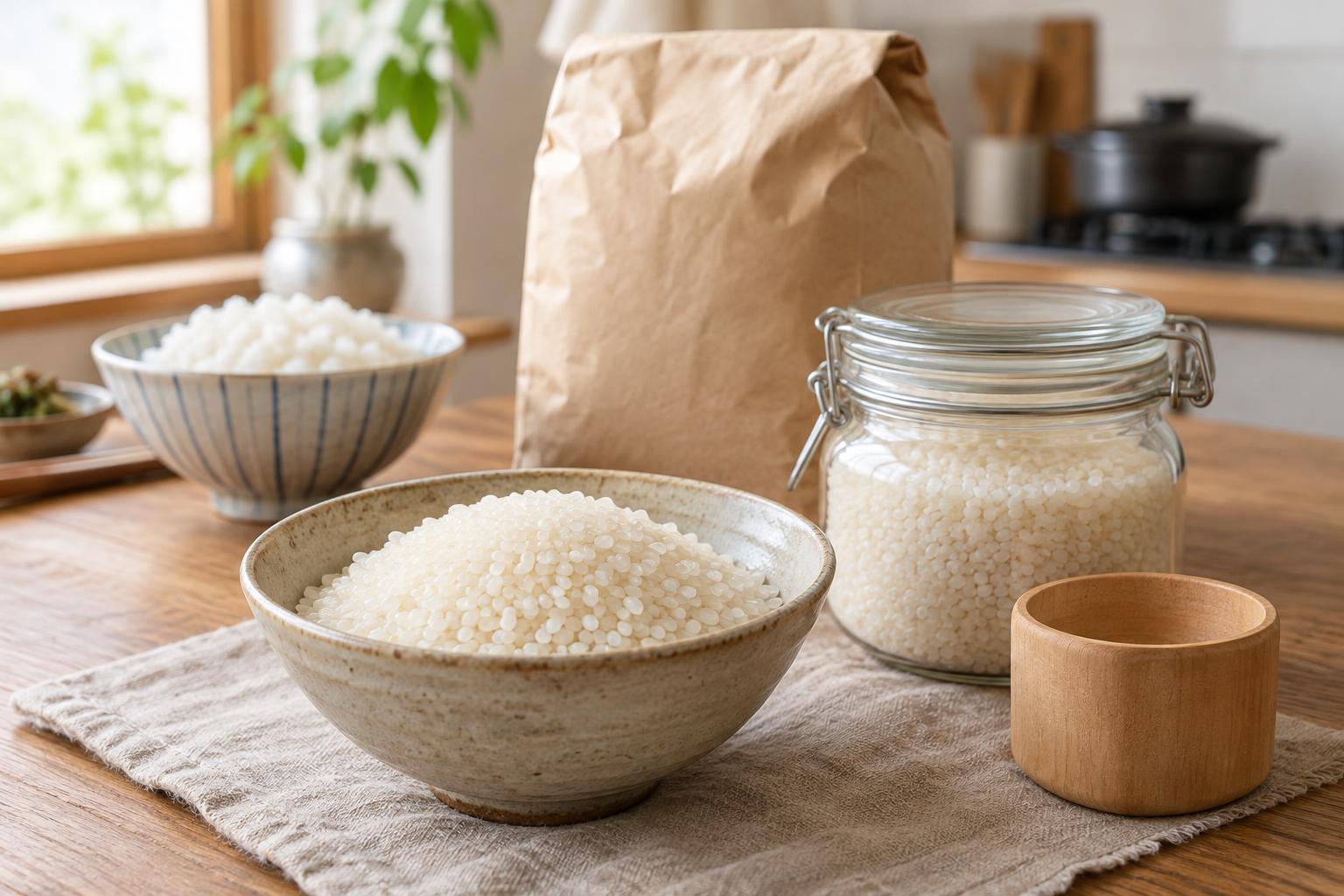
In many Japanese home meals, a bowl of plain rice sits alongside dishes with stronger flavors. Japanese short-grain rice is well suited to that role: when cooked, its grains are tender and cling together enough to pick up with chopsticks, while still remaining distinct when prepared well. It also holds its shape in simple foods such as onigiri, or rice balls.
If you are buying rice for everyday Japanese cooking, look for a package that says Japanese short-grain rice or identifies the rice as suitable for Japanese-style meals. “Sushi rice” on an English-language package often refers to the same general style of short-grain rice, even if you plan to serve it plain. Rice sold as glutinous or sweet rice is a different choice, despite its similarly short grains.
Read the label before choosing a bag
The most useful distinction is between ordinary eating rice and sticky rice. Uruchimai is the Japanese term for the ordinary, non-glutinous rice used for a typical bowl of rice. Mochigome is glutinous rice, used for foods such as mochi and certain steamed rice dishes. “Glutinous” describes its sticky texture; it does not mean the rice contains gluten. If your goal is a daily bowl of rice, choose uruchimai rather than mochigome.
Most white rice has had its bran and germ removed. Brown rice, often labeled genmai, retains them and has a firmer texture and more pronounced flavor. Partially milled options, including rice labeled haiga-mai, fall between brown and white rice in how much of the grain’s outer layers remain. They can be enjoyable choices, but their cooking directions may differ from those for fully polished white rice.
You may also see musenmai, or no-wash rice. It is processed so it generally does not need the usual rinsing before cooking; follow the package directions for water and preparation. Shinmai means rice from a new harvest. It can be appealing if you enjoy trying seasonal rice, but the label alone does not tell you how a bag has been stored. Variety names, such as Koshihikari, can offer a starting point for comparison, yet growing conditions and personal preference also affect which rice you will enjoy.
Choose an amount you can use comfortably
A larger bag may look convenient, but rice is easier to keep at its best when you buy an amount that fits your cooking routine and storage space. If you make rice occasionally, start with a smaller bag. That also gives you a low-commitment way to compare varieties or brands. If rice is on your table most days, a larger bag may be practical as long as you can store it properly.
Check that the package is intact and read any packing or best-before information provided. If the bag is transparent, look for rice that appears clean and reasonably consistent, without visible moisture or signs of damage. Once you have found a rice you like, noting its name and milling style can make the next shopping trip simpler. You do not need an especially expensive variety to make a satisfying everyday bowl.
Store uncooked rice away from heat and moisture
Transfer rice from an opened bag to a clean, dry container with a well-fitting lid, unless the original package closes securely. Keep it away from heat, sunlight, strong-smelling foods, and damp areas. A cool cupboard may work well in a mild, dry home. In a warm or humid kitchen, space in the refrigerator can be a better choice, provided the container is sealed against moisture and odors.
Avoid topping up a container with new rice while old rice remains at the bottom. Use what is there first, then clean and dry the container before refilling it. If you keep rice in the refrigerator, close the container promptly after taking out what you need. Keeping the rice dry is particularly important: water belongs in the pot when you cook, not in the storage container.
Let the cooked bowl guide your next purchase
Even a carefully chosen bag of rice may need a little adjustment in your kitchen. Measure the rice and water according to the package or your rice cooker, then notice the result. If the rice seems too firm or too soft for your taste, make a small water adjustment the next time rather than changing several steps at once. For standard white rice that is not labeled no-wash, a gentle rinse before cooking is common practice.
Pay attention to how you most often eat it. A rice that feels pleasantly soft in a plain bowl may also be convenient for onigiri, while another variety may better suit your preference for slightly firmer grains. Clear labels, a manageable bag size, and sensible storage matter more than finding one supposedly perfect rice. The best everyday choice is one you enjoy cooking and eating regularly.