Why the type of soy sauce matters
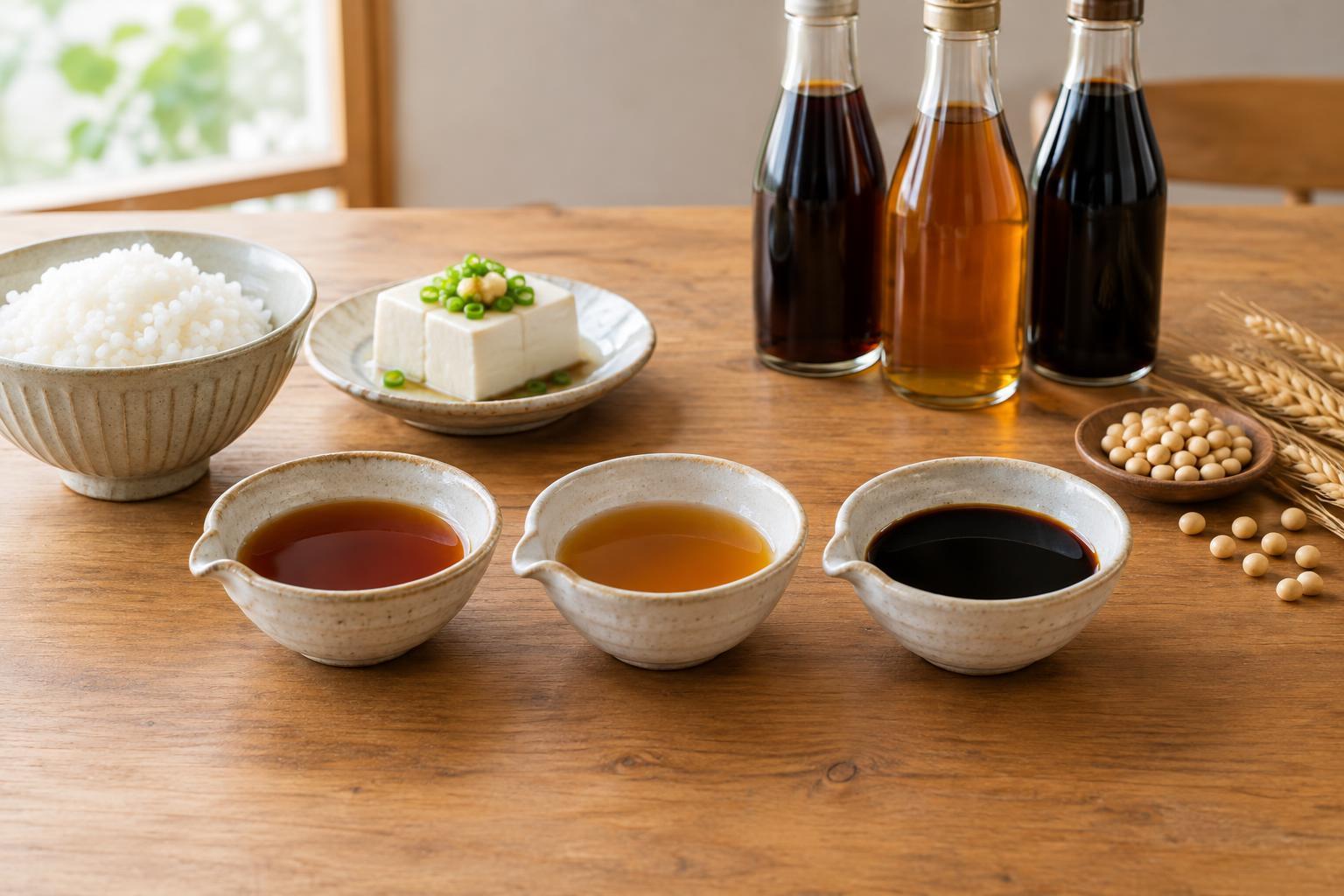
Soy sauce, or shoyu, does more than add salt. It can deepen a simmered dish, bring a savory edge to a dipping sauce, or season a clear broth without making it look too dark. Three varieties a home cook may encounter are koikuchi, usukuchi, and tamari. They are related, but they are not interchangeable in every recipe.
The simplest way to choose among them is to consider three things: how dark you want the finished food to look, how prominent you want the soy sauce flavor to be, and how much salt the sauce will add. Brands vary, so tasting a small amount diluted in water or broth can tell you more than color alone.
Koikuchi: the versatile everyday choice
Koikuchi is the familiar dark-colored Japanese soy sauce used across a wide range of home dishes. It offers a balance of saltiness, savory depth, and aroma. If a Japanese recipe simply says “soy sauce” without naming a variety, koikuchi is usually a sensible starting point.
Use it for teriyaki-style glazes, stir-fries, dipping sauces, and simmered vegetables or meat. Its color will show in pale ingredients and broths, which can be welcome in a glossy glaze but less desirable in a delicate soup. When building a sauce, add koikuchi gradually: a little can season the dish, while more can become its leading flavor.
Usukuchi: lighter color, not necessarily less salt
Usukuchi means “light-colored” in this context. It gives food a paler finish than koikuchi, making it useful when you want the colors of ingredients or a light broth to remain visible. You might reach for it in a clear soup, a gently simmered vegetable dish, or seasoned rice.
Its lighter appearance is easy to misread. Usukuchi is not a low-sodium soy sauce and may be saltier than koikuchi, depending on the product. If substituting it for koikuchi, begin with less than the recipe calls for, taste, and adjust. You can add more seasoning, but you cannot easily remove it once a broth has become too salty. If you specifically need less sodium, look for a product labeled reduced-sodium rather than relying on the word “light.”
Tamari: a richer accent with labels worth checking
Tamari is often described as having a full, rounded soy flavor. It can work well as a dipping sauce for tofu or grilled foods, and it can give depth to marinades and cooked sauces. Because its character and thickness vary by maker, try a small amount before using it wherever a recipe calls for ordinary soy sauce.
Tamari is sometimes chosen by people avoiding wheat, but the name alone does not guarantee that a bottle is wheat-free or gluten-free. Ingredients and production practices differ. If wheat or gluten is a concern, check the specific product label and any relevant certification rather than assuming all tamari is suitable.
Choosing a bottle and making substitutions
For a small pantry, start with koikuchi: it covers many everyday uses. Add usukuchi if you often make pale soups or lightly colored simmered dishes. Choose tamari if you enjoy its flavor as a finishing or dipping sauce. You do not need all three to cook good meals; the variety you will use regularly is the most useful one to keep.
When substituting, think of soy sauce as both seasoning and color. Koikuchi in place of usukuchi may darken a dish, even if the salt level tastes right. Usukuchi in place of koikuchi may need careful measuring to avoid excess salt. Tamari can change the flavor balance of a sauce. In each case, start modestly, taste after the sauce has mixed with the other ingredients, and adjust if needed.
Keep bottles tightly closed and follow the storage guidance on their labels. Once opened, protecting soy sauce from heat and prolonged exposure to air helps preserve its aroma. Whether you own one variety or several, using it with attention to the whole dish will matter more than finding a perfect one-for-one replacement.