What a miso strainer does
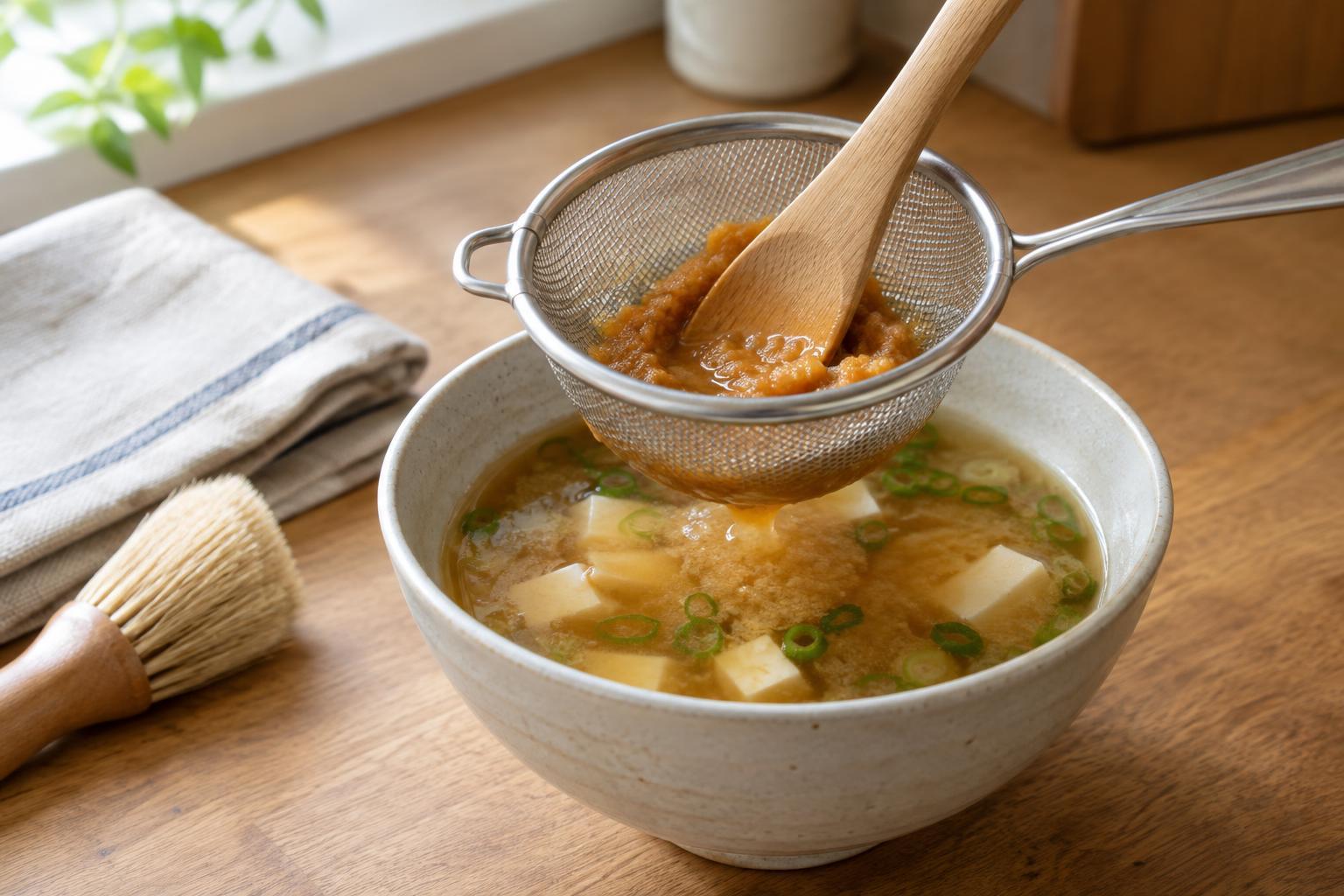
A miso strainer, often called a miso koshi, is a small mesh basket with a handle. You hold it in warm broth and press miso against the mesh with a spoon or the small pestle that sometimes comes with the tool. The miso disperses into the liquid while larger pieces remain in the basket. It is a convenient way to avoid finding an undissolved lump at the bottom of a bowl.
Straining also affects texture. Some miso pastes contain noticeable bits of soybean or rice koji, the grain used in fermentation. If you prefer a smoother soup, the mesh can hold back some of those pieces. If you enjoy a more rustic texture, there is no need to remove them. A miso strainer is a choice about convenience and mouthfeel, not a requirement for making miso soup.
When it helps—and when you can skip it
A strainer is particularly useful when adding a firm or coarse miso to a pot of soup. Rather than dropping the paste straight into the pot and chasing it with a spoon, you can dissolve a little at a time in one place. It also helps when making several servings, since you can taste the broth after each addition and stop when the seasoning suits you. Because miso varies in saltiness and intensity, tasting is more dependable than assuming every paste needs the same amount.
For a quick single serving, a strainer may be more tool than you need. Put the miso in a small bowl, add a spoonful of warm broth, and stir until loose before returning the mixture to the soup. You can also dissolve it against the side of a ladle held in the pot. These methods work well if you do not mind a few bits of paste in the finished bowl.
A strainer is not meant to filter the entire soup. Tofu, wakame and vegetables can stay in the pot while you season the broth. If you are using a particularly chunky miso and want to keep its solids, dissolve it in a ladle or bowl instead of pressing it through mesh.
How to use one without making a mess
First, cook any ingredients that need simmering and make sure the broth tastes balanced before adding miso. Lower the heat or turn it off, then set the strainer into the warm liquid. Place a modest spoonful of miso inside and move a spoon or pestle over it gently. Broth will flow through the basket as the paste dissolves. Lift the strainer, check for any paste clinging to the mesh, and repeat if the soup needs more seasoning.
Avoid grinding hard enough to bend the mesh. A gentle circular motion is usually enough, especially after the miso has warmed in the broth for a moment. If the liquid does not reach the basket in a shallow pot, dip warm broth into a ladle and work the miso through the strainer over the ladle, then pour it back. Once the miso is mixed in, warm the soup gently if needed rather than leaving it at a vigorous boil; this can help preserve its aroma.
Choosing a practical strainer
Look for a basket that is deep enough to hold a spoonful of paste without spilling and small enough to fit your usual saucepan. A comfortable handle matters because you may be holding the tool over hot liquid. Fine mesh produces a smoother result but can take longer to rinse; a slightly more open mesh may be easier to maintain and will let more small solids through.
A separate strainer is handy if miso soup is part of your regular cooking, but you do not need a dedicated purchase to try the technique. A small, sturdy fine-mesh sieve can serve the same purpose if it fits the pot and is safe to hold over the broth. Whatever you use, check that the rim and mesh are firmly attached, since trapped paste is harder to remove from loose seams.
Cleaning the mesh and storing it dry
Rinse the strainer soon after use, before miso dries in the weave. Run warm water through the mesh from the outside toward the inside to push residue back the way it entered. Then wash with a little dish soap and a soft brush or sponge, paying attention to the rim and the join where the handle meets the basket. If paste has dried on, soak the basket briefly in warm, soapy water before brushing rather than scraping it with a sharp utensil.
Rinse away the soap and inspect the mesh against the light for blocked spots. Shake off excess water and let the strainer air-dry fully before putting it in a drawer. Moisture can linger around the rim and handle joint, so give those areas time to dry as well. Follow the maker’s instructions if you are considering a dishwasher: fine mesh and attached handles do not all tolerate the same cleaning methods.