A meal built around good wishes
Osechi ryori is the name for a collection of foods associated with the Japanese New Year. Rather than one fixed recipe, it is an assortment of dishes, each with its own flavor, appearance and often an auspicious meaning. Families may prepare osechi at home, buy some or all of it, or choose only a few favorites. What appears on the table can differ by region, household and personal taste.
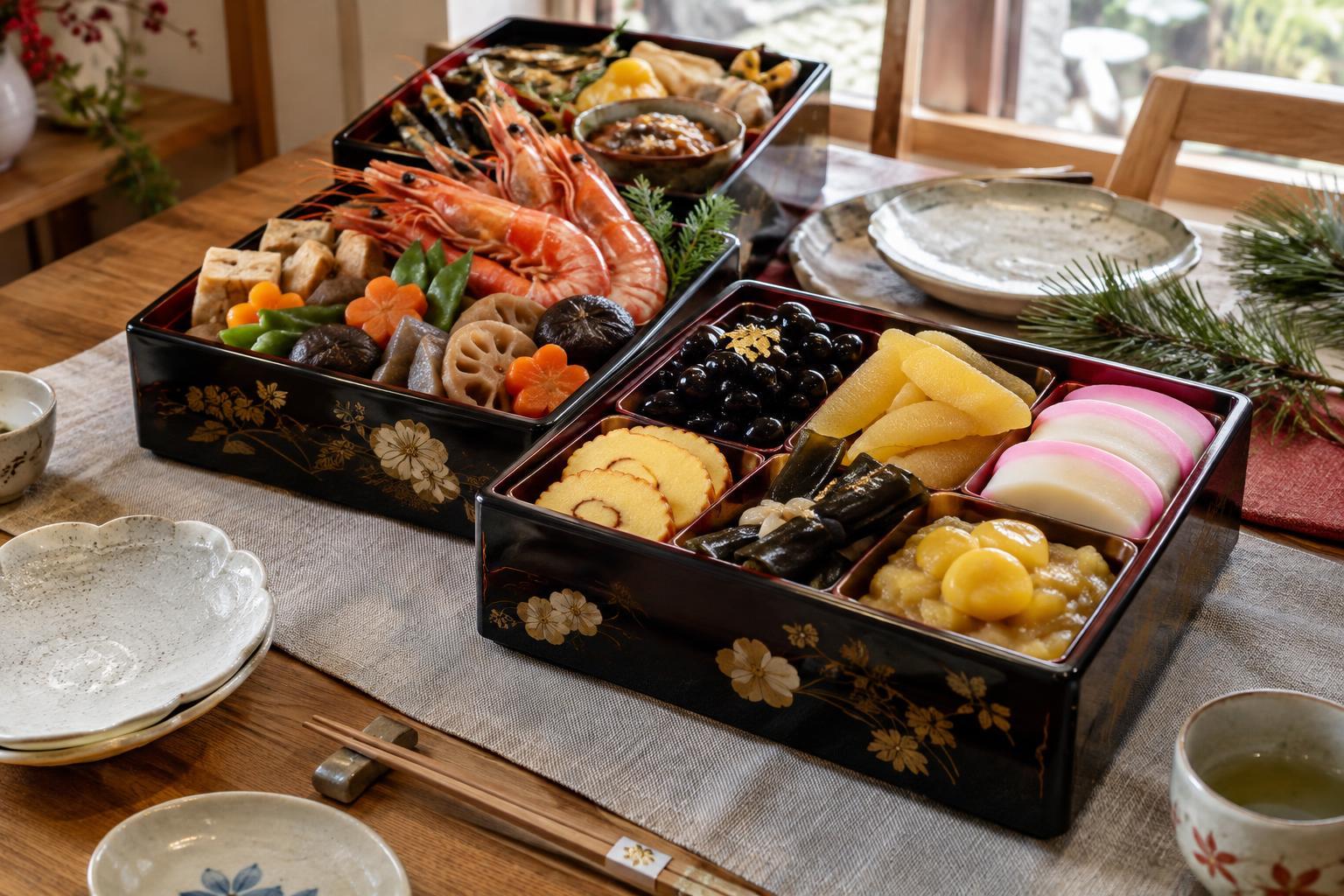
Osechi is often arranged in stacked lacquered boxes called jubako. The boxes make the assortment feel festive and give small portions of many foods a place at the table. Traditionally, dishes that could be prepared ahead were useful during a holiday when families might want a break from everyday cooking. That practical purpose still helps explain the assortment, even when the food is served on plates rather than in boxes.
Black soybeans, herring roe and hopes for the year
Kuromame, sweet simmered black soybeans, are commonly linked with good health and diligence. In Japanese, mame can suggest being healthy or hardworking as well as mean “bean.” Their gently sweet taste and glossy dark color also bring contrast to a box filled with brighter foods.
Kazunoko, herring roe, contains many tiny eggs and is associated with wishes for a flourishing family. Tazukuri, small dried fish seasoned in a sweet-savory glaze, carries a different kind of abundance: it is linked with a good harvest. The association is often explained through the historical use of small fish as fertilizer. You do not need to know every symbol to enjoy these dishes, but their meanings show how a New Year meal can express hopes without saying them aloud.
Celebratory colors and playful word connections
Some osechi meanings are easy to spot. Kuri kinton, a sweet mixture of chestnuts and mashed sweet potato, has a golden color associated with wealth and prosperity. Red-and-white kamaboko, slices of fish cake, use colors associated with celebration. Their rounded shape is sometimes compared to a rising sun. Red-and-white namasu, a lightly pickled dish often made with daikon and carrot, adds a crisp, refreshing bite alongside sweeter and richer foods.
Other connections depend on language. Kombumaki, rolls of kelp wrapped around a filling, are associated with joy partly because kombu echoes part of yorokobu, “to rejoice.” Datemaki, a sweet rolled omelet commonly made with fish paste, is sometimes connected with learning because its rolled shape resembles a scroll. These interpretations are familiar ways of explaining the foods, not rules that every household must follow.
Shape, texture and the variety of a New Year spread
Seafood and vegetables bring still more wishes to the table. Shrimp, or ebi, is associated with longevity: its curved body can call to mind the stooped posture of old age, while its long antennae resemble whiskers. Sliced lotus root, renkon, has visible holes, giving rise to the idea of seeing clearly into the future. Simmered root vegetables may appear together in nishime, a dish whose ingredients and seasoning vary from cook to cook.
Osechi is satisfying in part because its dishes are not all alike. Sweet beans can sit beside savory fish; tender simmered vegetables can be followed by crunchy pickles. Many foods are served in small amounts, so a meal becomes a series of tastes rather than a single main course. Ozoni, a soup with mochi, is also widely eaten at New Year, though it is generally considered a companion to osechi rather than a dish packed into the jubako.
Making the tradition your own
For someone new to osechi, the long list of dishes can seem daunting. A small selection is a good way to begin: perhaps kuromame for a sweet dish, namasu for something bright and crisp, and one simmered or savory favorite. Consider how the flavors work together as well as what each food represents. Store-bought components can share the table with homemade ones.
The meanings behind osechi offer a way to start conversations, not a checklist to complete. A family may keep a recipe because it recalls a relative, add a dish everyone enjoys, or leave out an ingredient that does not suit them. At its heart, the New Year table makes room to pause, share food and welcome the coming year with good intentions.