The quiet role of a meal drink
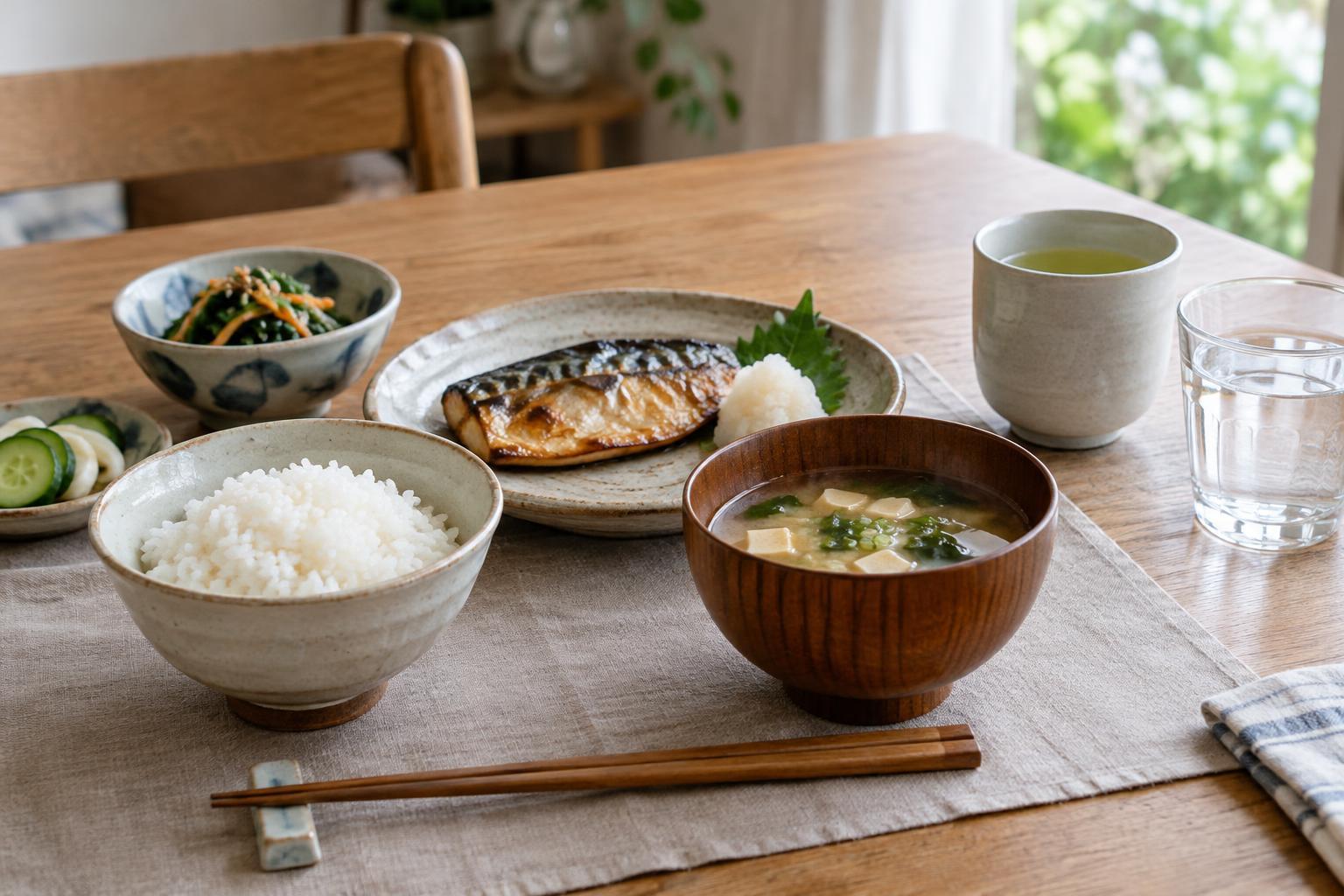
At many everyday Japanese meals, the drink is deliberately simple. Water or unsweetened tea offers a pause between bites without competing with rice, soup, pickles, or a seasoned main dish. Neither requires a special occasion, and there is no single drink that belongs with every meal. What appears on the table depends on the household, the season, personal preference, and what is already prepared.
A familiar home setting might include a cup of tea poured near the end of a meal, water available throughout, or just one of the two. Children and adults may choose different drinks. Thinking of tea and water as flexible parts of the meal, rather than mandatory pairings, is a useful starting point for anyone setting a Japanese-inspired table.
Tea choices for everyday food
The Japanese word ocha broadly means tea, but it does not tell you exactly what will be in the cup. Sencha is a green tea with a fresh, sometimes gently grassy character. Hojicha is roasted and often tastes toasty and mellow. Genmaicha combines green tea with roasted rice, adding a warm, nutty aroma. Any of these can accompany a modest home meal; choosing one is more a matter of taste than of following a fixed menu rule.
Mugicha, made from roasted barley, is another everyday option. Although its name includes cha, meaning tea, it is not made from tea leaves. It is often served cold, particularly when a refreshing drink sounds appealing. Its roasted flavor also works beside food without needing sweetener. If you are serving guests, it is worth naming the drink rather than assuming everyone will expect the same kind of tea.
Temperature matters as much as variety. Hot tea can feel comforting with a simple rice meal, while chilled tea may suit a warm day or a quick lunch. A strongly brewed cup can overshadow delicate food, so a lighter brew is often an easy choice when you are unsure. Follow the preparation guidance for the tea you have, then adjust the strength to suit the people at your table.
What to expect at home and when eating out
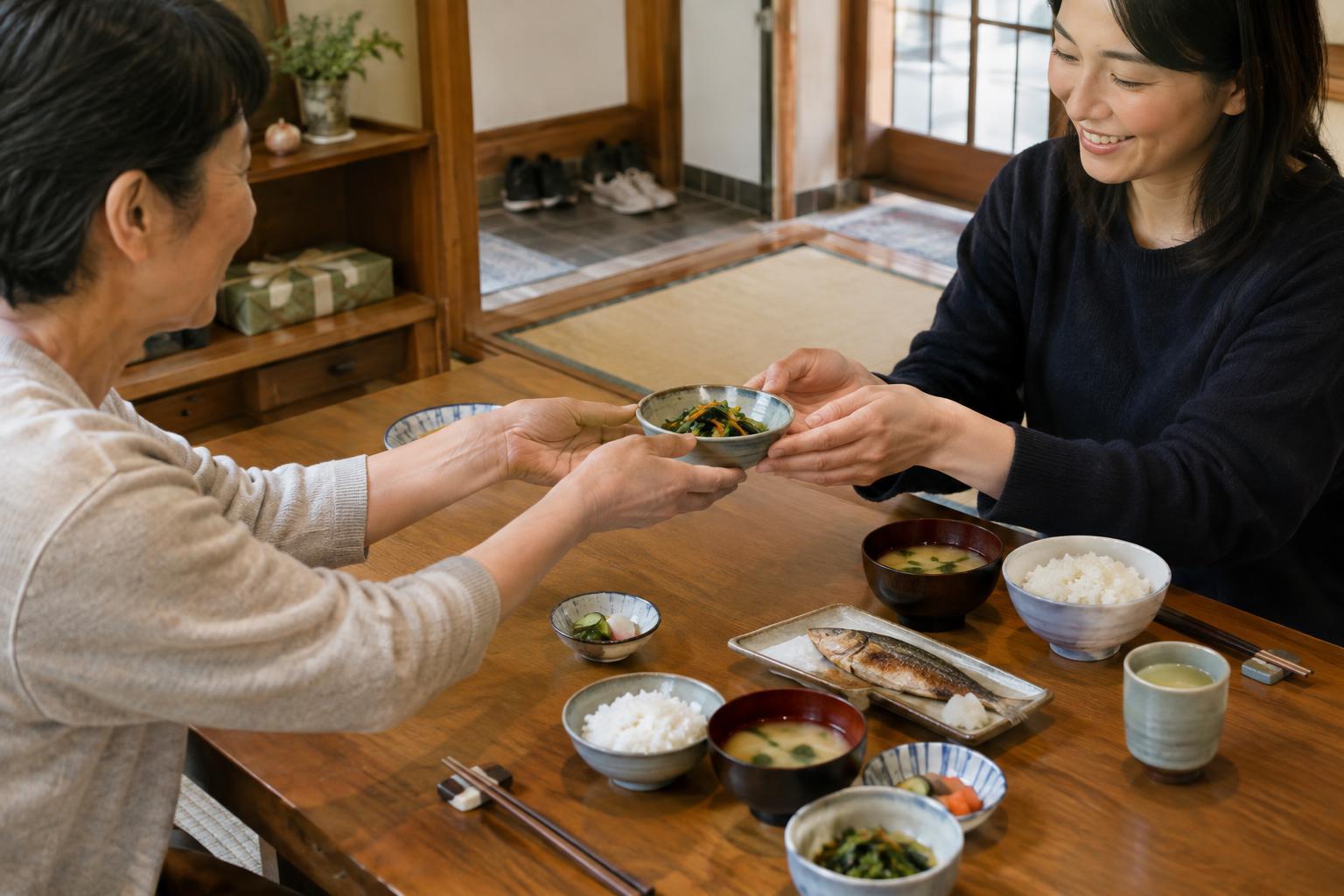
At home, there is no universal order for serving drinks. Someone may set out glasses of water before the food, keep a pitcher nearby, or bring tea after everyone has started eating. Practicality often decides: a pot of tea already made is easy to share, while water needs little preparation. If a meal includes soup, that does not mean a separate drink is unnecessary; it simply gives people another way to enjoy something warm.
In casual restaurants, water or tea may be provided, offered on request, or available from a self-service station. The arrangement varies by establishment, so notice what is on the table or ask staff if you are uncertain. Do not assume that a complimentary drink will be refilled at the table. If you are hosting at home, making refills easy is more helpful than trying to copy one particular restaurant routine.
Cups, placement, and small courtesies
An ordinary glass is perfectly suitable for water. Tea is often served in a small cup without a handle, though a mug is just as practical in a home kitchen. For hot tea, choose a cup that is comfortable to hold and leave enough room at the top to carry it safely. Matching cups can make the table look settled, but they are not essential to an everyday meal.
Place drinks where they can be reached without leaning across shared dishes. If you are pouring for others, check whether they want more rather than filling a cup automatically; someone may be waiting for their tea to cool or may prefer water. These small choices express consideration without turning the meal into a performance of etiquette.
Putting together a simple table
For a weeknight meal, start with the food and add drinks in the easiest way for your household. Set a glass of water at each place, or put a pitcher within reach. If you want tea, brew one pot of sencha, hojicha, or genmaicha and bring it to the table with cups. For a cold option, prepare mugicha ahead of time and serve it from the refrigerator. There is no need to offer several varieties at once.
When guests are joining you, a simple question—“Would you like water or tea?”—does more than an elaborate rulebook. It makes room for preference while keeping the meal relaxed. The most useful custom to borrow is not a particular cup or tea variety, but the idea that a modest drink, served with care, can make everyday food more comfortable to share.