A word for the right moment
In Japanese food culture, shun refers to the time when an ingredient is considered especially good to eat. It may be when a vegetable is tender, a fruit tastes its best, or a fish is prized for its condition. The idea is simple, but it asks a useful question: rather than deciding on a dish first and buying the same ingredients year-round, what looks good now?
Shun is not a fixed date on a calendar. Growing conditions, fishing grounds, weather, and local preferences all affect when an ingredient is at its best. Nor does the word mean that food outside its season is unworthy of eating. Modern kitchens rely on stored, preserved, greenhouse-grown, and imported foods, too. Shun is a way to pay attention to timing, not a rule that every meal must follow.
How the seasons appear on a Japanese table
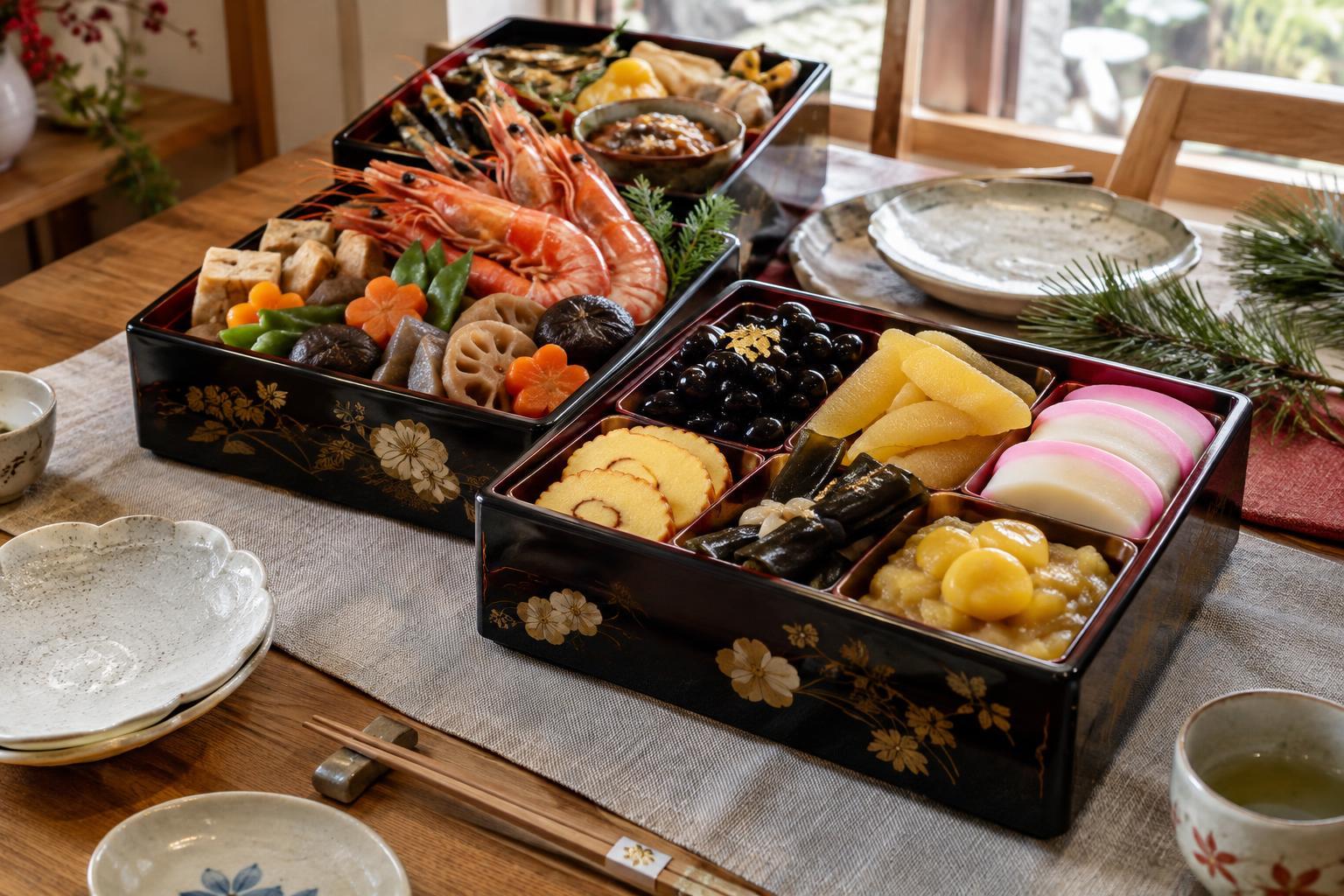
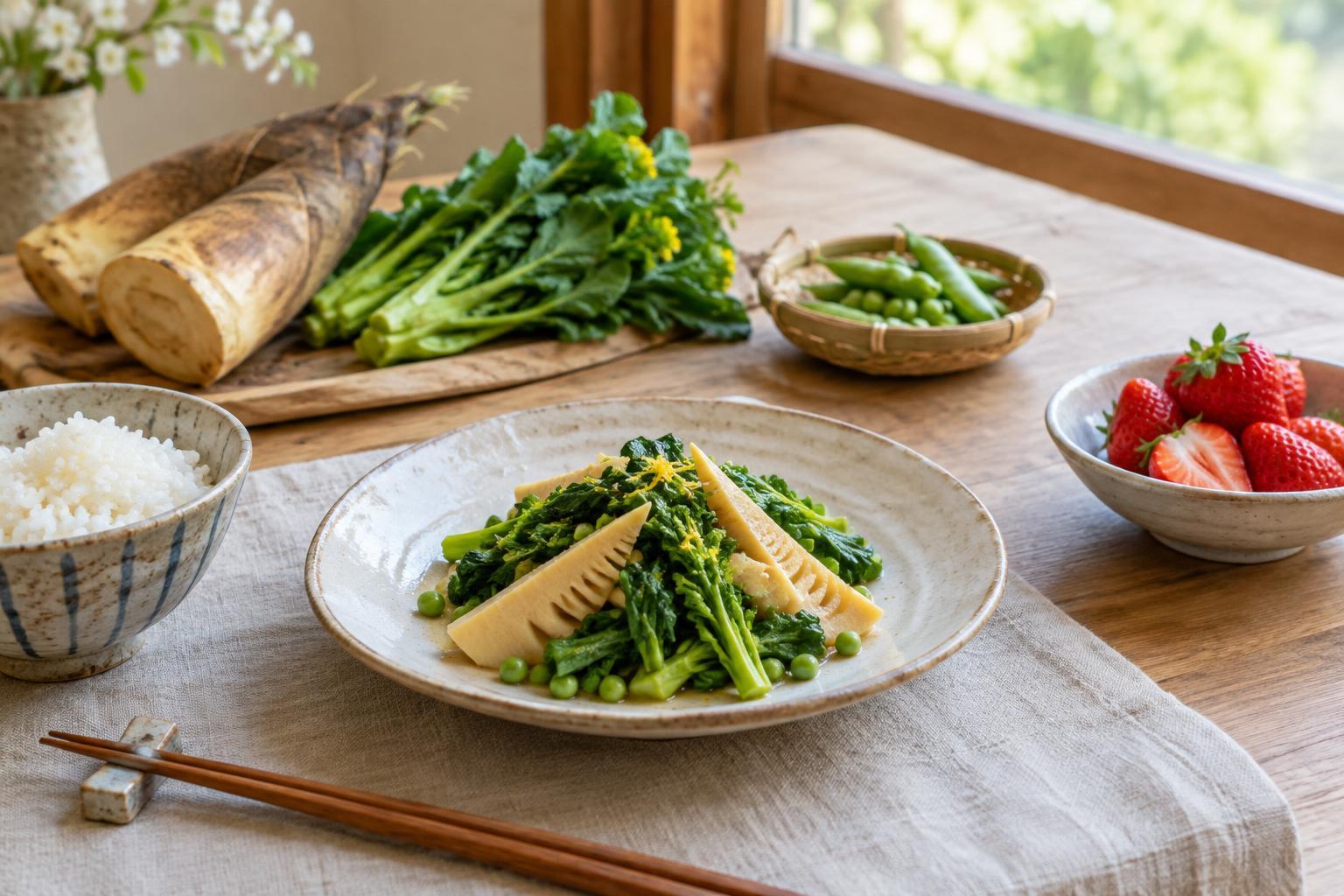
Seasonal thinking can shape an entire meal without making it elaborate. Spring might bring tender greens or bamboo shoots; summer offers foods such as cucumbers and eggplant; autumn is associated with mushrooms and sweet potatoes; and winter invites hearty preparations of daikon and other vegetables. These are examples, not a universal shopping list. What is readily available will differ between regions and households.
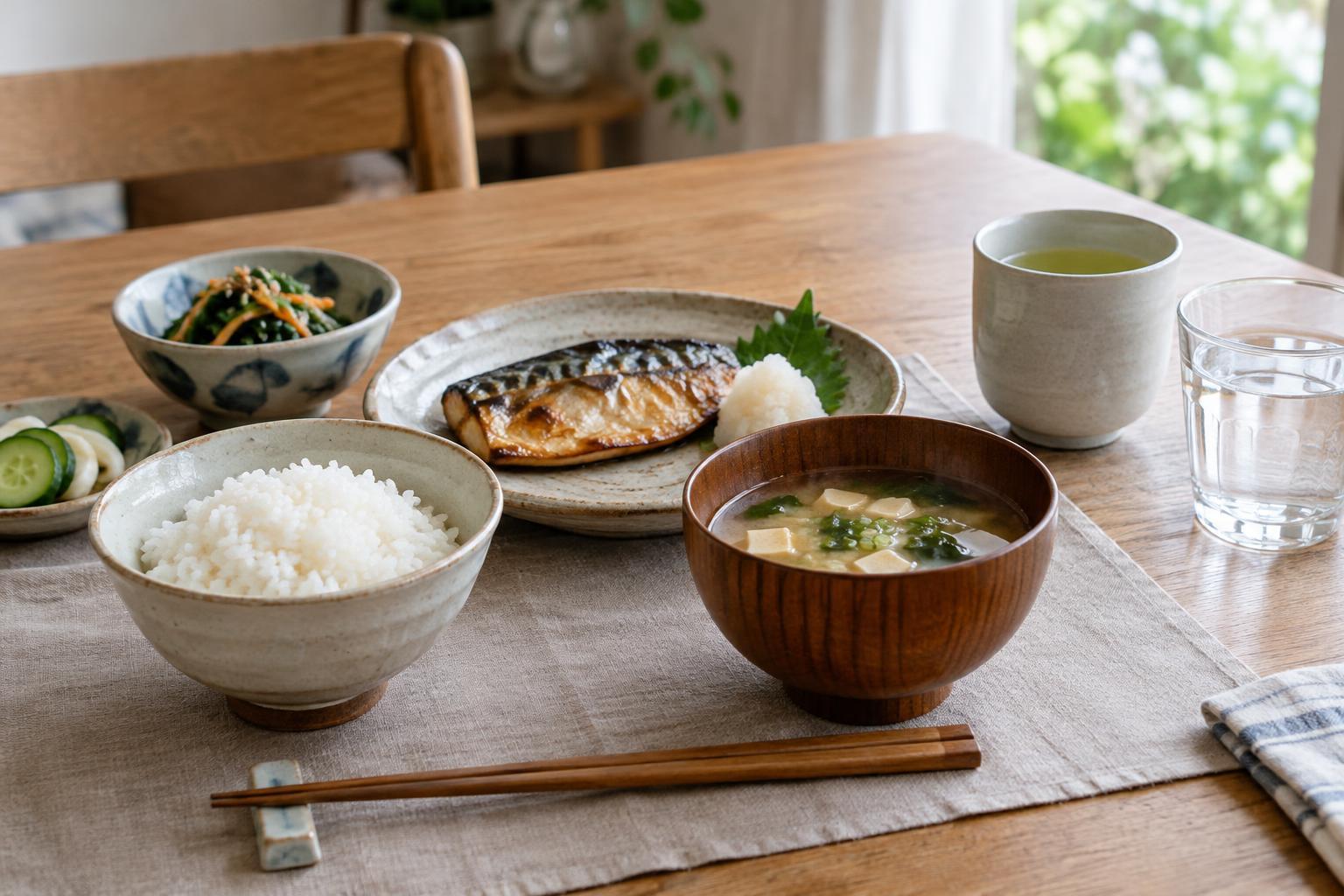
A cook might highlight a seasonal ingredient with a preparation that lets its character come through: simmering daikon until it is soft, grilling a fish simply, or adding fresh greens to a bowl of rice. Seasonal foods also appear alongside familiar staples. Rice, miso soup, and a small everyday dish can provide a steady framework while one ingredient changes. That contrast makes the new arrival noticeable.
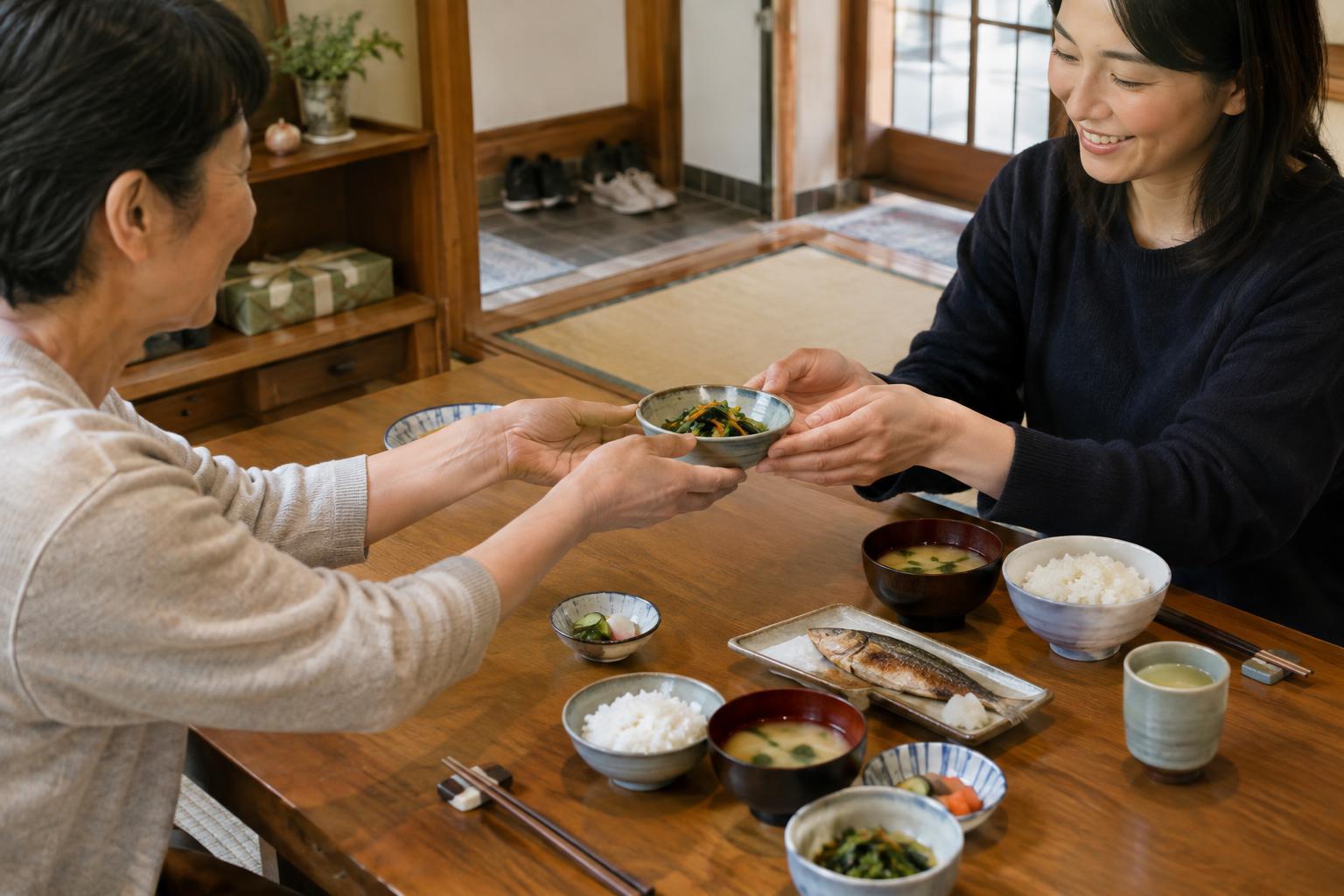
The sense of season extends beyond produce. A cooling dish may feel welcome in hot weather, while a warm soup suits a cold evening. Presentation can play a part as well, but it need not involve special tableware. Even serving a small portion of something newly available and naming it at the table can make a meal feel connected to its moment.
Peak, first arrival, and the last taste
When people talk about seasonal ingredients in Japan, they may distinguish between a food’s first appearance, its fullest period, and the tail end of its season. You may encounter the terms hashiri for an early arrival, sakari for the height of the season, and nagori for what remains as the season passes. Usage varies, but the distinctions show that seasonal eating is about more than a single perfect week.
Each stage offers a different pleasure. An early ingredient can feel exciting because it signals a change; one at its peak may be abundant and easy to build a meal around; a late-season ingredient can invite a final familiar dish before it disappears from the usual rotation. There is no need to memorize these terms to enjoy the idea. Notice how an ingredient changes over time, then cook it in a way that suits what you have.
Making shun useful at home
Start with one flexible meal rather than a strict seasonal menu. Keep a basic plan—rice and soup, noodles with vegetables, or a simple grilled main dish—and choose one ingredient that looks particularly appealing when you shop. If it is unfamiliar, use a straightforward method first: wash and slice it, then simmer, sauté, or serve it with a modest seasoning. A light hand makes it easier to learn its texture and flavor.
Availability is a practical clue, though not proof of local seasonality. Shop signs, origin labels, and conversations with sellers can help you understand where an ingredient came from. If fresh choices are limited, frozen or preserved foods can still make a satisfying meal. Seasonal thinking need not become an expensive search for something rare; a well-priced, good-quality ingredient you will actually cook is a sound choice.
You can also keep a small note of what you enjoyed and when you found it. Over time, you may notice that your local seasons do not match a Japanese recipe’s assumptions. That is useful knowledge, not a mistake. Use the recipe for its technique or flavor pairing, then adapt the ingredient to what grows or is available near you.
A habit of noticing
Shun offers a gentle way to vary everyday cooking. It encourages curiosity about an ingredient’s taste, where it comes from, and how long it will be around. You do not have to rebuild your pantry or prepare a formal Japanese meal to try it. The next time you shop, choose one food because it seems especially good right now, and give it enough space on the plate to be noticed.