Decide what the tofu needs before you prep
Tofu is convenient partly because it often needs very little preparation. Before draining or cutting a whole package, think about the dish you plan to make. Silken tofu has a delicate, custard-like texture that suits chilled tofu, smooth sauces, and gentle soups. Firm tofu holds its shape better for simmering, pan-frying, and mixing into vegetables. The labels vary by brand, so the tofu’s feel is a useful guide: the softer it is, the more carefully it needs to be handled.
For a Japanese-style meal, you might serve chilled tofu with toppings, add cubes to miso soup, or simmer larger pieces with vegetables. Each use calls for a different amount of handling. Preparing only what you need helps protect the rest from breaking apart and gives you more options later in the week. If your plans are uncertain, leave the tofu uncut and refrigerated until you are ready to cook.
Drain gently, and press only when useful
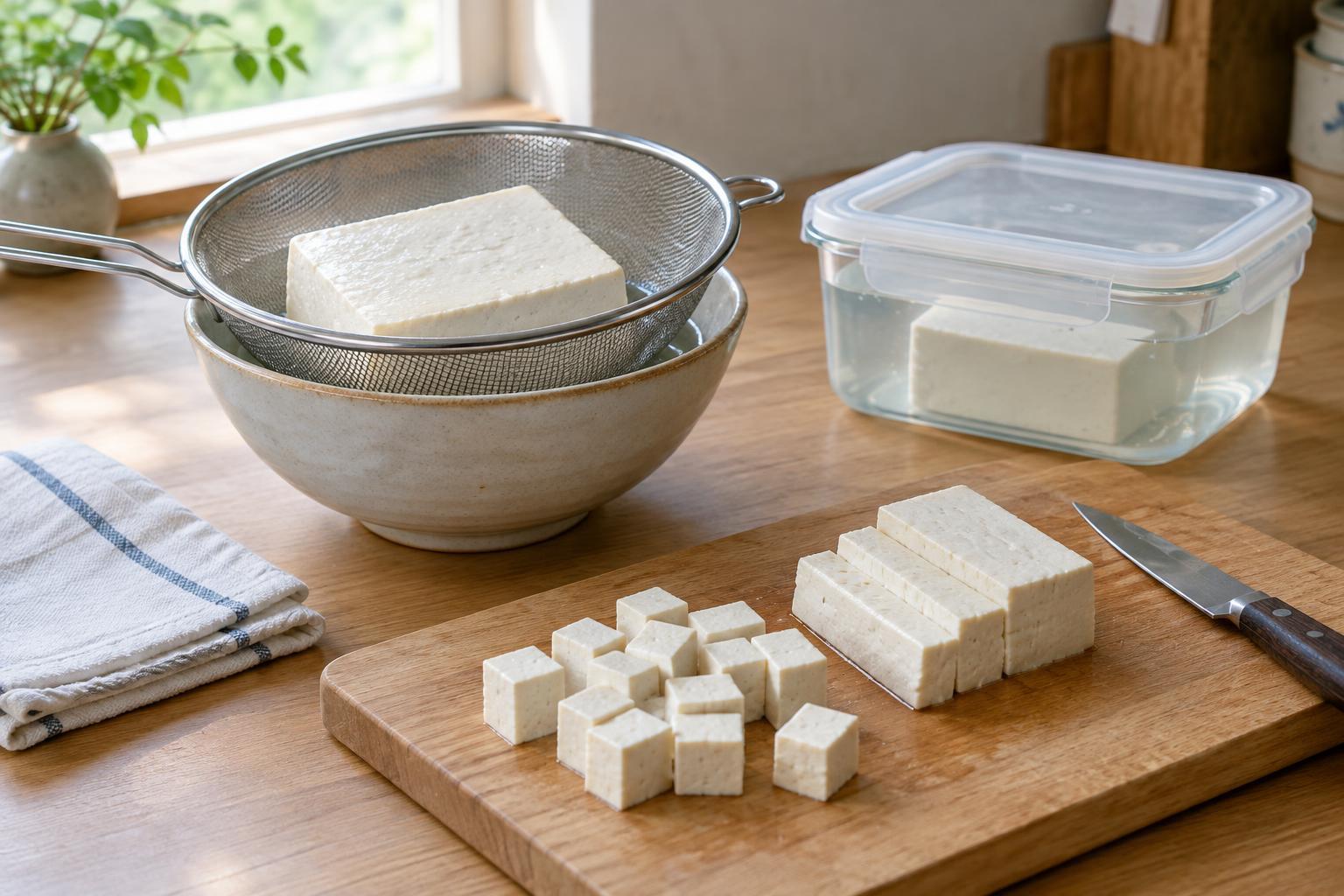
Most tofu comes with liquid in the package. To drain it for immediate use, open the package over the sink and tip away the liquid, then transfer the tofu to a plate or shallow container. A brief rest on a clean towel or paper towel can remove surface moisture. This is often enough for chilled tofu or tofu going into soup, where thorough pressing offers little benefit.
For firmer pieces that you want to brown in a pan, removing more water can help the surface cook more evenly. Wrap firm tofu in a clean towel, place it on a plate, and set a light weight on top for a short period. Start gently rather than stacking on a heavy pan; too much pressure can crack the block. Silken tofu is best left unpressed. If you prepare pressed tofu ahead, refrigerate it promptly in a covered container and plan to use it soon, since it no longer has its packing liquid around it.
Cut for the dish, not just for convenience
A steady cutting surface makes tofu easier to portion neatly. Slide firm tofu onto a board and use a sharp knife with slow, straight cuts. Small cubes distribute well through miso soup, while larger cubes are less likely to fall apart in a simmered dish. Slices offer broad surfaces for pan-frying. For a softer, more irregular texture, firm tofu can also be broken into pieces by hand just before cooking.
Silken tofu is easier to cut while well chilled. You can slice it in its container, if there is room to do so safely, or slide it onto a plate and portion it with a knife or spoon. Cut pieces are more fragile and expose more surface to air and handling. Unless a recipe calls for advance assembly, keeping the block whole until shortly before serving is usually the simplest way to preserve its appearance.
Store opened tofu with its texture in mind
Keep unopened tofu according to its package instructions; some varieties are sold shelf-stable, while others need refrigeration from the start. Once opened, refrigerate any unused portion promptly. For tofu packed in water, place the remainder in a clean, covered container with enough fresh cold water to submerge it. Replace the water daily and aim to use the tofu within a few days, or sooner if the package gives a shorter limit.
Tofu that has been drained, pressed, or cut can instead go in a clean, airtight container in the refrigerator. Because it is ready to cook and has been handled more, using it within a day or two is a practical plan. Keep raw tofu separate from raw meat and its juices, and use clean utensils when taking out a portion. If tofu develops an unpleasant smell, unusual discoloration, or a slimy surface, discard it rather than trying to rescue it by cooking.
Make ahead without doing every step ahead
A small amount of planning can save time without leaving tofu sitting around in its most delicate state. Decide on the dish, prepare any vegetables or toppings, and set aside a clean container for leftovers. Then drain and cut the tofu close to cooking time. If you need to do those steps earlier, keep the prepared pieces chilled until you use them; do not leave them on the counter while you work on other parts of the meal.
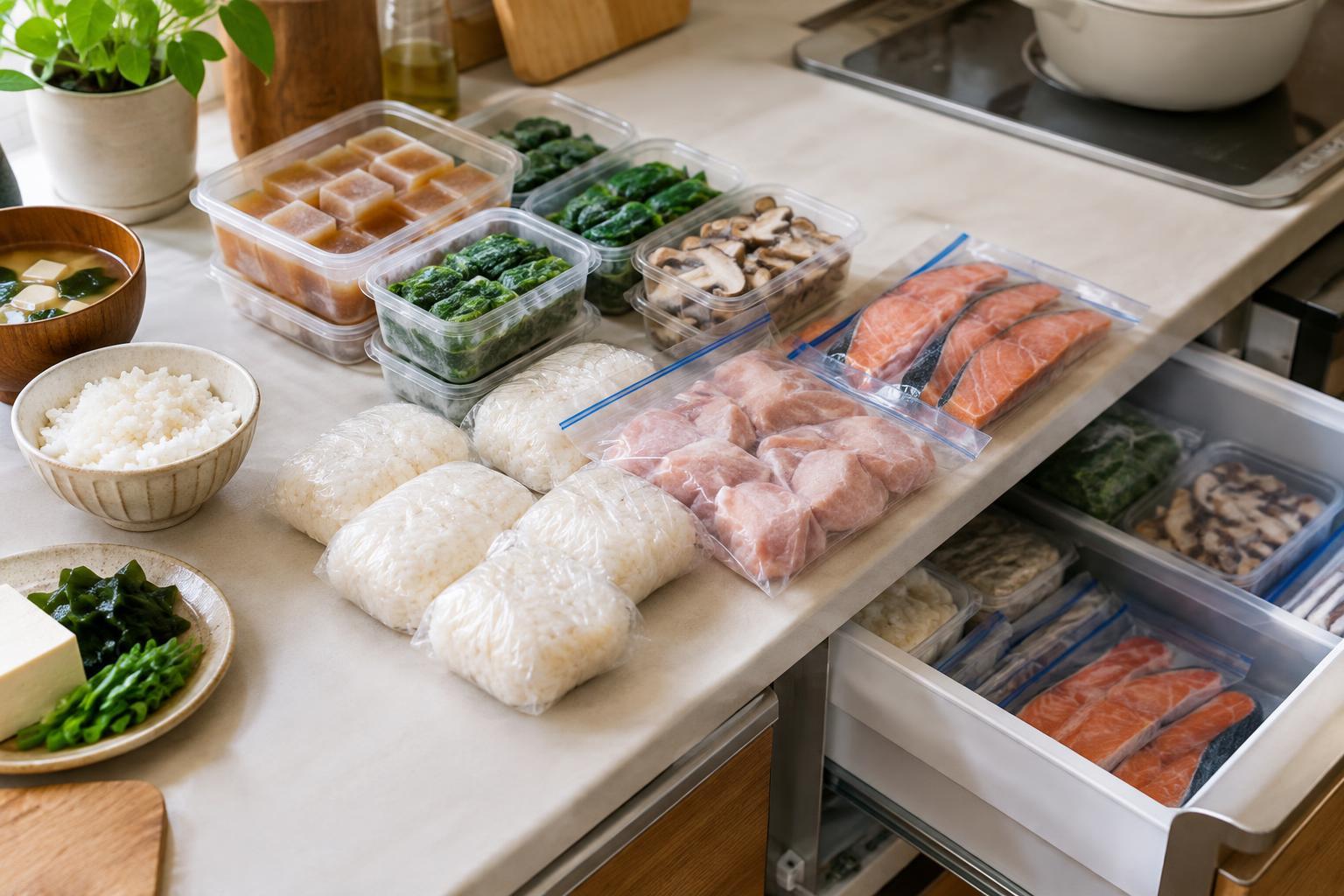
Freezing is another option when you will not use a firm block soon. After thawing, tofu often has a spongier, chewier texture that can soak up simmering liquid, but it will not feel like fresh tofu in a chilled dish. Whether you freeze it or keep it in the refrigerator, let the meal guide the preparation. The most useful advance step is the one that saves effort while leaving the tofu suited to the way you want to eat it.