Start with the food you prepare
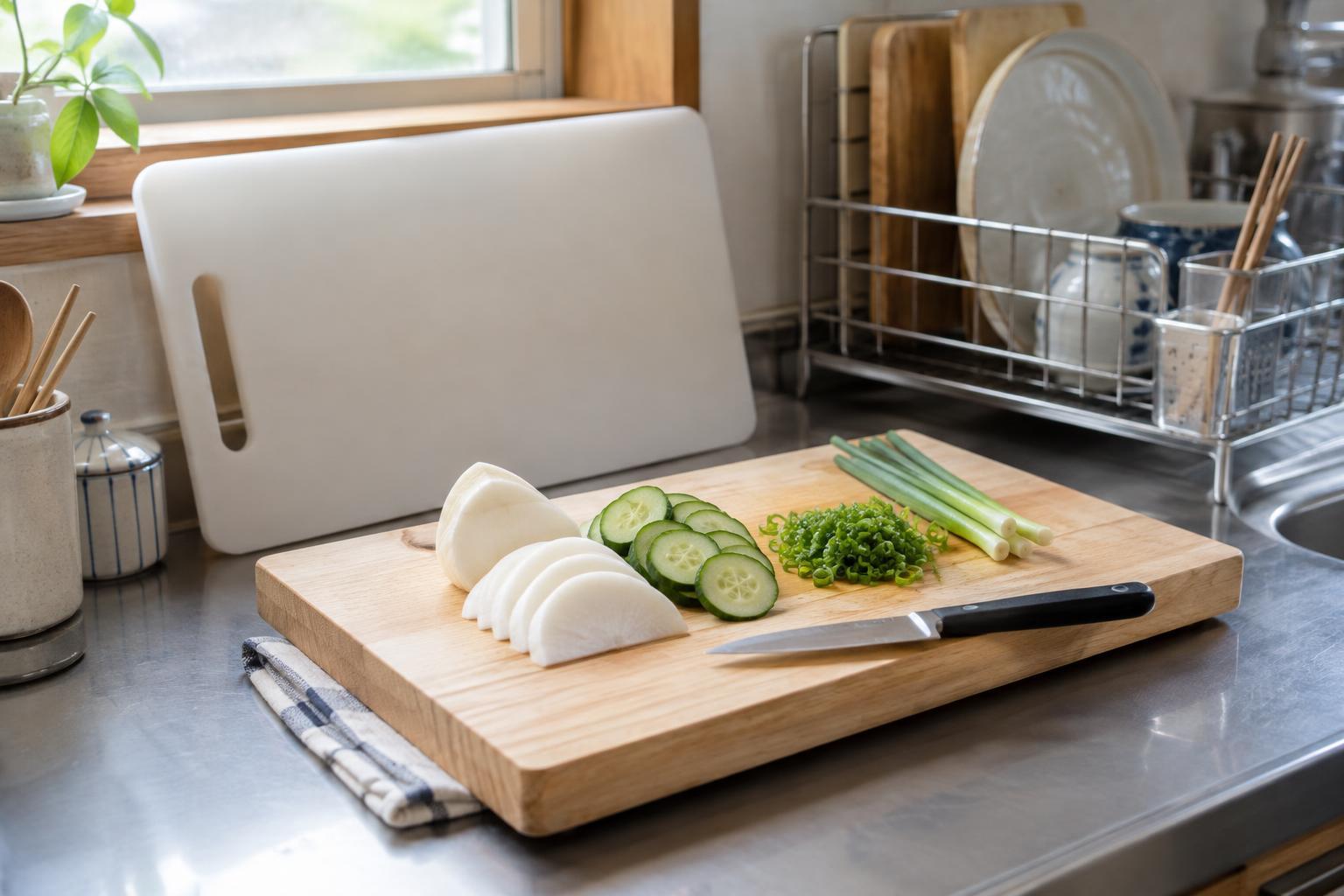
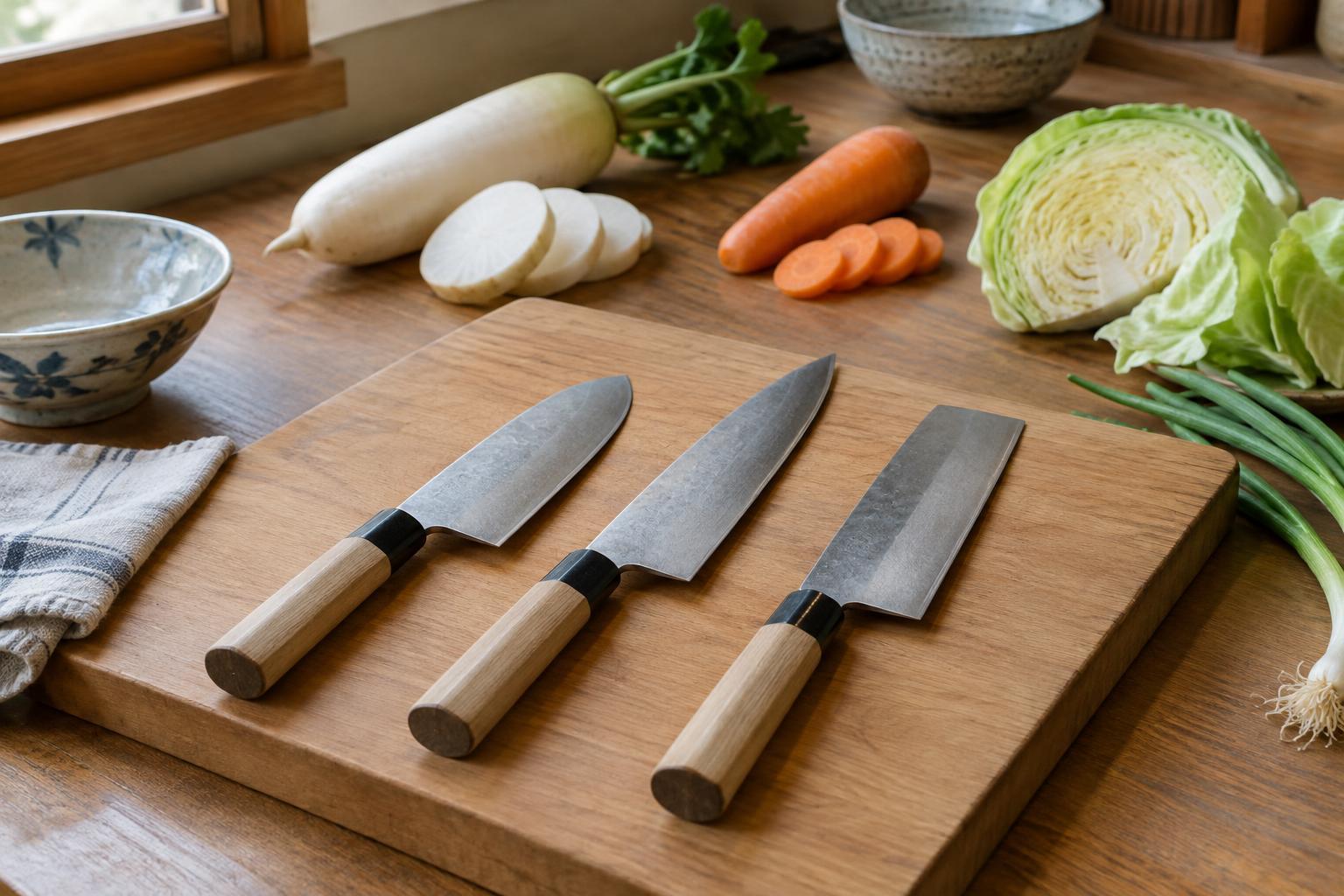
A Japanese-style meal might call for finely sliced cabbage, chopped scallions, diced tofu, and a portion of fish or meat. You do not need a separate knife for every task. For most home cooks, one comfortable, well-maintained knife does more good than a collection of specialized blades. The santoku and gyuto are general-purpose options; the nakiri is designed primarily for vegetables.
Before choosing, think about your cutting board, the size of your kitchen, and your usual ingredients. Do you often work with large squash or substantial cuts of meat, or are most dinners built around smaller vegetables and boneless proteins? Knife names are a helpful starting point, but the way a particular knife feels in your hand matters just as much.
Santoku: a compact all-rounder
Santoku knives typically have a relatively straight cutting edge and a rounded or gently angled tip. Their moderate blade length can feel manageable on a small board. They work well for slicing vegetables, mincing aromatics, and portioning boneless meat or fish. The flatter portion of the edge suits a controlled downward or forward-and-down cut rather than an exaggerated rocking motion.
If you prepare everyday meals with a mix of ingredients and prefer a shorter blade, a santoku is a sensible first choice. Its broad blade can also help you move chopped ingredients from the board to a bowl. Use the side of the blade for that job rather than scraping with the sharp edge, which can dull it faster. A santoku is less convenient when you need a long slicing stroke or frequent precision work with the tip.
Gyuto: more reach and flexibility
A gyuto is a Japanese-style multipurpose knife with a pointed tip and, usually, a longer, more curved edge than a santoku. It can handle vegetables, herbs, boneless proteins, and many of the tasks associated with a Western chef’s knife. The longer edge helps when slicing a large ingredient in fewer strokes, while the tip is useful for trimming and other detailed cuts.
A gyuto may suit you if you have enough board space and like to vary your cutting motion. Depending on the blade’s shape, you can use a gentle rocking cut for herbs or a forward slicing cut for firmer ingredients. The trade-off is that a longer knife can feel less nimble in a crowded kitchen. If you are buying your first knife, try holding different lengths rather than assuming the longest will be the most useful.
Nakiri: a specialist for vegetables
The nakiri’s rectangular blade and mostly straight edge are built for vegetable preparation. With an up-and-down or slight forward-and-down motion, you can cut through a pile of greens, slice daikon, or chop cabbage while keeping the edge in contact with the board. Its tall blade provides clearance for your guiding hand and offers a convenient surface for transferring cut vegetables.
Despite its shape, a nakiri is not a cleaver for chopping bones or other hard materials. Its blunt-looking front also lacks the pointed tip that makes trimming or piercing easy. A nakiri can be a satisfying second knife for someone who prepares plenty of vegetables, but it is usually a less flexible choice as the only knife in a home kitchen.
Choose by fit, then keep the edge in good shape
If you want one knife for varied everyday cooking, compare a santoku and a gyuto in person if possible. Notice whether the handle feels secure, whether your knuckles clear the board, and whether the knife feels balanced during your natural cutting motion. If vegetable prep takes up most of your time and you already have a versatile knife for other jobs, consider adding a nakiri. Blade profiles, handles, and weights vary even among knives with the same name.
Whatever you choose, use a stable wooden or suitable plastic cutting board, and avoid twisting the edge through hard ingredients. Wash and dry the knife by hand, and store it where the edge will not knock against other utensils. Some blades need more care around moisture than others, so follow the maker’s guidance for your knife. Regular sharpening matters more than owning several dull knives: a sharp edge makes controlled cuts easier and lets the tool you chose do its job.