What makes a suribachi different?
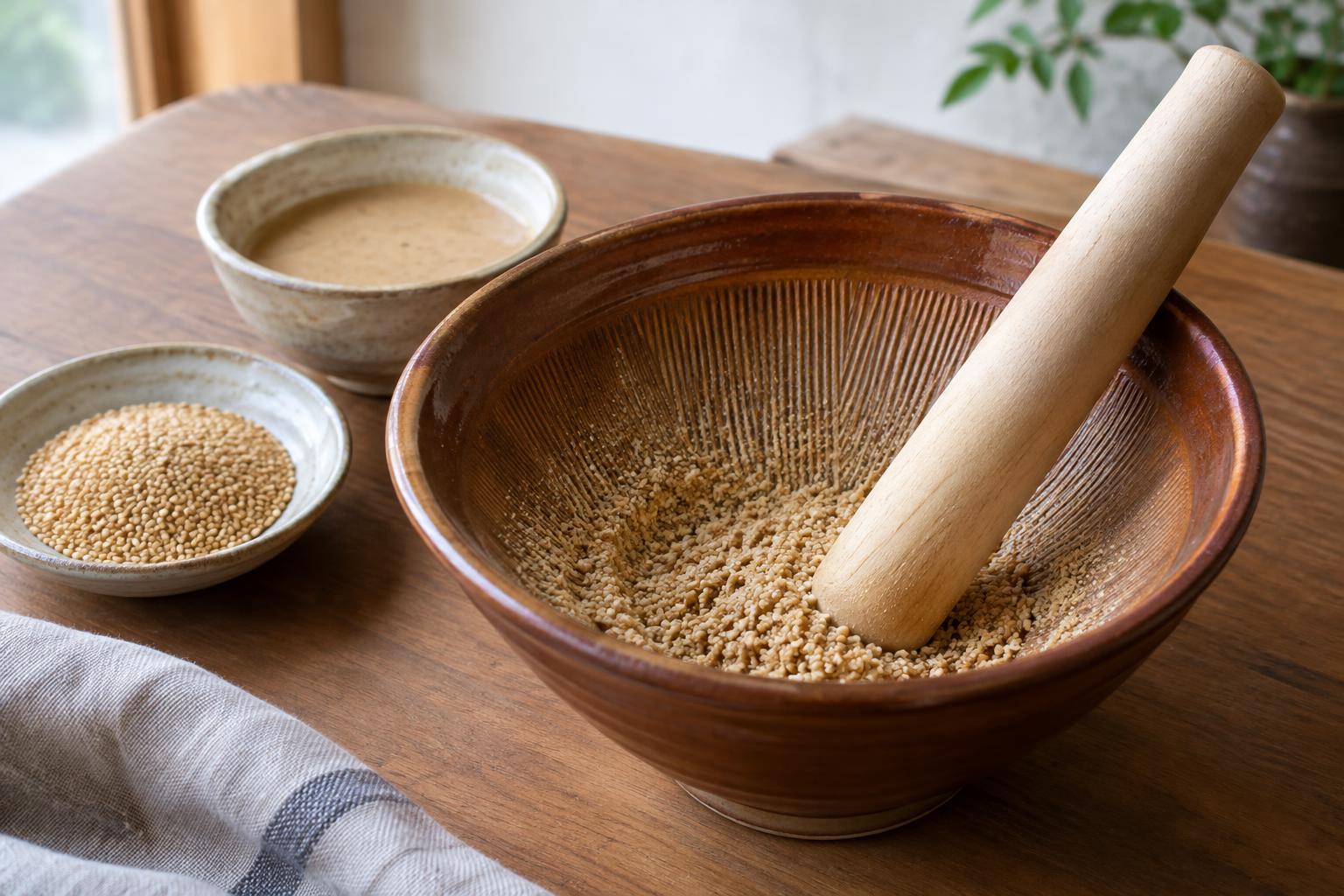
A suribachi is a Japanese mortar, usually made of ceramic, with fine ridges on its inner surface. Its partner, the surikogi, is a wooden pestle. Rather than pounding ingredients straight down, you generally press and move the pestle around the bowl. The ridges help catch seeds and other small ingredients, making it easier to crush them into a coarse mixture or a smoother paste.
This pair is especially useful when a recipe benefits from a little texture. Crushed sesame seeds, for example, release their aroma and mix readily into a dressing while retaining some recognizable pieces. A suribachi can also combine soft ingredients with seasonings. It is less suited to forceful pounding of very hard items: the goal is controlled grinding, not impact.
Choosing a size and setting it up
For everyday home cooking, choose a bowl that gives the pestle room to move without scattering its contents. A small bowl is handy for a spoonful or two of sesame seeds; a larger one offers more space for dressings and other mixtures. Check that the bowl sits steadily on the counter and that the pestle feels comfortable in your hand. Some suribachi have a pouring lip, which can make transferring a sauce easier.
Set the mortar on a folded, slightly damp kitchen towel or another nonslip surface before you begin. Add a modest amount of ingredient rather than filling the bowl: exposed ridges and space to move the pestle make grinding more effective. Keep one hand on the bowl’s rim and the other on the pestle. This simple setup helps you work steadily instead of chasing a sliding bowl across the counter.
A gentle grinding technique
For sesame seeds, start with seeds that are dry and cool enough to handle. Press the surikogi against the ridges and move it in small circles, using moderate pressure. Pause to scrape ingredients from the sides toward the center with a spoon or spatula. Stop when the mixture suits your dish: a few passes leave a coarse, crunchy texture, while continued grinding produces a finer mixture.
You can use the same gradual approach with soft cooked vegetables or other tender ingredients. Add liquid seasonings a little at a time after grinding, stirring with the pestle or a spoon until the texture is even. If ingredients collect at the bottom without being crushed, try a smaller batch or change the angle of the pestle. There is no need to bear down hard; let the ridged surface do its work.
Make a simple sesame dressing
To put the tool to use, grind about two tablespoons of toasted sesame seeds until most are crushed but a few remain whole. Stir in one tablespoon of soy sauce, one tablespoon of rice vinegar and a teaspoon of sugar. Add water a teaspoon at a time until the dressing is loose enough to coat the food you are serving. Taste before adding more seasoning, since soy sauces vary in saltiness.
Toss the dressing with blanched, well-drained green beans or spinach, or spoon it over cooled vegetables. Drying the vegetables matters: excess water can dilute the sesame flavor and leave the dressing at the bottom of the dish. For a different balance, adjust the vinegar or sugar in small increments. Grinding and mixing in the same bowl also gives you a chance to judge the texture as you go.
Cleaning and caring for the ridges
Clean the suribachi soon after use, before paste dries in its grooves. Rinse it with warm water and use a soft brush to lift out trapped bits, following the direction of the ridges where helpful. Use mild dish soap if needed, then rinse and dry the bowl thoroughly. Avoid metal tools or harsh scrubbing that could damage its surface, and follow any care instructions supplied with your particular bowl.
Wash the wooden surikogi by hand and dry it promptly rather than leaving it to soak. Let both pieces dry completely before storing them, especially if the pestle is kept inside the mortar. With gentle use and straightforward cleaning, a suribachi and surikogi can become a practical part of weeknight cooking—not just a tool reserved for a special recipe.