What makes a teriyaki glaze work
Teriyaki is a way of cooking food with a sweet-savory sauce that becomes glossy as it heats. At home, the challenge is not making the sauce thick as quickly as possible. It is giving the food time to cook while leaving just enough liquid in the pan to coat it at the end. If the sauce goes in too early over high heat, its sugars can scorch before the food is ready.
A straightforward starting mixture is equal parts soy sauce, mirin, and sake, with a little sugar if you want a sweeter glaze. Stir until the sugar dissolves. The proportions are flexible: soy sauce provides saltiness, mirin brings sweetness, and sake adds flavor. If you do not use sake, a little water can help keep the sauce fluid, though the taste will differ. Taste your mixture before adding it to the pan and adjust it to suit what you are cooking.
Cook the food before concentrating the sauce
For an easy pan teriyaki, choose a food that can sit flat against the pan, such as boneless chicken, a fish fillet, or firm tofu. Pat its surface dry so it can brown rather than steam. If using tofu, press out excess moisture first. Add a small amount of oil to a skillet and cook over medium heat, turning as needed. Work in batches if the pan is crowded; a crowded pan holds moisture and makes the final glaze harder to judge.
The food should be nearly cooked before you add the sauce. This is especially useful with thicker pieces of chicken, which need more time than the glaze does. Lower the heat if the pan is already very hot, and pour off excess fat if there is enough to prevent the sauce from contacting the pan. Brown bits can add flavor, but blackened bits may make the sauce taste bitter. If the pan has scorched, wipe it out before continuing.
Reduce gently, then coat
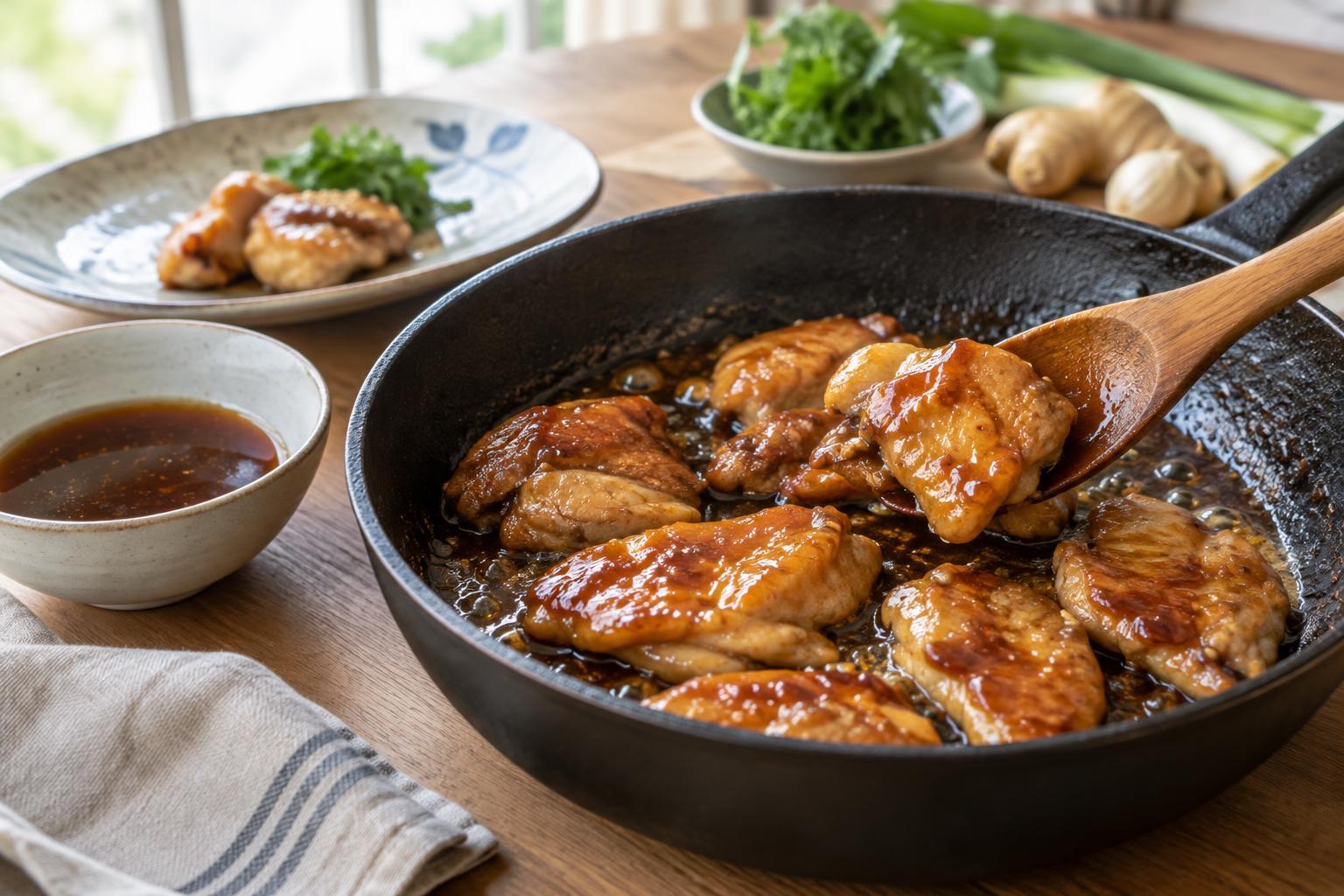
Pour the mixed sauce into the pan and let it come to a gentle simmer, not a fierce boil. The liquid should bubble steadily around the food. Turn or spoon sauce over the food as it reduces, watching the pan as well as the glaze: a broad, hot skillet can evaporate a small amount of sauce surprisingly fast.
At first, the sauce will look thin. As water evaporates, the bubbles may become larger and slower, and the sauce will begin to leave a light coating on a spoon. That is the moment to keep the food moving and consider turning off the heat. Residual heat continues to thicken the glaze. Aim for a sauce that clings and shines while still flowing a little when you tilt the pan. It will firm up further as it cools, so stop before it looks like a thick syrup.
Adjust a glaze that is moving too fast
If the pan looks dry or the sauce starts catching at the edges, lift it off the heat immediately. Add a small splash of water and swirl or stir to loosen the glaze, then return it to lower heat only if it needs more reducing. A splash of water can also bring an overly salty, concentrated sauce back into balance, although you may need to leave some sauce behind rather than reduce it all onto the food.
If the sauce is still watery but the food is done, transfer the food to a plate and simmer the sauce briefly on its own. Return the food just long enough to coat it. Avoid adding extra sugar to fix a thin sauce: the problem may simply be that it needs a little more evaporation. Conversely, if the sauce smells burnt or tastes bitter, dilution will not remove that flavor. Clean the pan and make a fresh, smaller batch.
Serve while the glaze is glossy
Spoon any loose sauce from the pan over the food and serve it with rice and a simply prepared vegetable. This lets the glaze season the plate without requiring every bite to be heavily coated. For fish or tofu, turn gently near the end so the pieces stay intact.
If you marinate raw meat in the sauce, set aside a separate portion for glazing before the raw meat touches it. Do not spoon used marinade over the finished dish without cooking it thoroughly first. The easiest routine, especially while learning to judge reduction, is to cook the food without a marinade and add a fresh sauce near the end. You will be able to see the glaze change in the pan and take it off the heat at just the right moment.