A small towel with a simple purpose
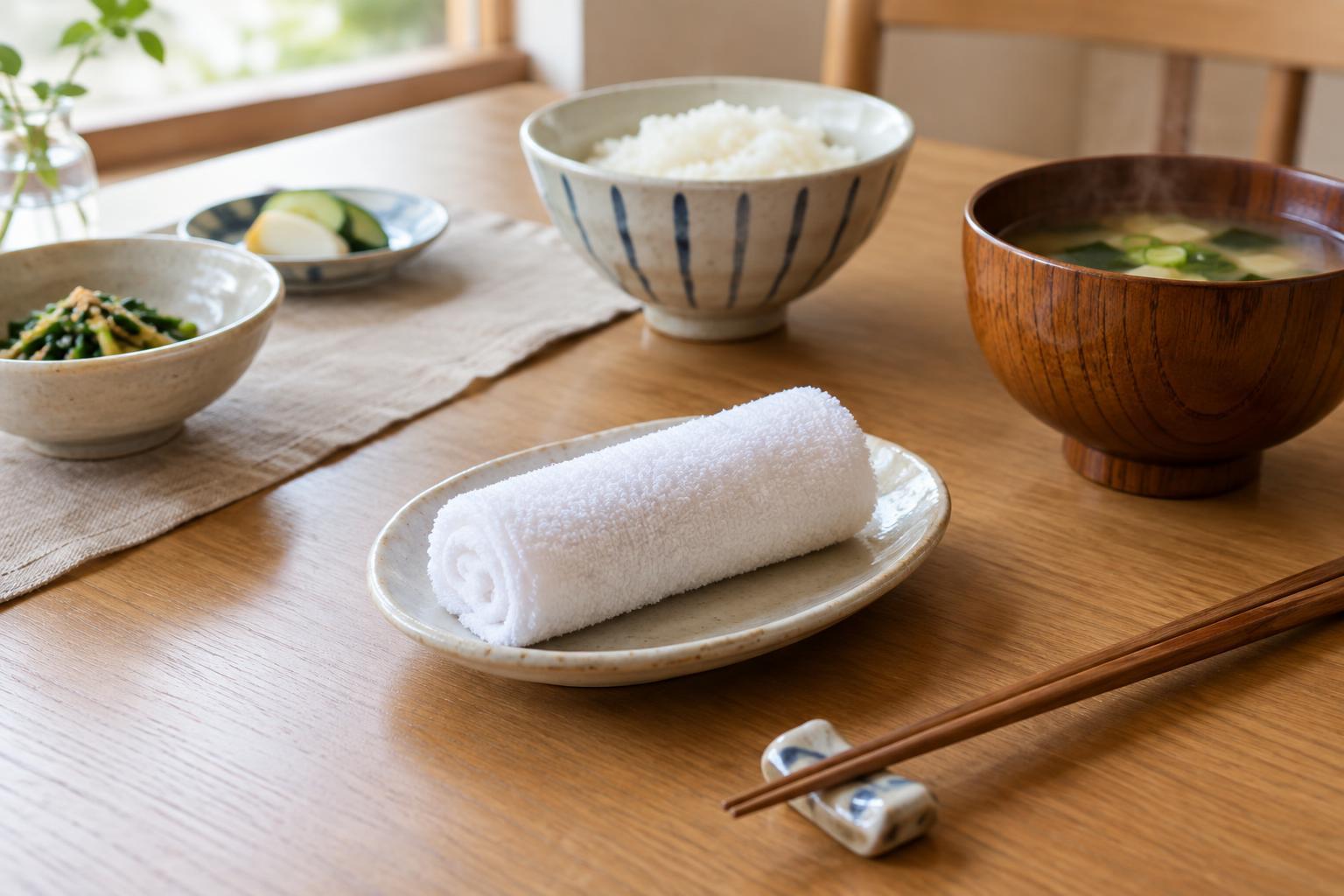
An oshibori is a damp towel offered to guests for cleaning their hands, usually before eating. You may receive one at a restaurant or café, sometimes on a small tray and sometimes wrapped in a sleeve. It might be warm, cool, reusable, or disposable. However it is presented, its main purpose is the same: to let you refresh your hands at the table.
The gesture is especially welcome before a meal you may eat partly with your hands, but it is not limited to that kind of food. Think of the oshibori as part of getting settled, alongside being shown to your seat or offered water. You do not need a ceremony to use it. A quiet wipe of your hands is enough.
How to use it when you sit down
If the oshibori arrives wrapped, open the sleeve and take out the towel. Wipe your fingers and palms, then fold or loosely roll the towel and set it back on its tray or wrapper. If there is no tray, place it neatly beside your setting, away from shared dishes. Use it before reaching for food or handling serving utensils.
An oshibori is intended primarily for your hands. In an informal setting, you might notice someone briefly wiping their face with one, particularly if it is warm. That does not make it the safest choice to copy everywhere. In a restaurant or when you are a guest, using it for your hands keeps things straightforward and considerate. Avoid using it to scrub the table, wipe a spill, or clean your utensils; ask for a napkin or help instead.
What to do with the towel afterward
Once you have used an oshibori, leave it at your place rather than putting it on a plate, into a bowl, or among the food. A cloth towel may be collected later by the host or restaurant staff. If it came in a disposable sleeve, you can usually rest the used towel on or near that sleeve until the meal is cleared. You do not need to pack a damp towel tightly back into its wrapper.
An oshibori also differs from a napkin. A napkin is better for your mouth during the meal and for small drips around your place setting. If your hands become sticky after eating, you can use the oshibori again if it is still at your place and reasonably clean. When in doubt, follow how the table has been set or ask for another towel.
Warm, cool, cloth, or disposable
The temperature and material may vary with the setting. A warm cloth towel can feel welcoming on a cool day, while a cool one can be refreshing in hot weather. Some businesses use individually wrapped disposable towels for convenience. These differences do not change the basic etiquette: use the towel for your hands, then leave it tidily where it can be cleared.
At home, offering an oshibori is optional rather than a requirement for a Japanese meal. A host might prepare small damp washcloths for guests, or simply invite everyone to wash their hands at a sink. If you want to offer oshibori at your own table, use clean, comfortably damp towels and provide a clear place to put them. They should feel pleasant to hold, not hot enough to be uncomfortable or wet enough to drip.
A useful custom, not a test
The easiest way to remember oshibori etiquette is to treat the towel as a small act of hospitality with a practical job. Clean your hands, put the towel down neatly, and enjoy your meal. If the setting is unfamiliar, you can take a moment to see where others place theirs, but there is no need to worry over an exact fold.
Japanese dining customs can differ between households, restaurants, and occasions. An oshibori is one of the more approachable ones because its purpose is so immediate. Knowing what it is helps you accept the gesture comfortably—and, if you are hosting, offer the same simple welcome to someone else.