A word for food and the way it is shared
Washoku is commonly used to mean Japanese food or Japanese-style cuisine. The word can point to particular dishes, but it also invites a wider view: ingredients, cooking methods, how a meal is arranged and the habits that surround eating it. That is why a bowl of rice and a few modest accompaniments can be as useful a starting point for understanding washoku as a beautifully presented restaurant meal.
There is no single menu that defines every Japanese home. What people cook depends on time, region, household tastes, available ingredients and the occasion. A meal might feature simmered vegetables one day and a quick pan-fried dish the next. Thinking of washoku as a set of familiar patterns, rather than a rigid checklist, makes it easier to recognize its place in ordinary kitchens.
The useful pattern of rice, soup and sides
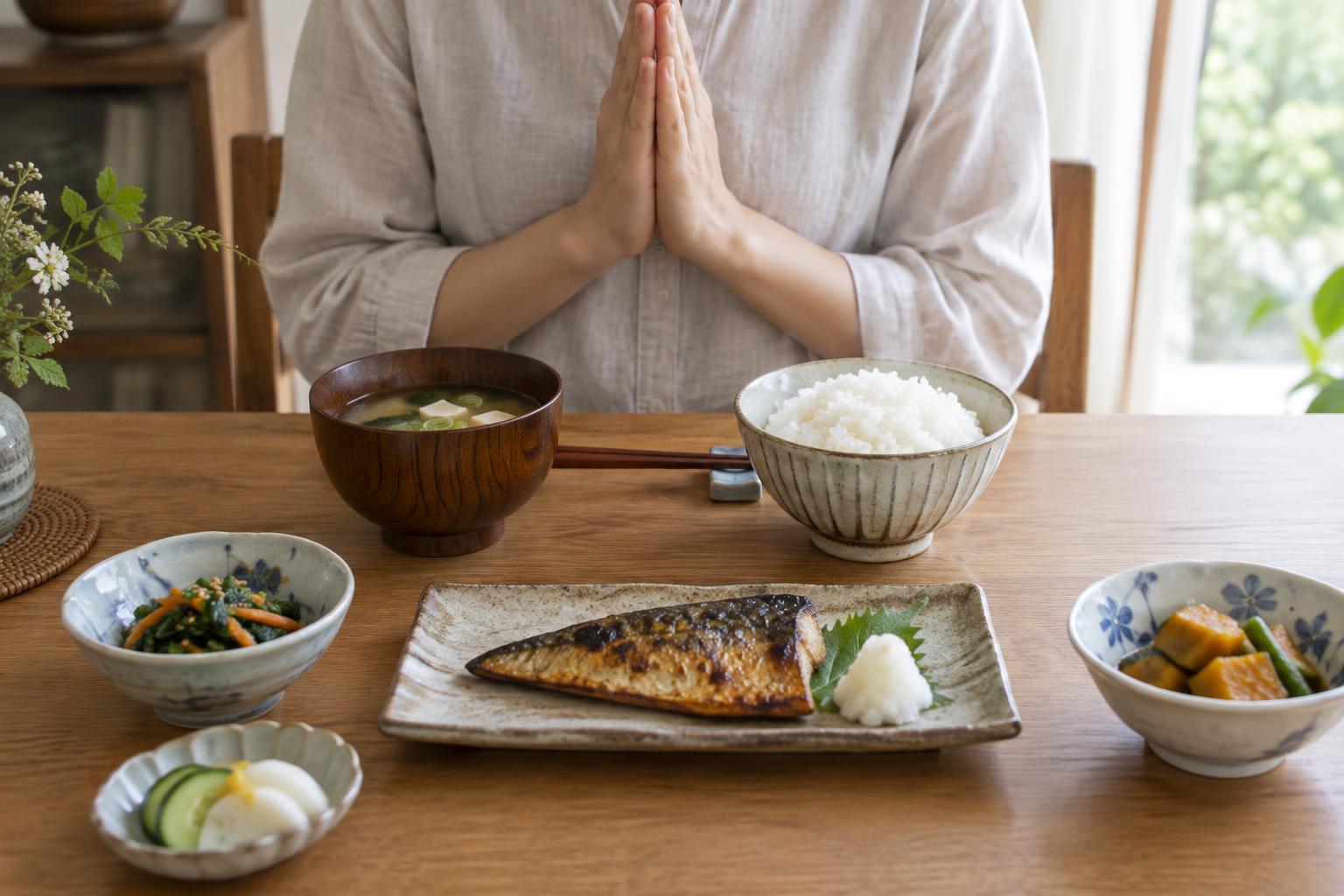
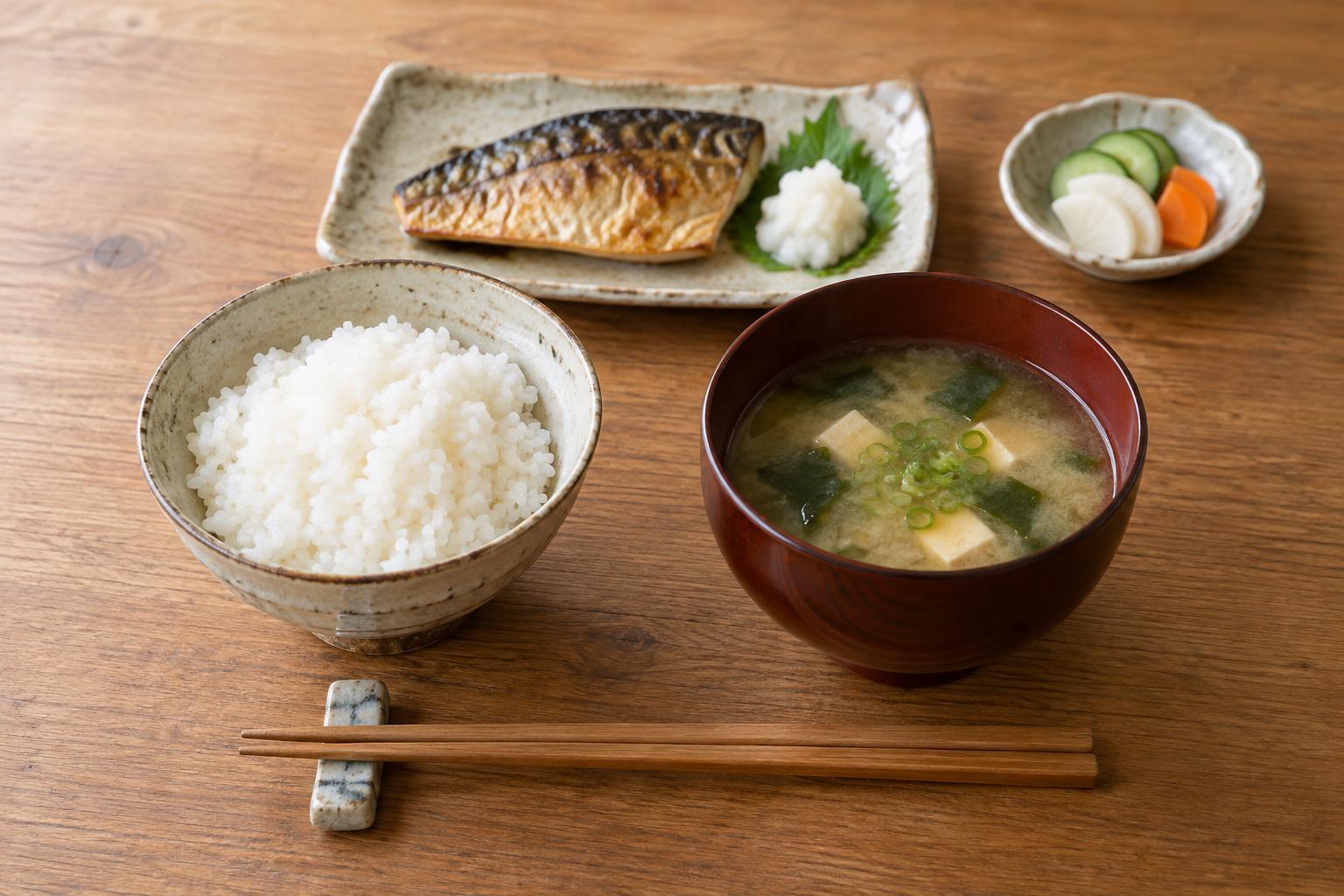
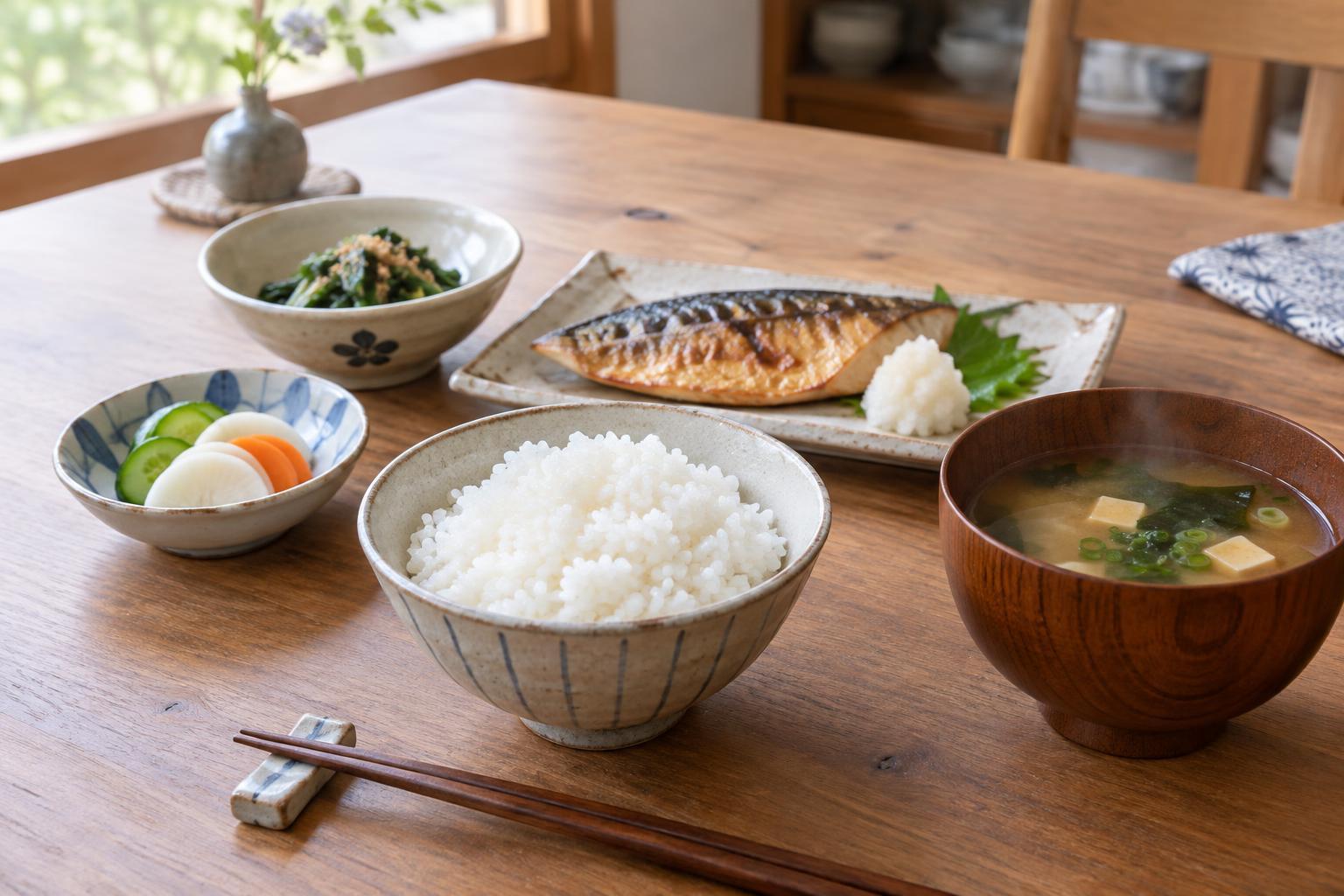
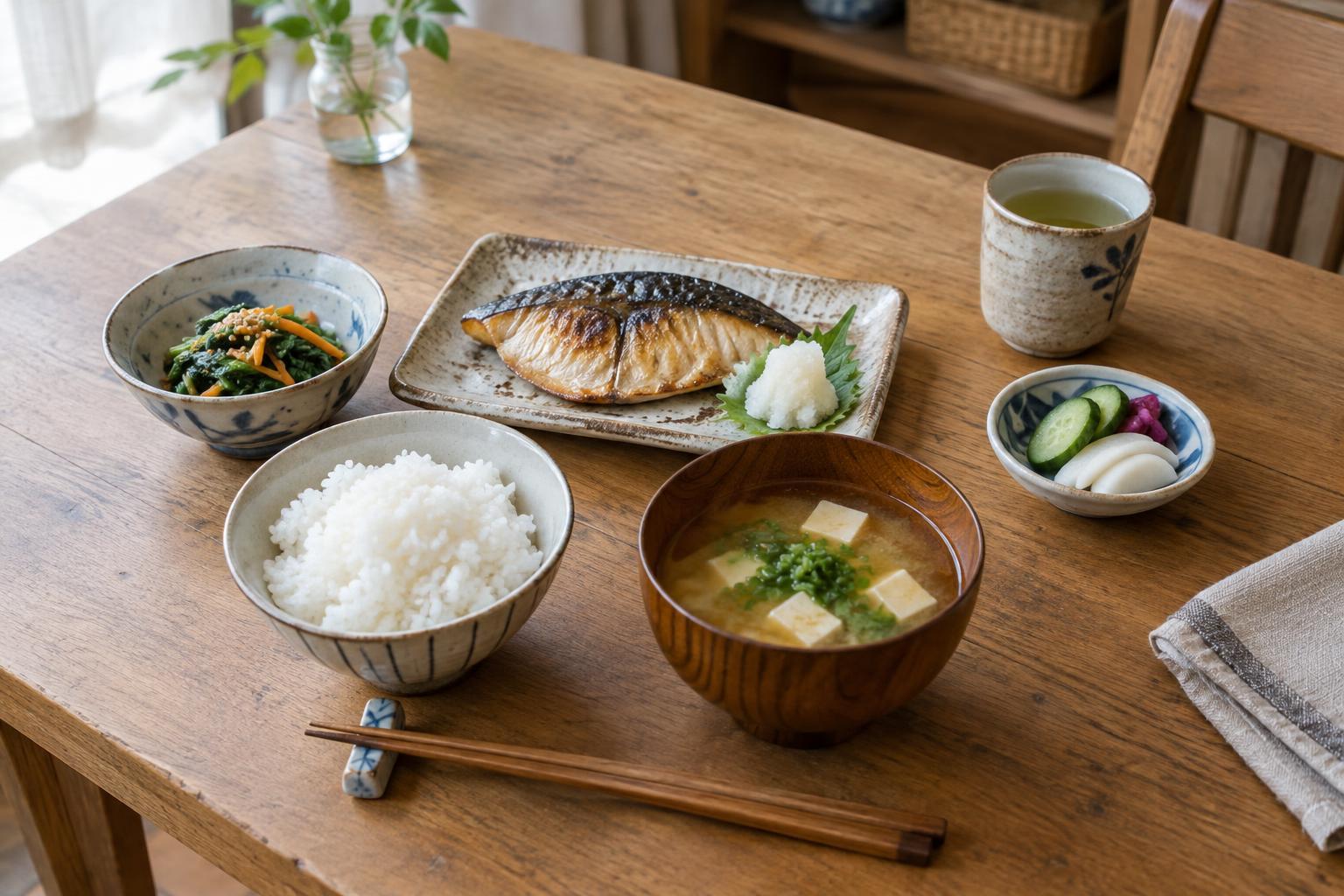
One way to picture a traditional Japanese meal is ichiju sansai: one soup and three accompanying dishes, served with rice. The phrase describes a balanced arrangement of different tastes and textures, not a requirement for every breakfast or dinner. A home cook might make just one main dish and a soup, set out something left from yesterday or skip the soup altogether. The pattern is helpful because each part has a role, even when the full arrangement is not on the table.
Rice often acts as a quiet center, giving diners something to eat alongside seasoned dishes. Soup, frequently but not always miso soup, brings warmth and moisture. A main dish might be fish, tofu, eggs or meat; smaller dishes might include greens, beans or pickles. Rather than expecting one plate to contain everything, the table can offer a few simple components that taste good together.
This approach can also make meal preparation manageable. Cook extra rice for another meal, prepare one vegetable dish ahead, or turn leftover ingredients into soup. The result need not look formal. A small bowl of rice, soup with vegetables and tofu, and a serving of cooked fish can express the same meal logic on an ordinary evening.
Seasonality, seasoning and small choices
Seasonality is an important idea in washoku, but it does not demand rare ingredients or an elaborate calendar of dishes. At home, it might mean choosing a vegetable that looks good at the market, changing a soup garnish or serving a warming preparation when the weather is cool. The aim is to notice what suits the moment and let an ingredient’s flavor come through.
Seasonings help create continuity across different dishes. Soy sauce, miso and dashi—a savory stock often made with kombu or dried fish—can add depth without making every dish taste the same. Cooking methods matter too: a crisp pickle next to a soft simmered vegetable creates contrast, while a lightly seasoned soup can sit comfortably beside a stronger-flavored main. These are options for building a pleasant meal, not tests of authenticity.
Presentation can be similarly practical. Separate bowls make it easy to serve a little of each dish and keep a broth from soaking the rice before a diner wants to combine them. A garnish or a neatly cut vegetable can show care, but the everyday purpose of the tableware is straightforward: make the food appealing and comfortable to eat.
Everyday tables are flexible
Japanese households also eat meals that do not follow a rice-soup-sides pattern. Noodles, curry rice, rice bowls and dishes influenced by many other cuisines can all be part of ordinary home life. Describing washoku should not erase that variety or imply that every meal must resemble a formal set meal. Family routines often grow from convenience as much as tradition.
Table customs offer another glimpse of the culture around a meal. Itadakimasu is commonly said before eating, and gochisousama deshita after finishing; both can express appreciation for the meal and the work behind it. Like the choice of dishes, the way these customs appear can vary by household and setting.
For a newcomer, the most useful lesson is not to reproduce an idealized table. Start with rice if you like it, add a soup or a simple side, and pay attention to how the flavors and textures work together. Washoku becomes easier to understand when seen not only in special-occasion dishes, but also in the small, adaptable decisions that make dinner possible.