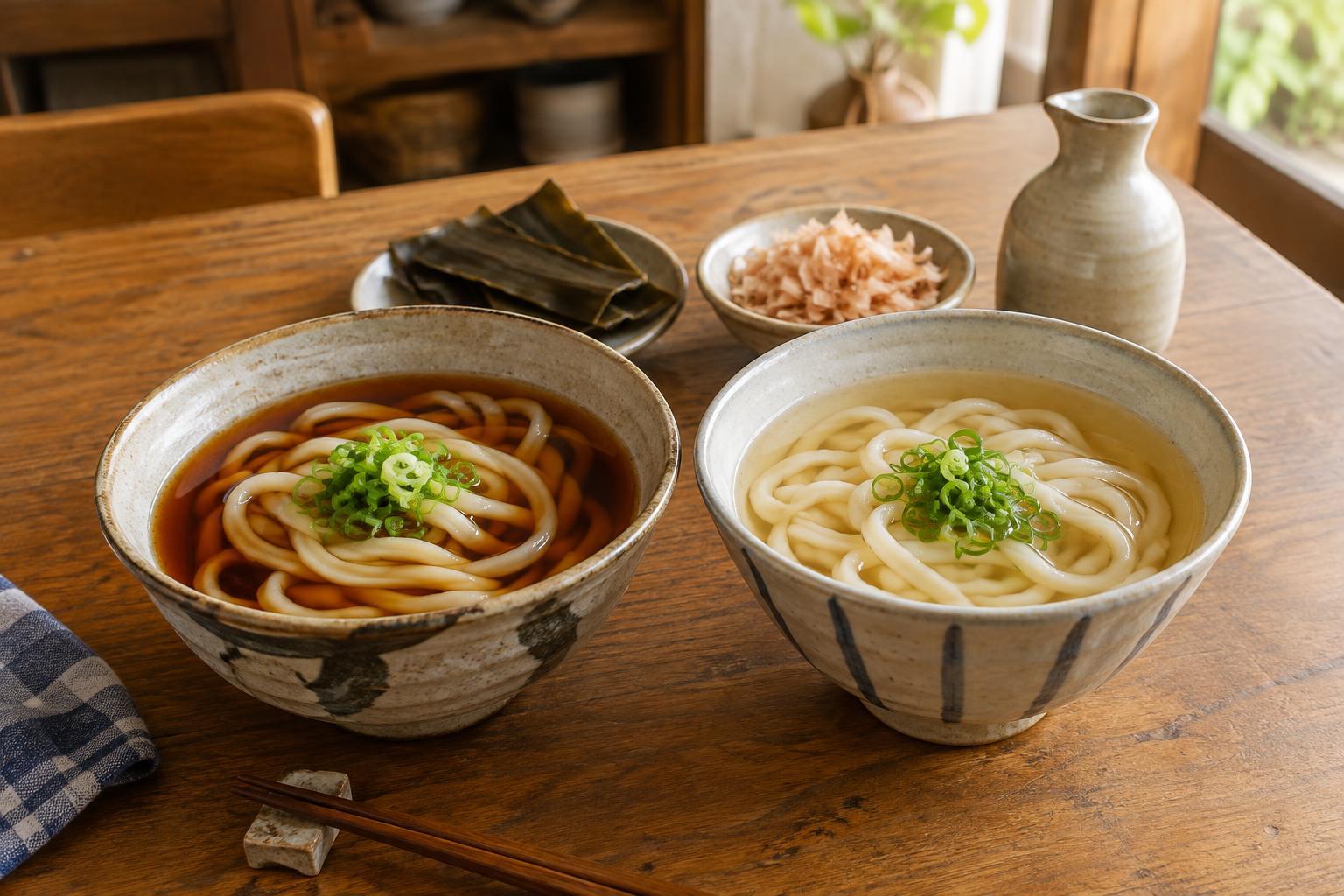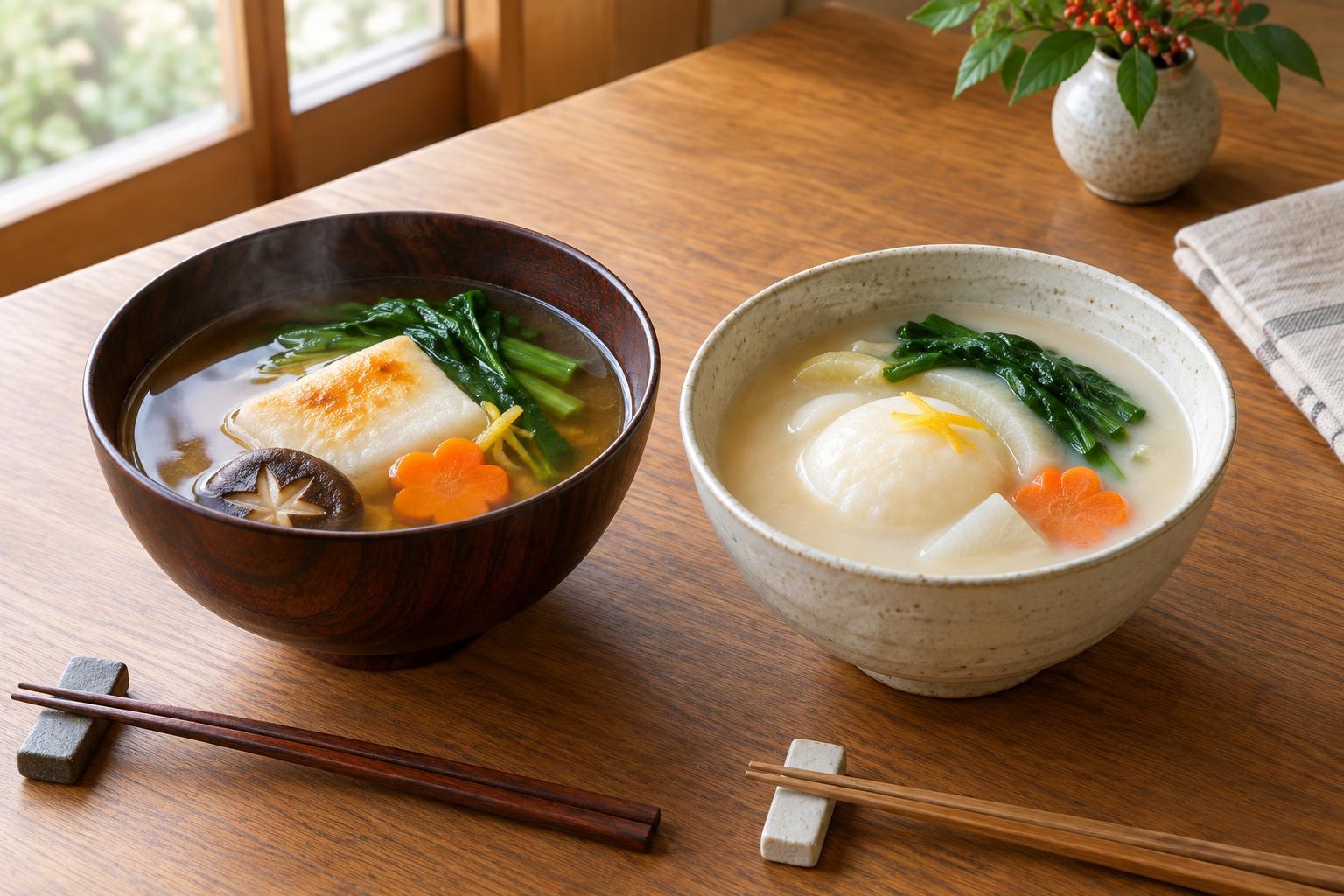
Food and Table CultureOzoni is a New Year soup built around mochi, but its broth, toppings and preparation vary widely. Explore common regional patterns, notable variations and what these differences can tell us about Japanese home cooking.
Read article · 3 min↗
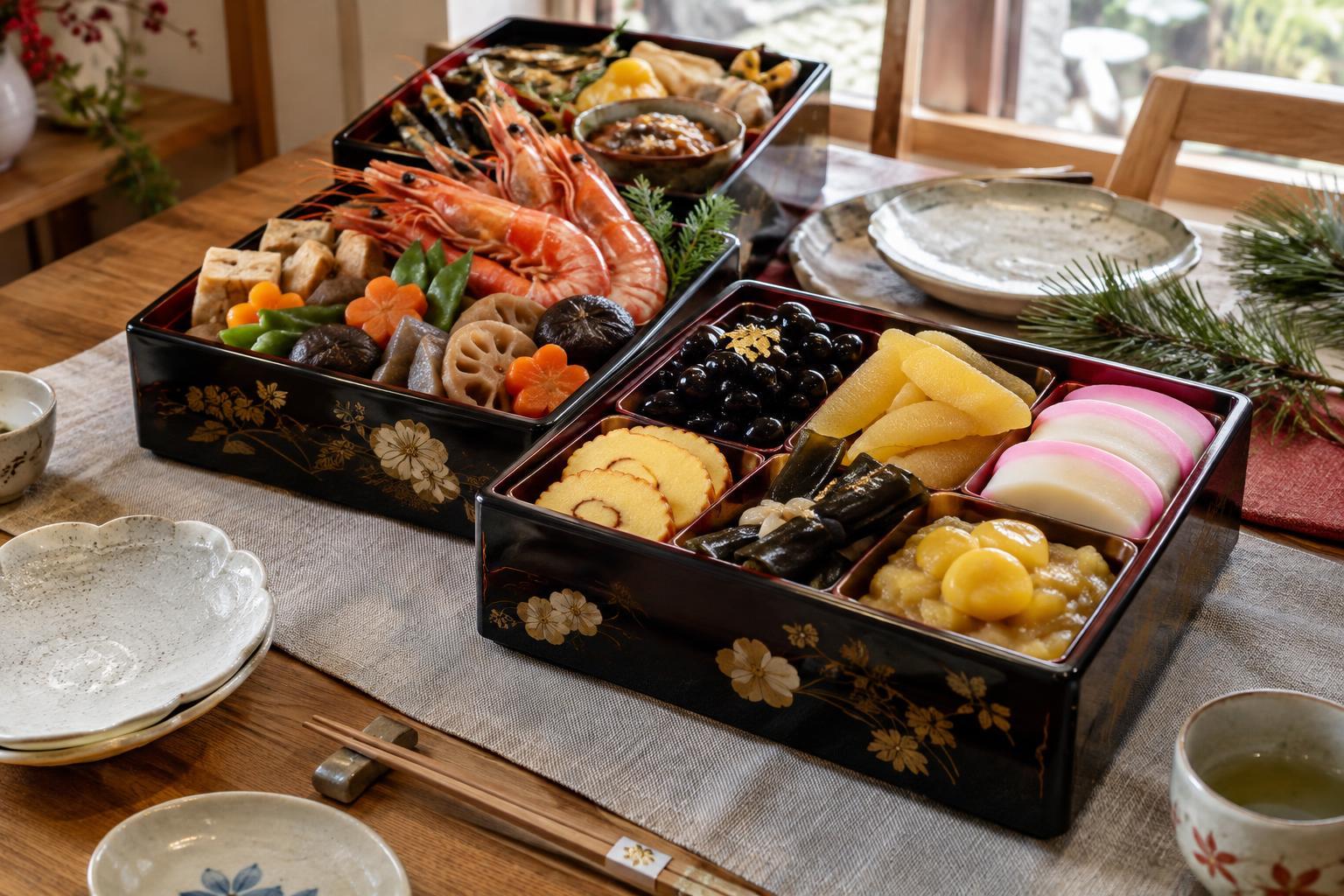
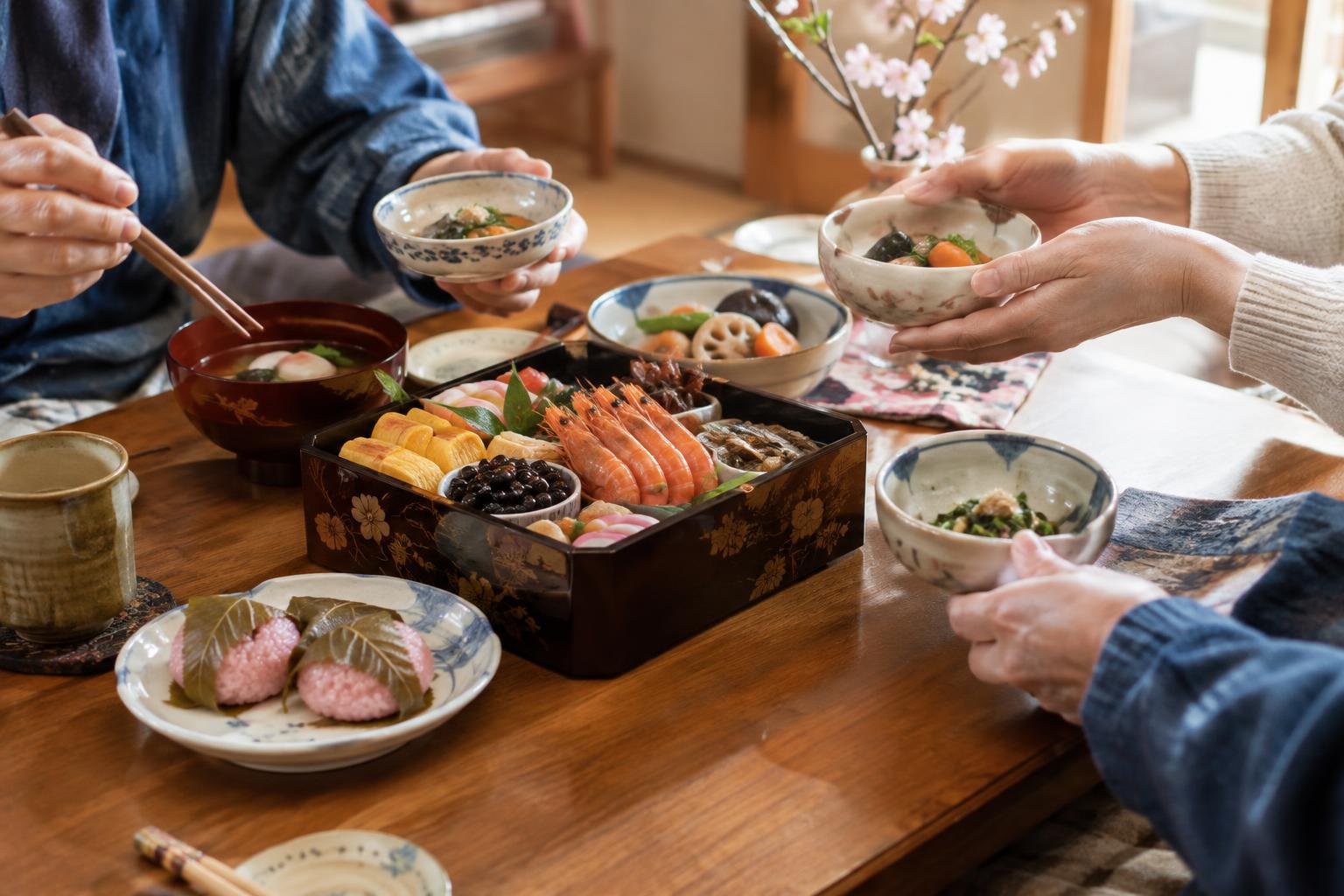
Food and Table CultureOsechi ryori is a collection of dishes served for the Japanese New Year. Learn how familiar ingredients express wishes for health, prosperity and a good year ahead—and why no two family tables look quite the same.
Read article · 4 min↗
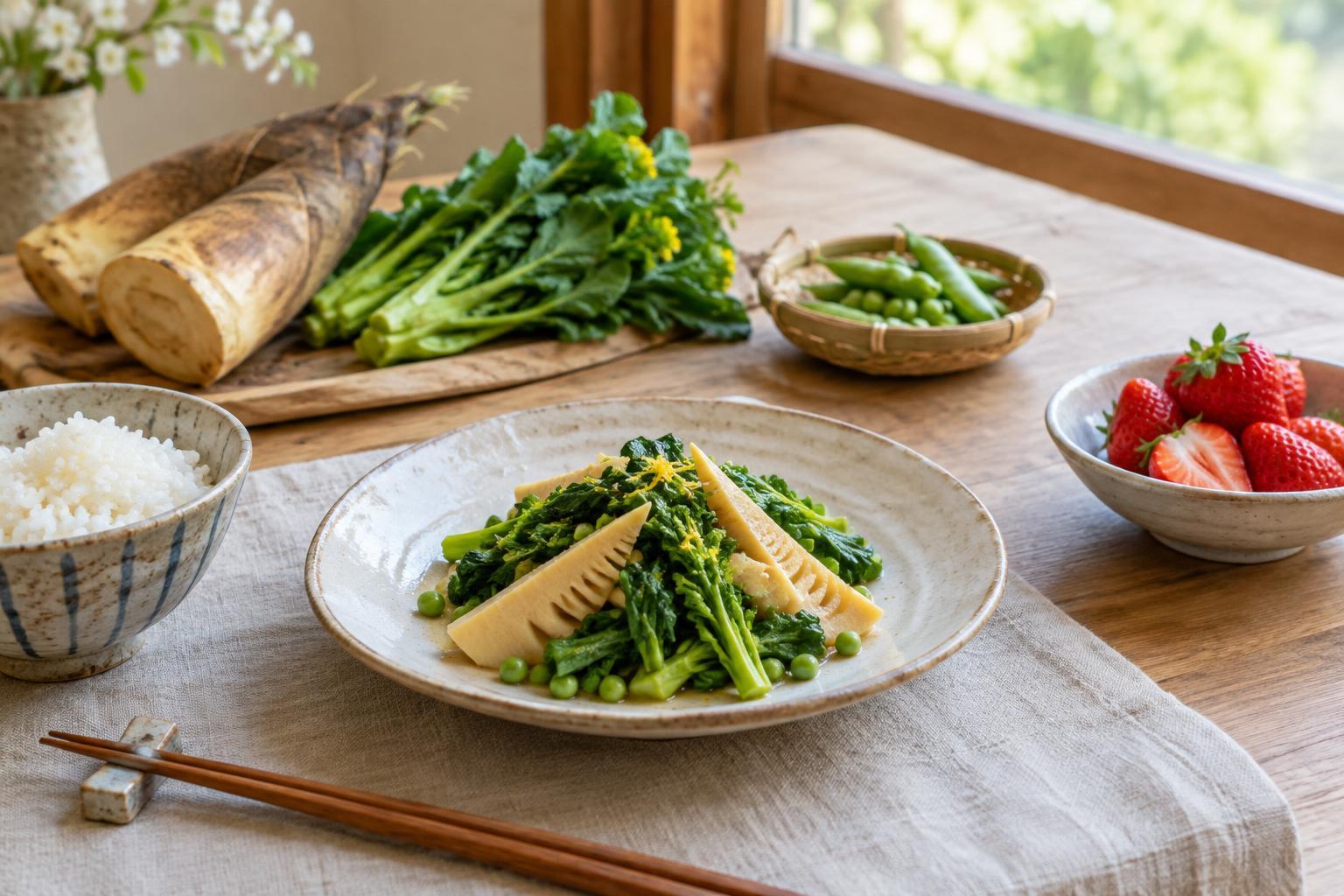
Food and Table CultureShun is a Japanese way of talking about food at its seasonal best. Learn what the term means, why timing varies by place and ingredient, and how to bring a little seasonal thinking to an everyday meal.
Read article · 4 min↗
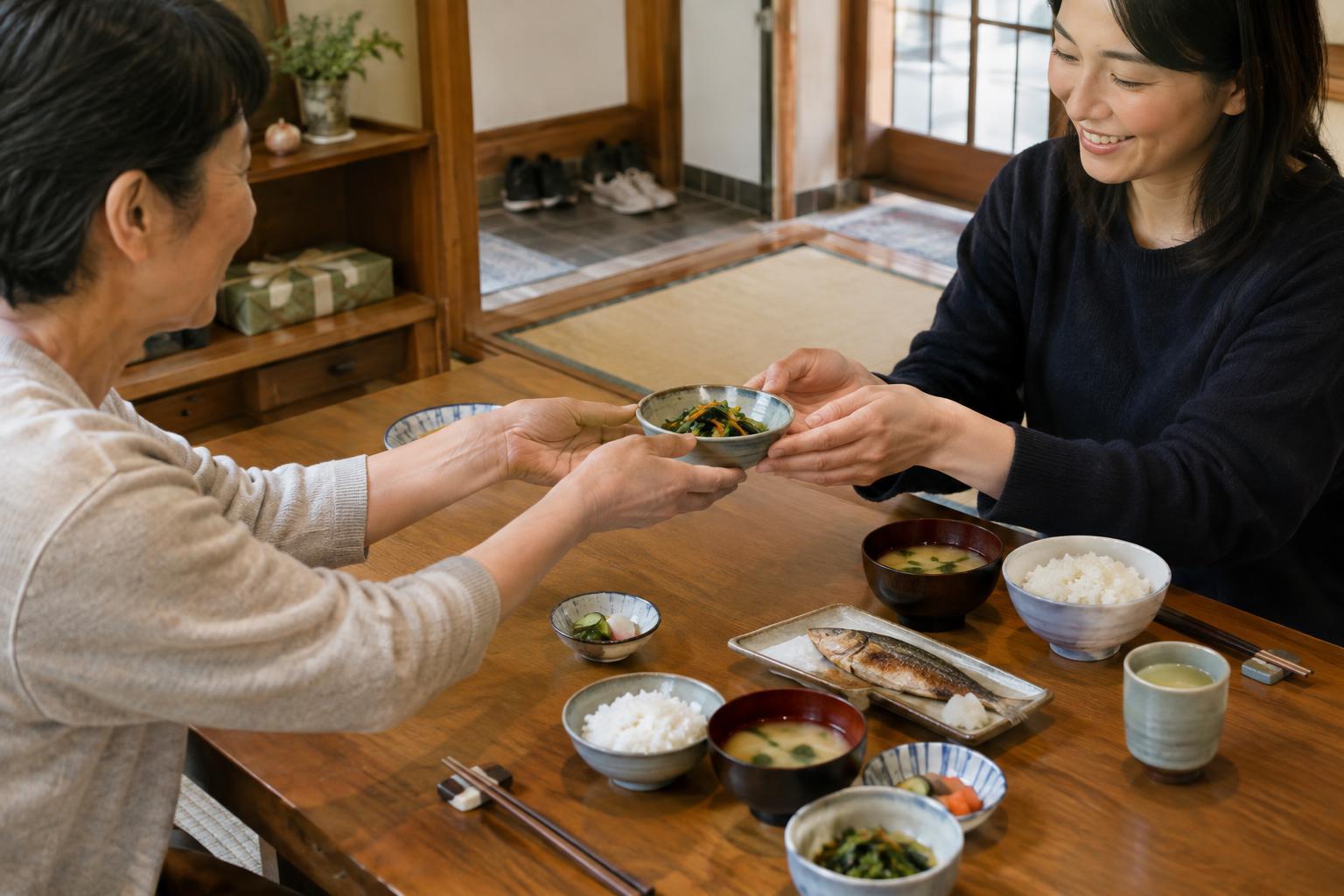
Food and Table CultureBeing a thoughtful guest is less about memorizing rules than noticing your host’s routines. Learn how to approach shoes, small gifts, shared dishes, chopsticks and cleanup with warmth and flexibility.
Read article · 4 min↗
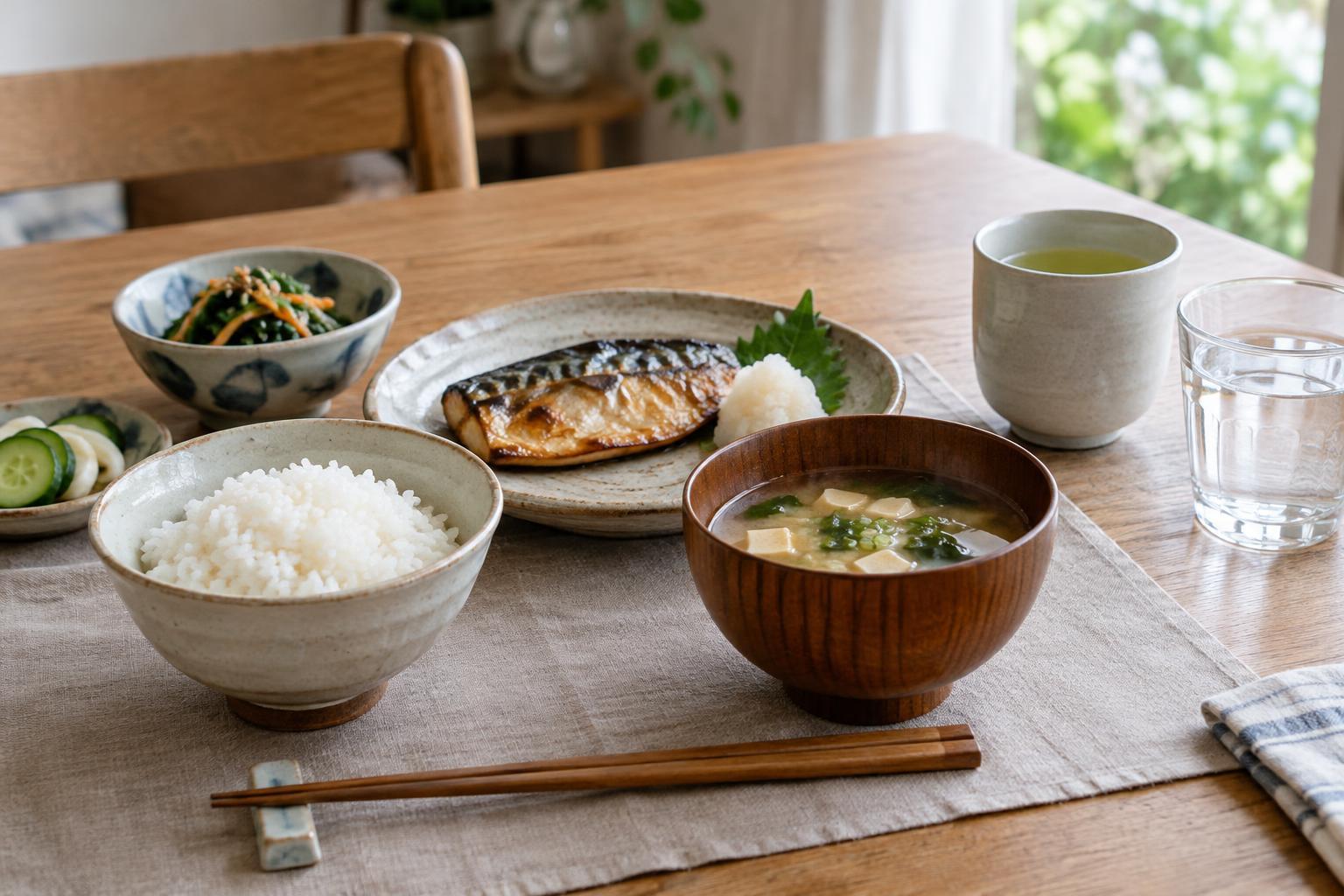
Food and Table CultureA glass of water or a cup of tea can make a Japanese meal feel complete without drawing attention away from the food. Learn how these everyday drinks are served at home and in casual restaurants, which teas are common choices, and how to set a welcoming table without treating custom as a rigid rule.
Read article · 4 min↗
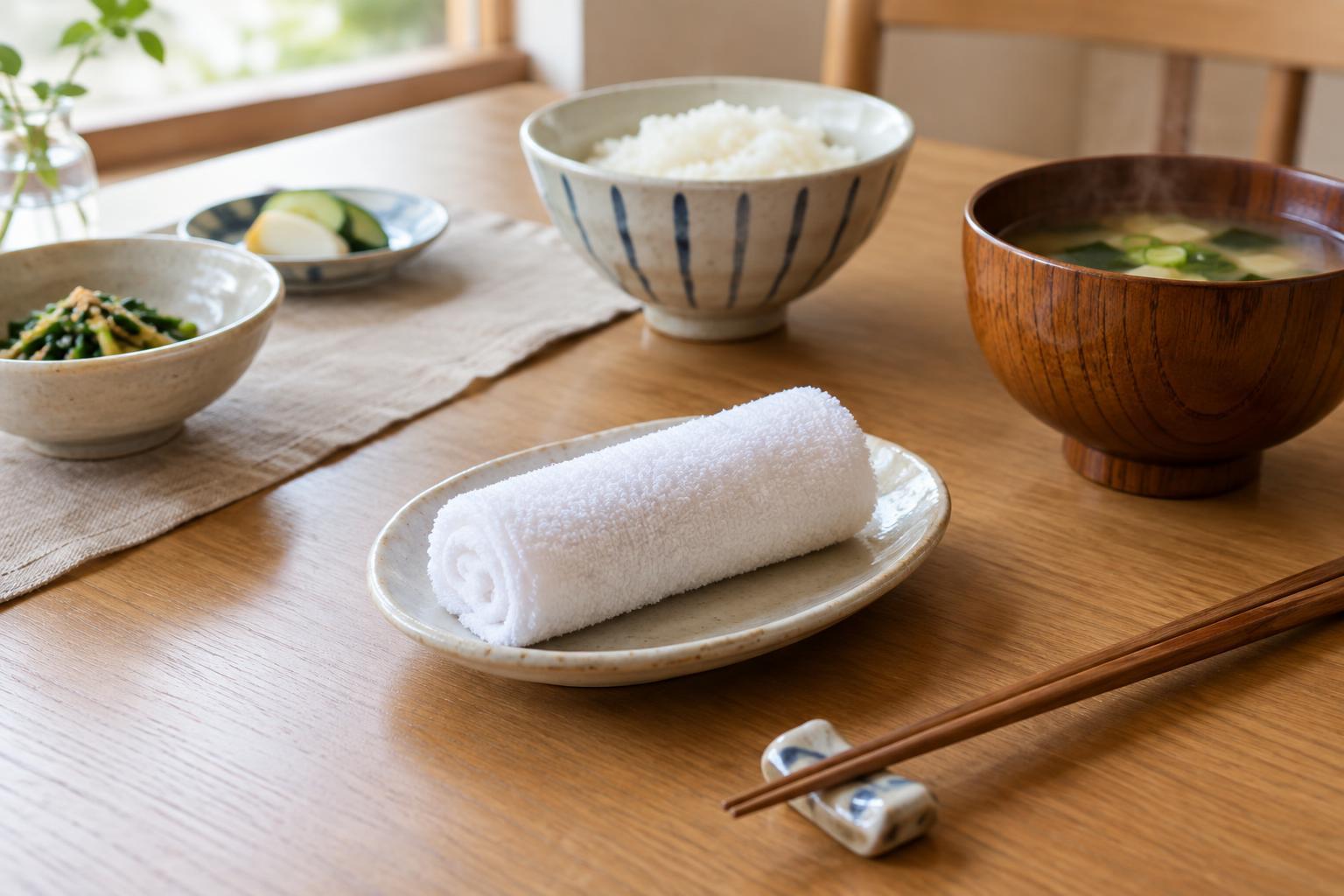
Food and Table CultureAn oshibori is a damp towel offered before a meal to refresh your hands. Learn when to use it, where to put it afterward, and how the custom fits into everyday Japanese dining.
Read article · 3 min↗
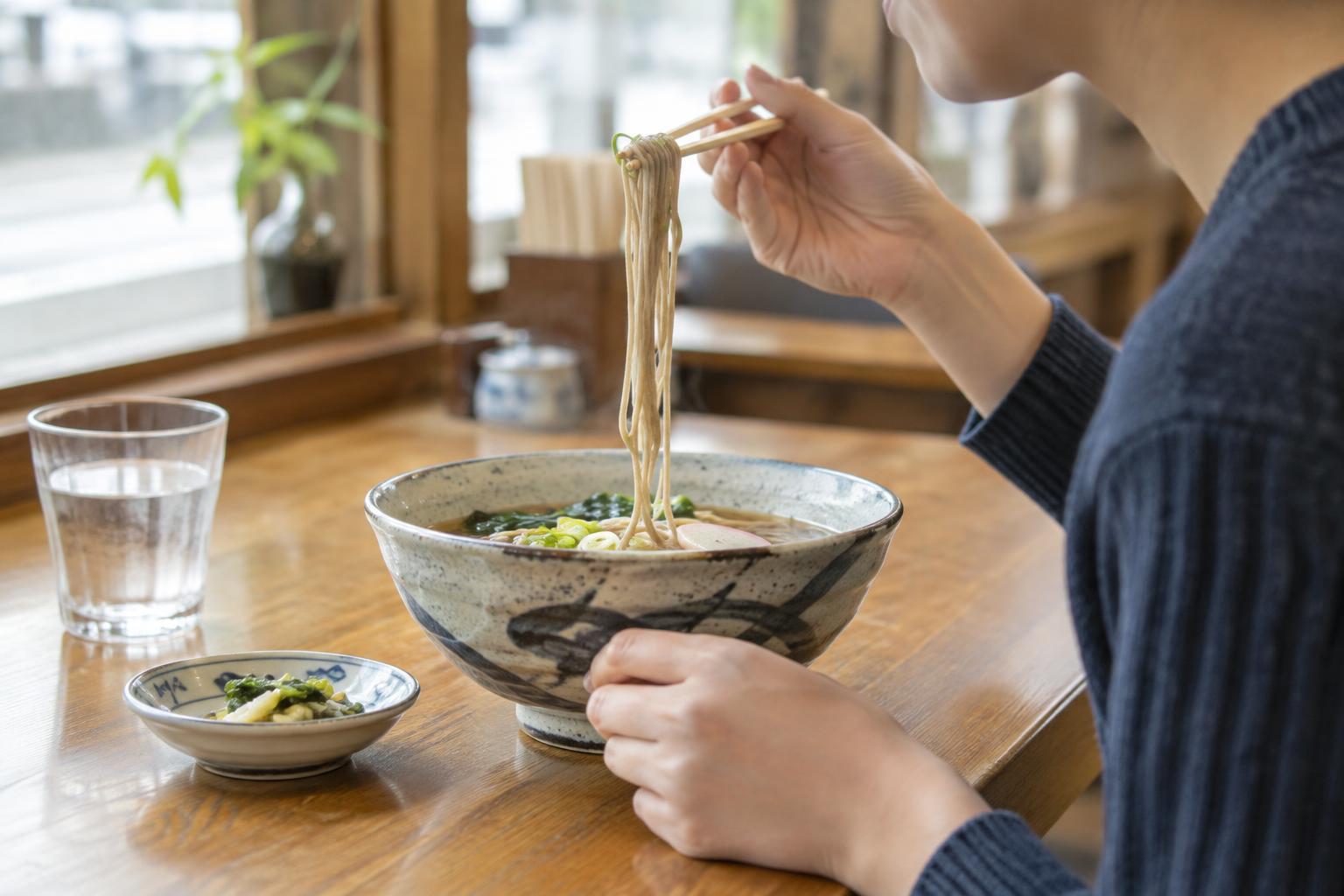
Food and Table CultureSlurping noodles in Japan is generally acceptable, but it is not required. Learn when you might hear it, how to eat ramen, soba and udon comfortably, and which table habits matter more than making a sound.
Read article · 4 min↗
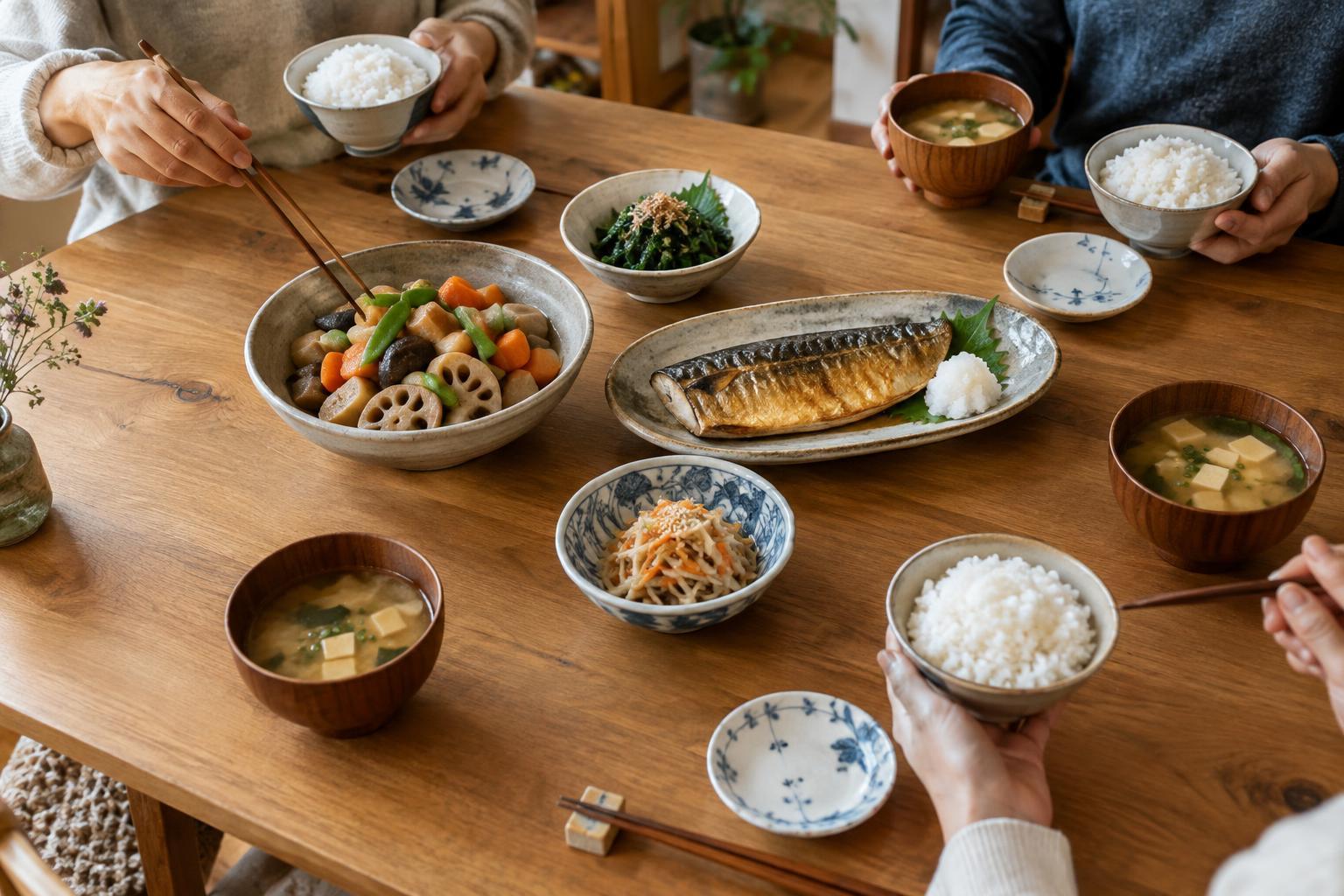
Food and Table CultureA Japanese family meal may give each person their own rice bowl and soup bowl while placing other dishes in the center of the table. Here is how individual portions and shared plates can work together, with practical tips for serving a comfortable meal at home.
Read article · 4 min↗
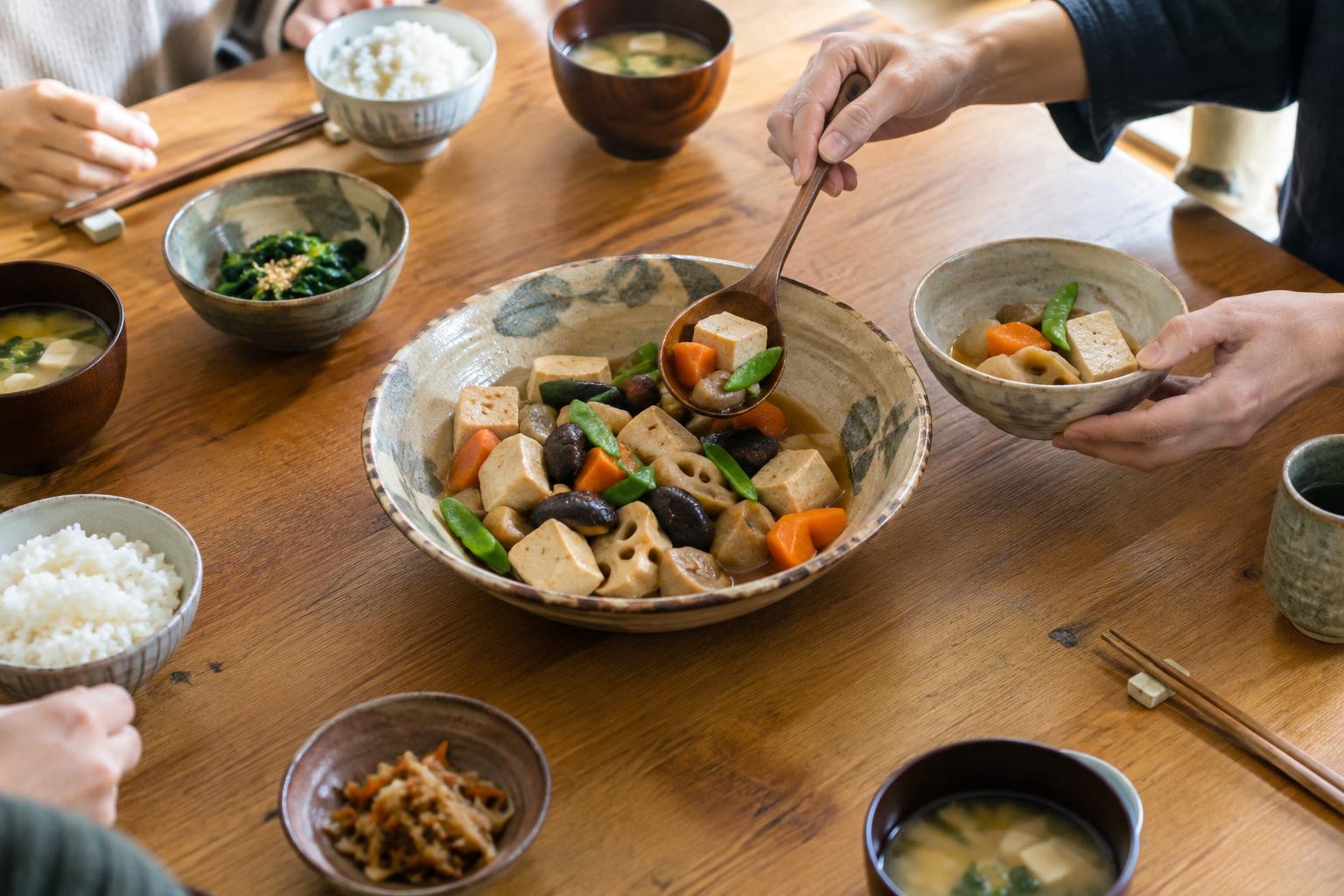
Food and Table CultureShared plates make an everyday meal feel welcoming, but they can leave guests wondering when and how to take a portion. Learn a few practical ways to use serving utensils, leave room for others and follow the rhythm of the table without worrying about a perfect set of rules.
Read article · 4 min↗
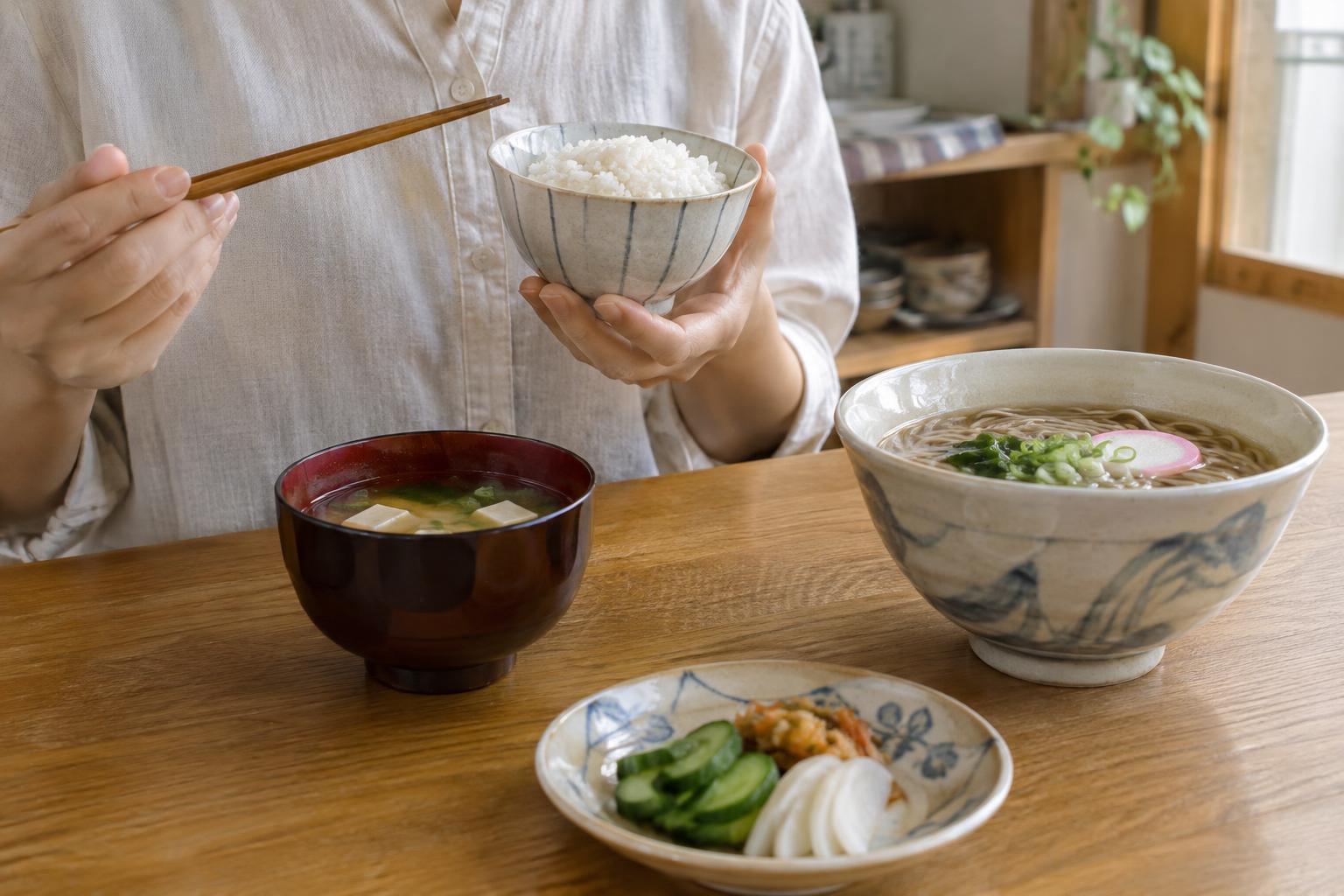
Food and Table CultureRice bowls and miso soup bowls are often held while eating, but larger bowls and plates usually stay on the table. Learn how bowl size, the food inside and the setting can guide you.
Read article · 3 min↗
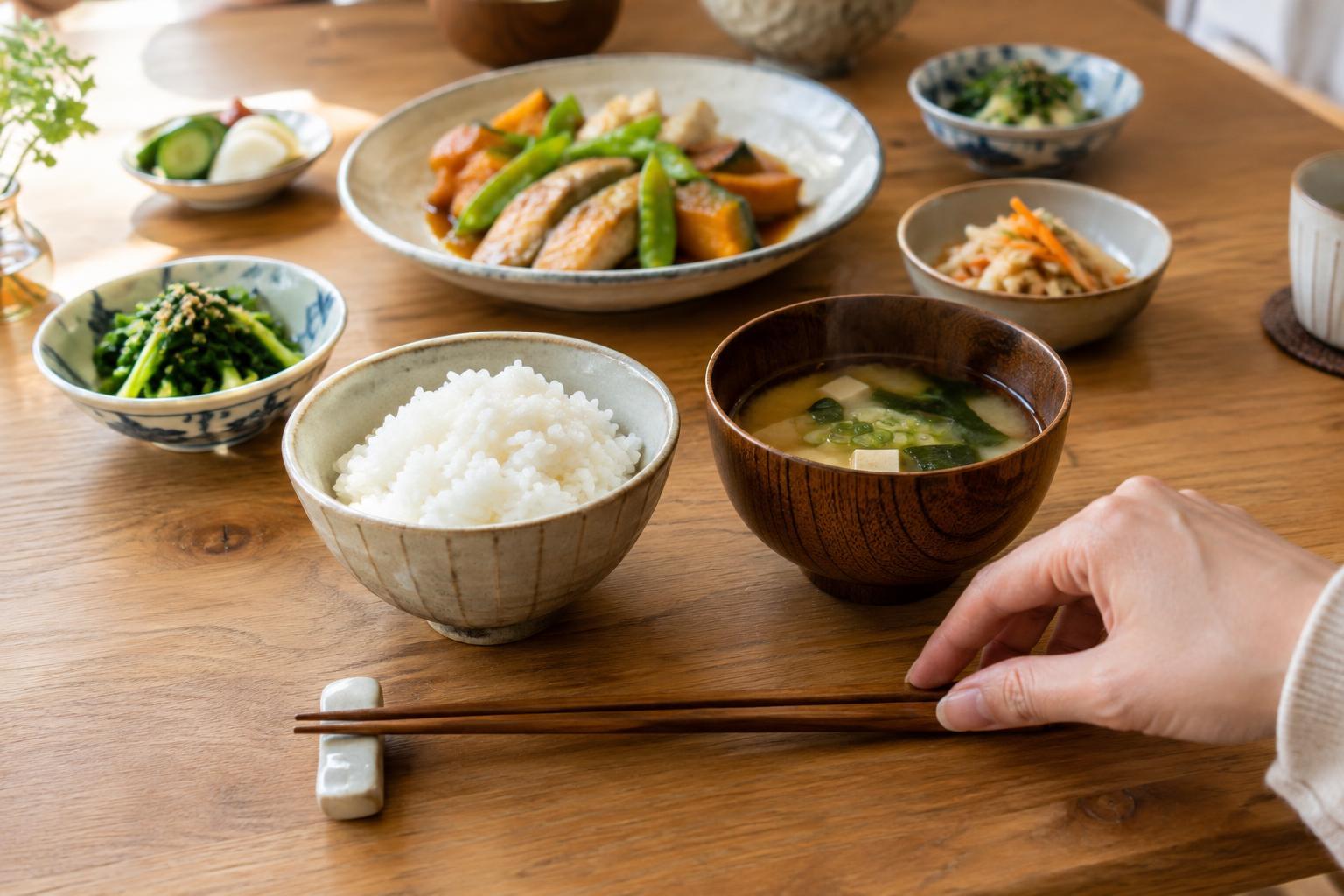
Food and Table CultureChopstick manners are easier to remember when you know the purpose behind them. Learn how to rest your chopsticks, serve from shared dishes and handle a few gestures that can feel awkward at a Japanese table.
Read article · 3 min↗
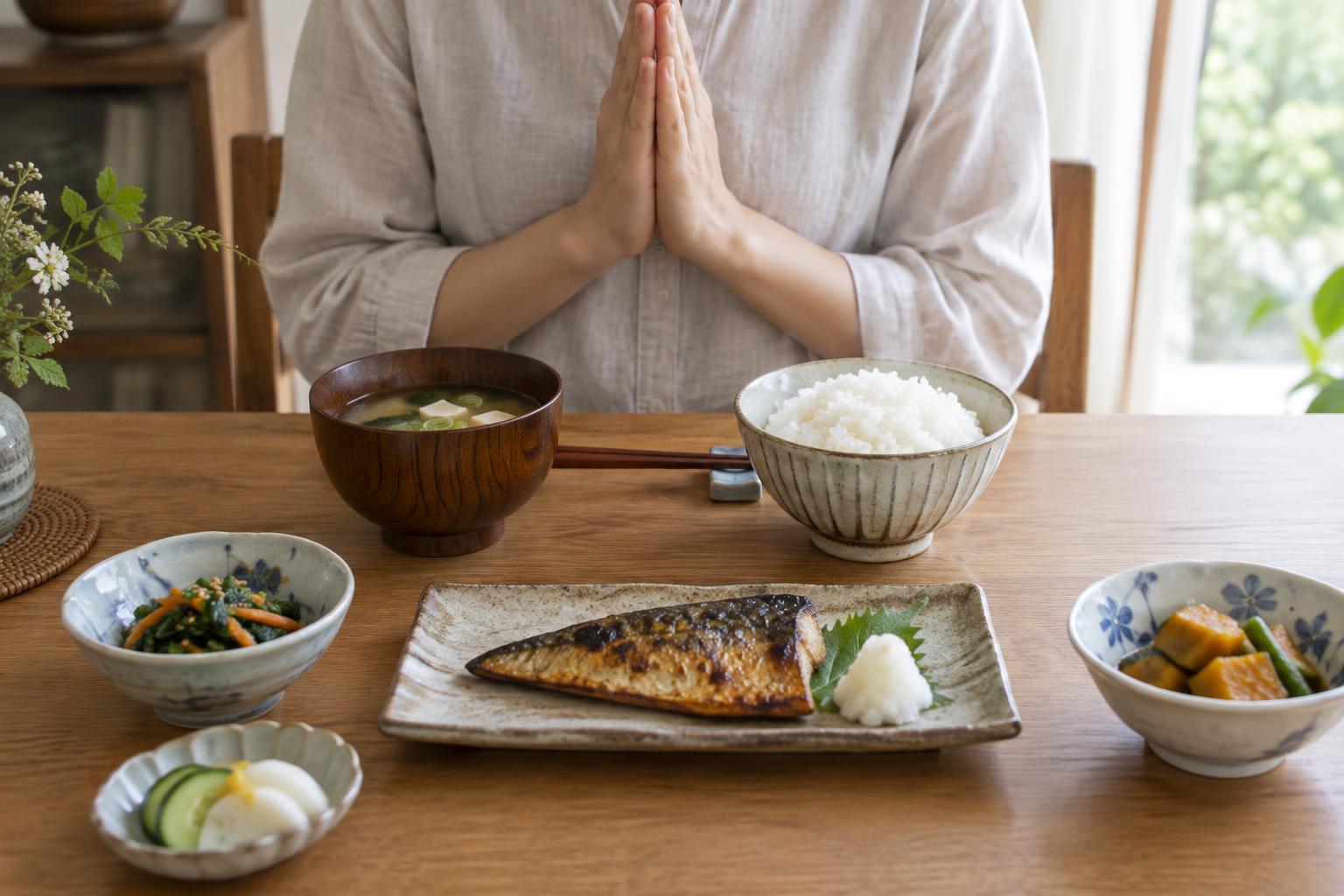
Food and Table CultureTwo familiar Japanese mealtime phrases mark the beginning and end of a meal. Learn when to say each one, what it expresses, and how to use both naturally at home or when dining out.
Read article · 4 min↗
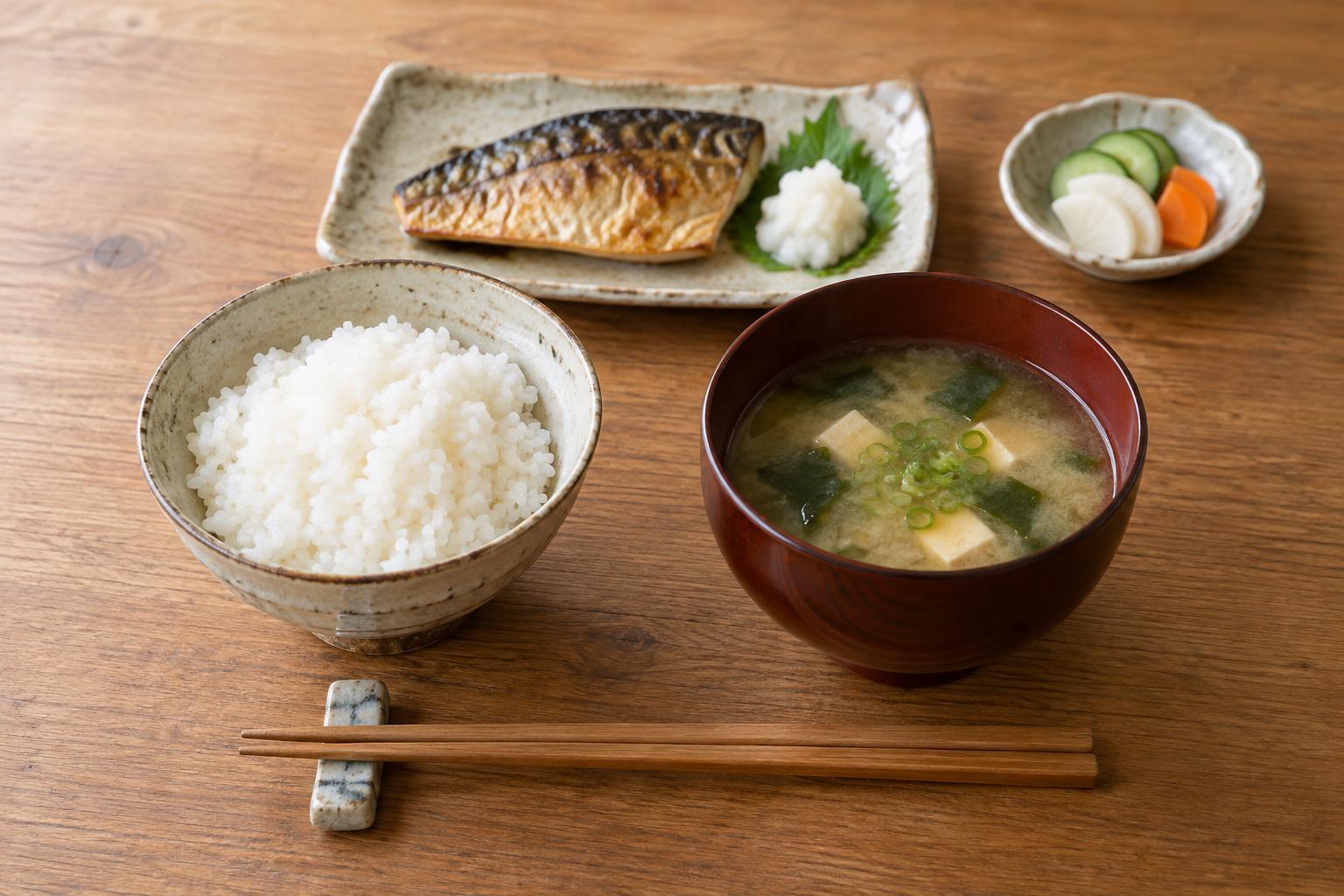
Food and Table CultureA simple Japanese-style place setting starts with rice on the diner’s left, soup on the right, and chopsticks across the front. Learn how to build on that arrangement for an everyday meal without treating it as a rigid rule.
Read article · 4 min↗
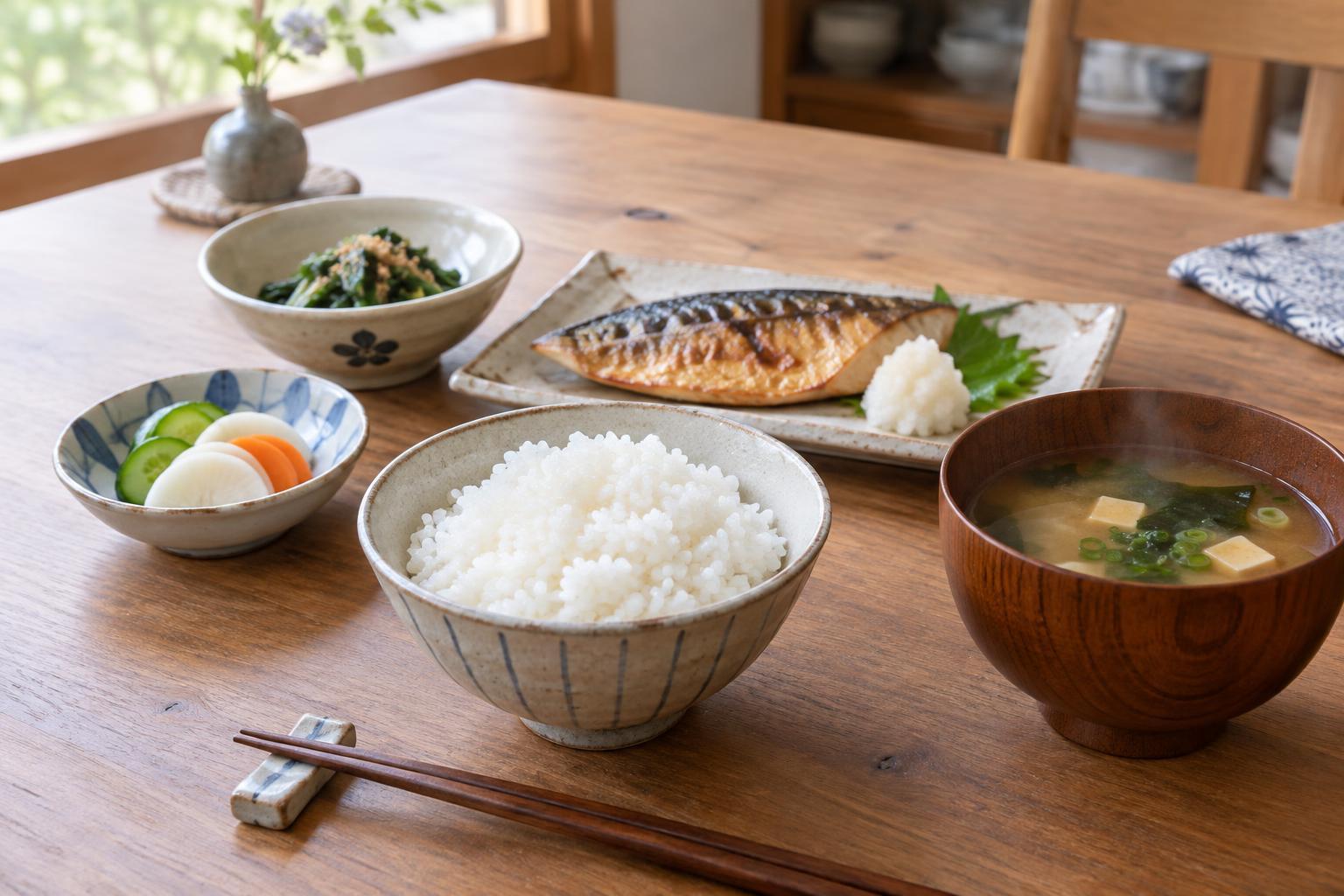
Food and Table CultureIn many Japanese home meals, a bowl of rice does more than fill the plate. It gives side dishes a point of reference, shapes how flavors are balanced, and helps organize the table. Here is a practical look at that role, along with the many ways everyday meals can depart from it.
Read article · 4 min↗
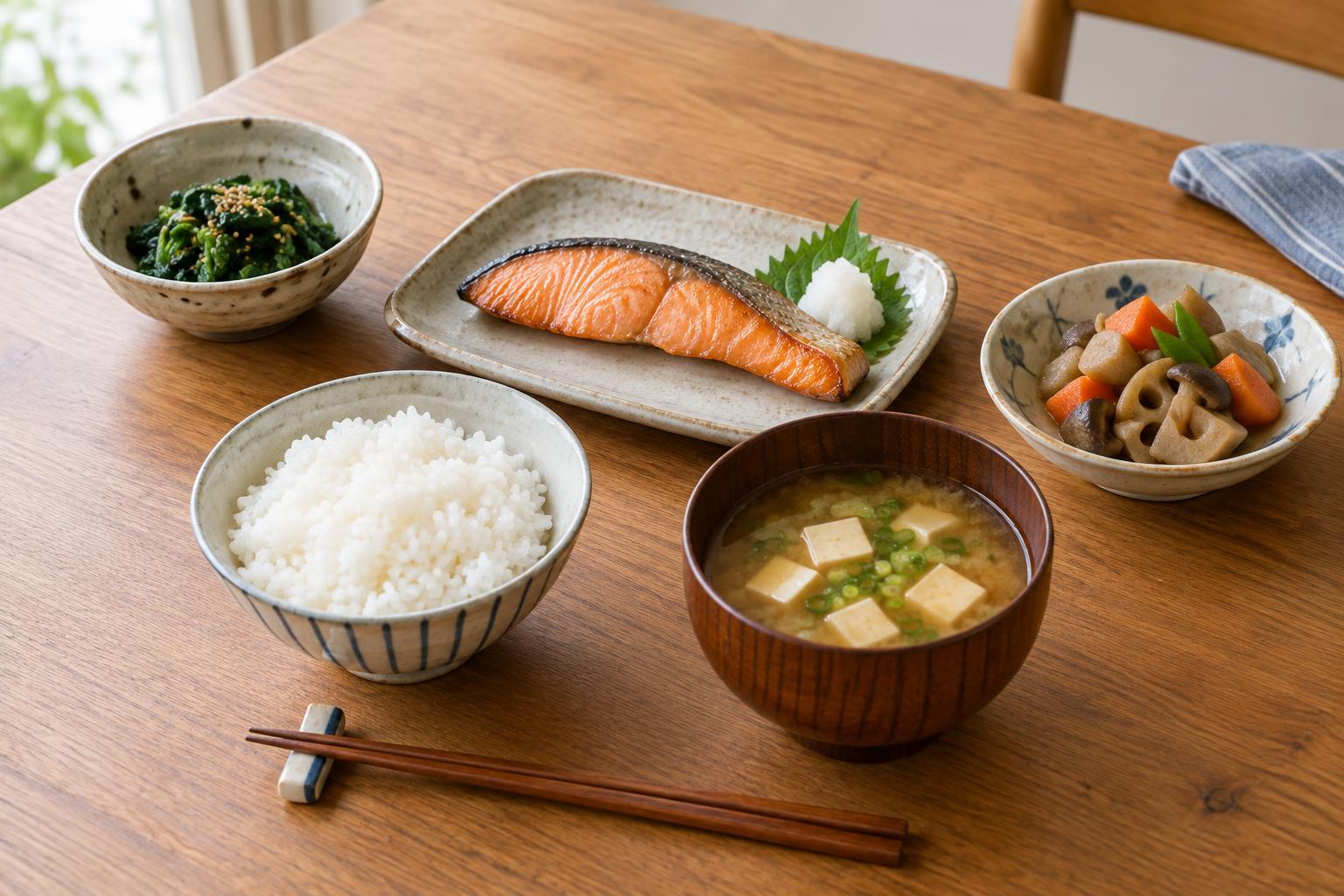
Food and Table CultureIchiju sansai is a familiar way to arrange a Japanese meal: one soup and three dishes, usually served with rice. Learn what counts as a dish, how the parts work together, and how to adapt the pattern for everyday home cooking.
Read article · 4 min↗
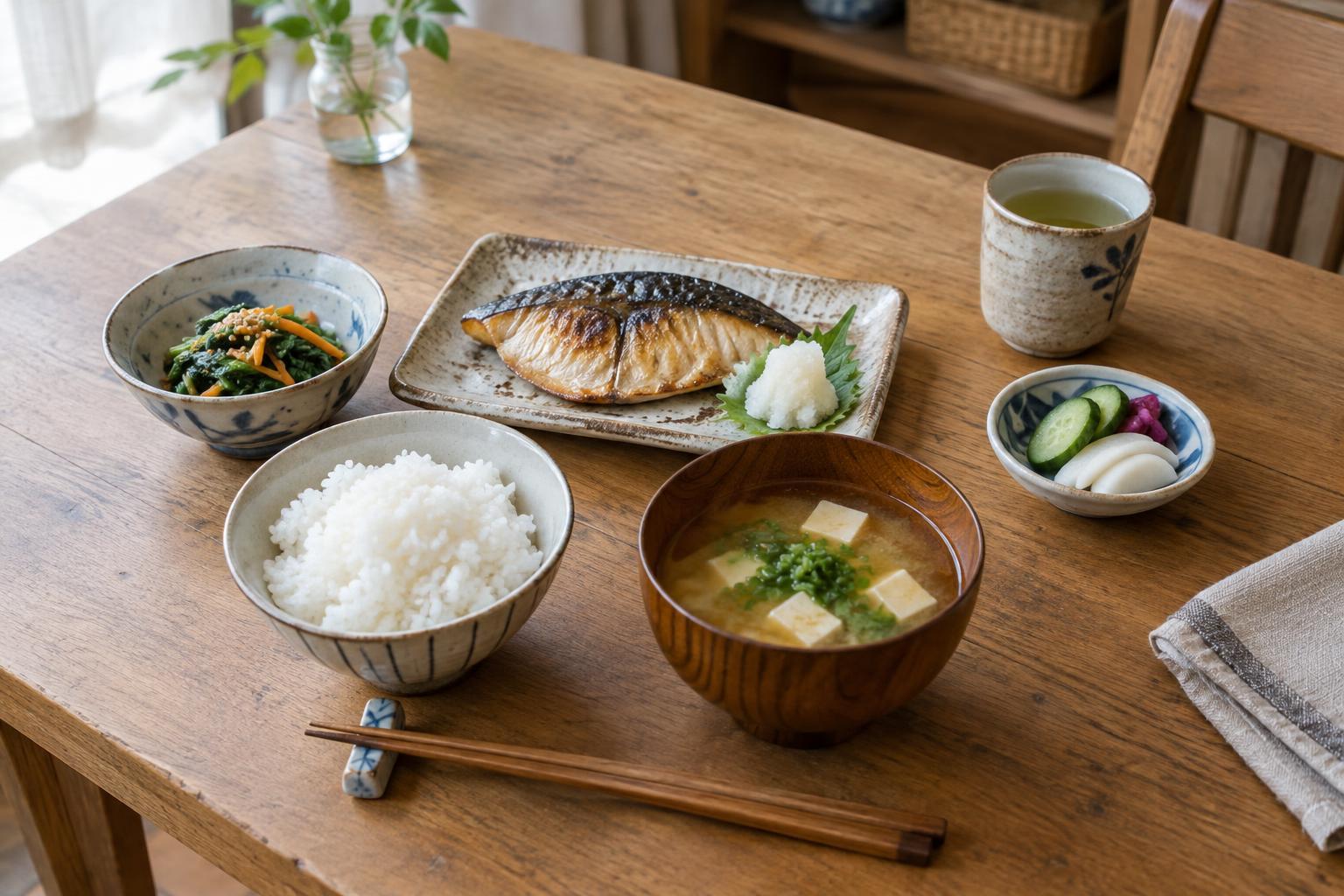
Food and Table CultureWashoku is often pictured as an elaborate arrangement of rice, soup and small dishes. But the idea also has room for simple weeknight meals, leftovers and family preferences. Here is a practical look at the word, the familiar meal patterns behind it and the everyday choices that bring a Japanese table together.
Read article · 4 min↗
 Food and Table Culture